Exclusive: Rep. Clarke pushes to revive broadcast diversity initiative

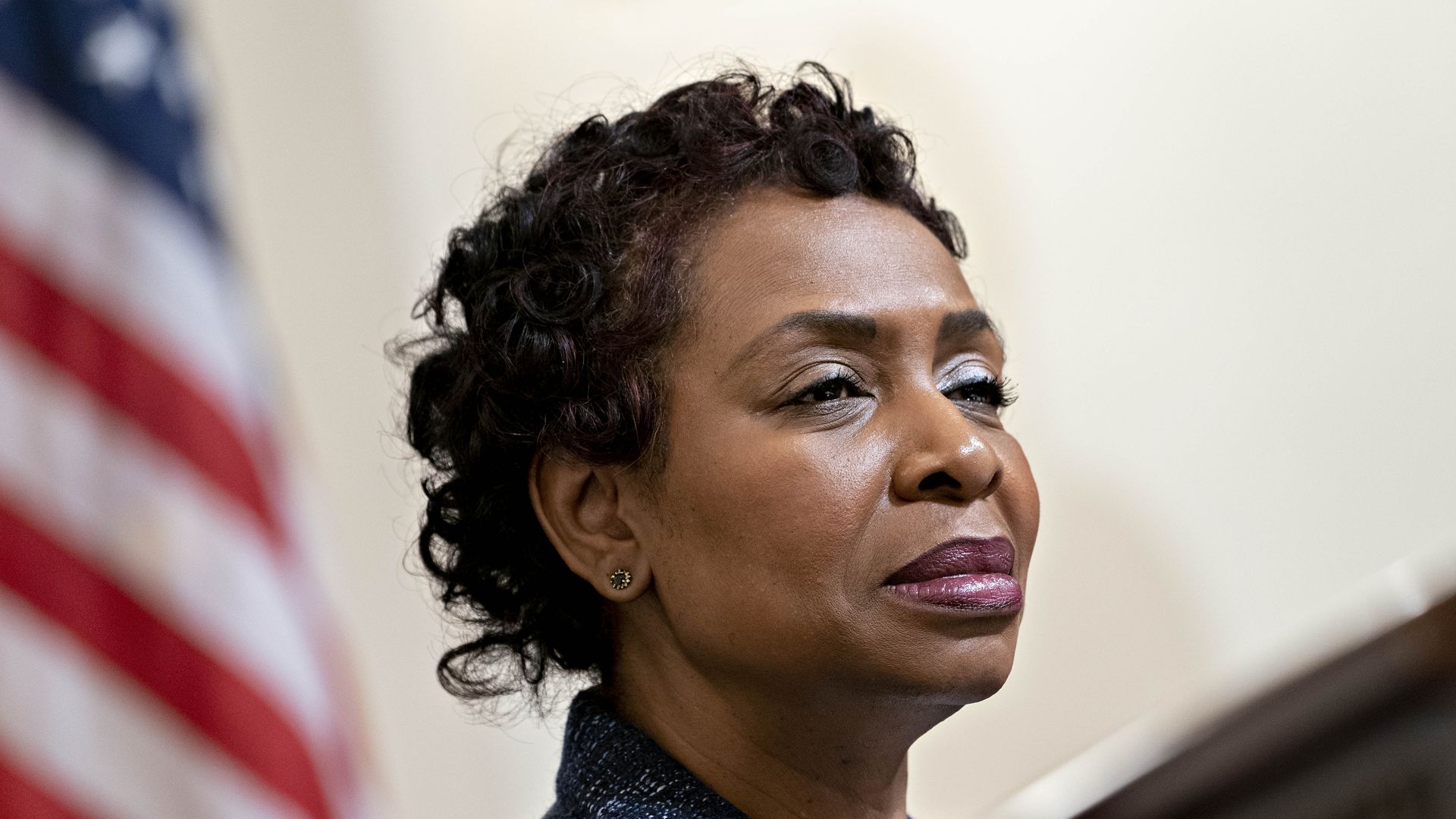
Clarke in 2020. Photo: Andrew Harrer/Bloomberg via Getty Images
Rep. Yvette Clarke is pressuring the FCC to start collecting diversity data from broadcasters again.
Driving the news: Clarke and FCC Commissioner Geoffrey Starks in a joint interview Monday relayed their plans for getting revamped data collection rules across the finish line.
- Clarke, the Congressional Black Caucus' first vice chair, will send a letter to the FCC stating "Congress and the Commission have charged broadcasters with providing programming that is responsive to the needs and interests of their community of license."
- "It is simple — a station is best placed to do so when its employees reflect the diversity of that community," a draft of the letter shared exclusively with Axios states.
- Rules have not yet been circulated to commissioners. Starks said he would work "very quickly" to ensure his colleagues are ready to vote on them.
Why it matters: Diversity proponents say broadcast stations with a workforce that is representative of the community they serve fosters better and more accurate storytelling.
- The lack of data also limits the FCC's ability to evaluate discrimination in hiring practices, Clarke said.
What they're saying: Diversity in media "directly impacts what stories are told, who gets to tell them, who sits in front of the camera and who decides what is in fact newsworthy," Starks said.
- "All of these factors influence what news gets reported and what doesn't. And all of that in turn shapes how we see the world."
- Clarke: "I know there are stories that are going untold when I look at the diversity of our civil society and then I look at the content that our major broadcasters provide."
Catch up fast: The Communications Act of 1934 requires the FCC to collect information from broadcasters about the racial and gender makeup of a station's employees.
- The FCC stopped collecting the form in 2001 after a D.C. Circuit decision regarding the unconstitutionality of the commission's use of data.
- In 2021, the FCC put out a request for comment on how to best resolve confidentiality concerns.
- 20 years after the commission paused the data collection, the request for comment is complete. Now Clarke and Starks are pushing for new rules to be brought to a vote.
Meanwhile, National Association of Broadcasters spokesperson Alex Siciliano pointed to the FCC's diversity tax certificate program, repealed in 1995, as another way to promote diversity.
- The program, which NAB and some lawmakers are pushing to reinstate, would provide a tax incentive to those who sold their majority interest in a broadcast station to women, people of color or members of other underrepresented communities.
- The program "plays a crucial role in advancing these goals as we move towards comprehensive solutions that encompass both regulatory support and industry-driven programs," Siciliano said.
What we're watching: A key question the commission is grappling with is whether the broadcast diversity data should remain confidential.
- Clarke said she wants the data to be public: "It's good to hold people accountable for reflecting the public at large."
