
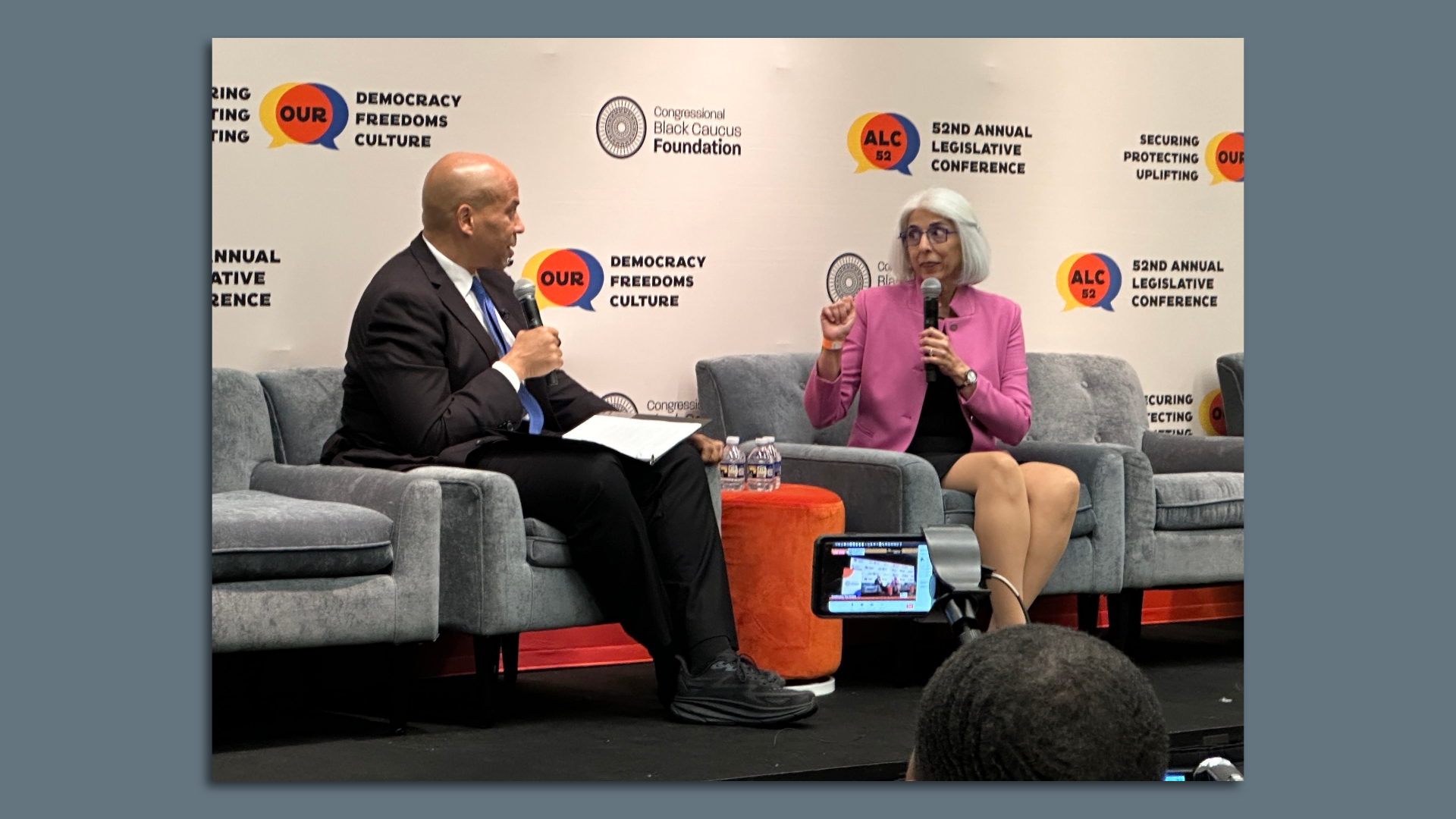
Booker and Prabhakar discuss AI during a CBC legislative conference panel on Sept. 20. Photo: Maria Curi
Black and Hispanic lawmakers and advocates this week grappled with what artificial intelligence means for their communities.
Driving the news: The Congressional Black Caucus and the Congressional Hispanic Caucus held their annual legislative conferences, featuring a variety of policymakers, industry leaders and advocates.
Prominent themes included:
- The importance of having Black and Latino people participate in the development of the technology and rules around it: "If you're not at the table, you might end up on the menu," Sen. Cory Booker said.
- The way AI can exacerbate existing discrimination through algorithmic bias. For example, in housing (getting mortgage and rental application approvals), resume ranking through job postings, medical care recommendations and in the criminal justice system.
What they're saying: "This is exactly why we can't just blindly use this technology, because it is reflecting and intensifying what human beings have been doing for a long time," Arati Prabhakar, director of the White House Office of Science and Technology Policy, said.
- Claudia Ruiz, UnidosUS policy analyst, noted 35% of Latinos don't have access to home internet: "Now on top of that, also beginning to talk to them about AI, ChatGPT and automation, you can imagine just how daunting it is and the really kind of existential threat it becomes."
Zoom in: An UnidosUS study found that national data sets on individuals who have been killed by police significantly undercount Latinos and other people of color because they are incorrectly categorized under "white" or "other."
- "The decisions that we make around what information to collect, how we collect it, and for what purpose, play into the possibilities for bias and inequity," said Ruiz, pointing to the study.
- "When it comes to machine learning and generative AI, that's how we have come to this idea of garbage in, garbage out."
Of note: The Equal Employment Opportunity Commission has an initiative underway to ensure that software used in hiring and other employment decisions complies with civil rights laws and provided new technical assistance in May.
- EEOC Chair Charlotte Burrows: "Because this is such a new and exciting area, people started to think that the current laws didn't apply. And so we wanted to be very clear collectively and individually: Yes, they do."
Our thought bubble: One principle in the Blueprint for an AI Bill of Rights, which Prabhakar helped create and touted during the conference, is that people should be protected from algorithmic discrimination and systems should be equitable.
- The White House faces pressure to make the bill of rights binding policy for the federal government's own use of the technology.
- Whether President Biden does so in a forthcoming executive order will be an indicator of his administration's commitment to turning the document from a voluntary set of recommendations to rules with teeth.
Meanwhile, speakers also focused on the promises of AI to, for example, make education more effective or help detect illness earlier, potentially saving lives.
- "Imagine now, at a time of educational inequity, you could have a machine that can learn your learning style. We don't all learn the same way," Booker said.
- "So just the fact that every child now could have the most sophisticated tutor that could understand them and help them learn calculus in a different way than other people might learn. That's exciting in terms of expanding opportunity for communities left out."
