ViVE conference notebook: Fewer quality pitches, bigger swings

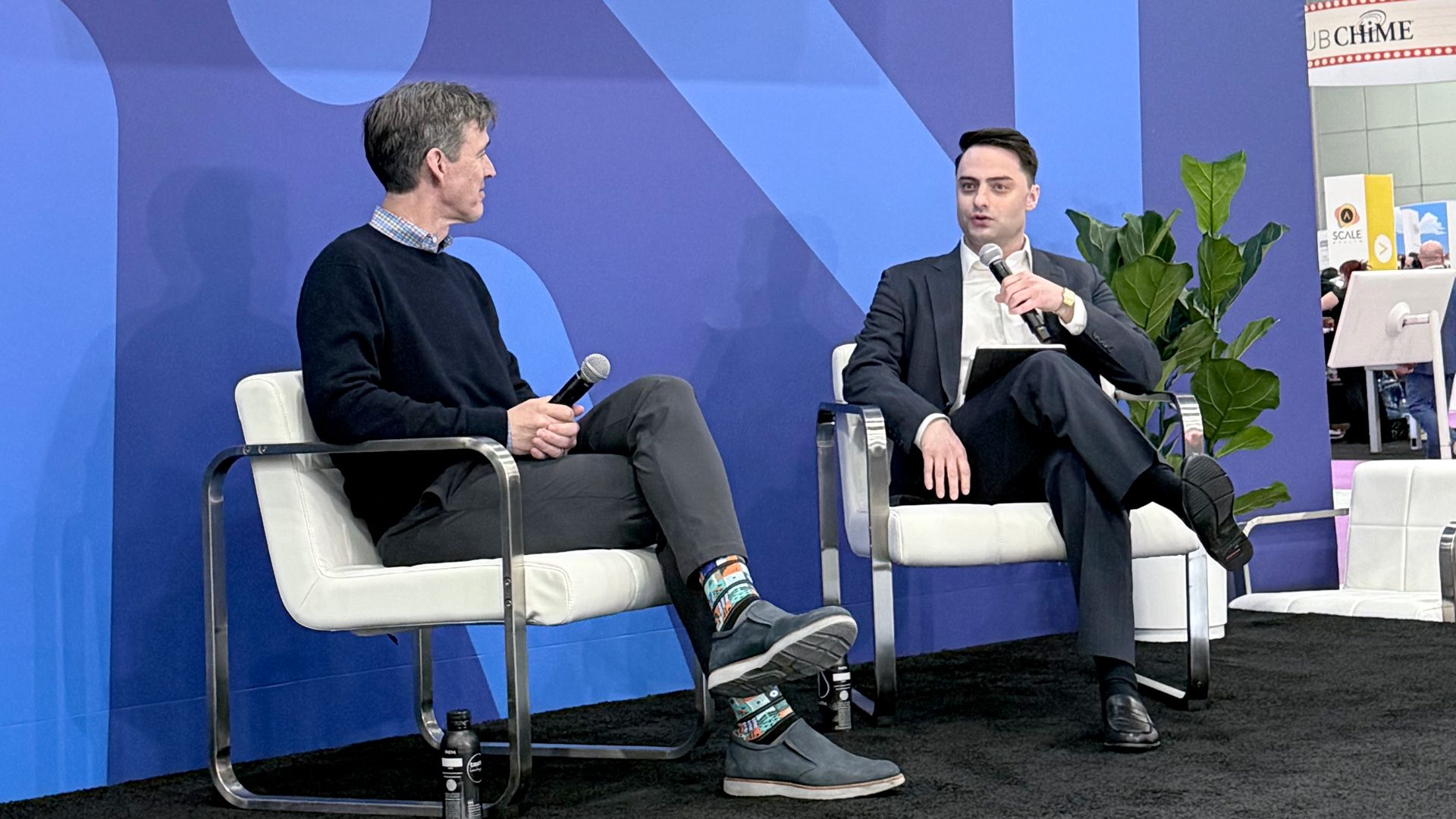
Brock E.W. Turner, right, interviewing Doximity CEO Jeff Tangney. Photo: Doximity
I escaped the snow for sunny Los Angeles but have a cold assessment of this year's ViVE conference.
VCs want better pitches
Several investors expressed pessimism with the slate of early-stage health tech companies pitching them.
Inside the room: Multiple investors were dismayed and unconvinced by pitches they're seeing from companies looking for funding.
- Some felt like they had to deploy capital in certain segments to "have a horse in the race" but weren't exactly optimistic those bets would produce a winner.
What they're saying: Aegis Ventures co-founder and managing partner John Beadle says investors in startups competing against foundation model companies, electronic health record companies and legacy software are figuring out where they have a right to win.
- While Aegis, a venture studio that works with entrepreneurs and health systems, is not expressing the same outward pessimism, Beadle did acknowledge deal flow has decreased.
- "You're seeing a lot fewer deals, but the deals are much larger," he says, noting that seed and Series A deals are particularly challenging right now.
By the numbers: Fewer companies are capturing a larger sum of health tech venture capital dollars. Startups raised $3.7 billion more in 2025 versus 2024, but deal count dropped by five percent last year compared with 2024, according to a report from health tech research and venture firm Rock Health.
Threats from incumbents loom
While absent from booths, behemoths like OpenAI, Microsoft and Epic still hung over the show.
- Attendees were keenly aware they needed to establish a moat against their immediate competitors along with established vendors.
Reality check: Finding that moat is difficult.
- Sanford Health's chief medical officer of virtual care, David Newman, says he's taken around 1% of meetings vendors have requested.
- The Sioux Falls, S.D.-based health system is shortening contracts for more specialized vendors and looking for a platform vendor to build and scale AI.
Yes, but: They're more open to innovation to find operational efficiencies that support patients and providers by sharing risk with vendors, Chief Information Officer Brad Reimer says
The bottom line: Investors and buyers are particularly interested in spaces where incumbents aren't currently building.
