August 28, 2025


🚨 Welcome to the final issue of this newsletter. As we announced in our Aug. 4 email to you, our expert policy reporters will share their stories in our free Axios newsletters going forward.
- So please keep following our work in newsletters like Axios Vitals, Axios AI+ and Axios Generate.
👋 Thanks for subscribing to Pro Policy. If you have any questions about prorated refunds for your subscription, please reach out to [email protected].
Situational awareness: HHS Secretary Robert F. Kennedy Jr. will appear at a Senate Finance Committee hearing Sept. 4. Although plans for the hearing were in the works before the firing of CDC director Susan Monarez, he is sure to be pressed on the upheaval at the agency.
1 big thing: Exclusive — House Oversight widens PBM inquiry
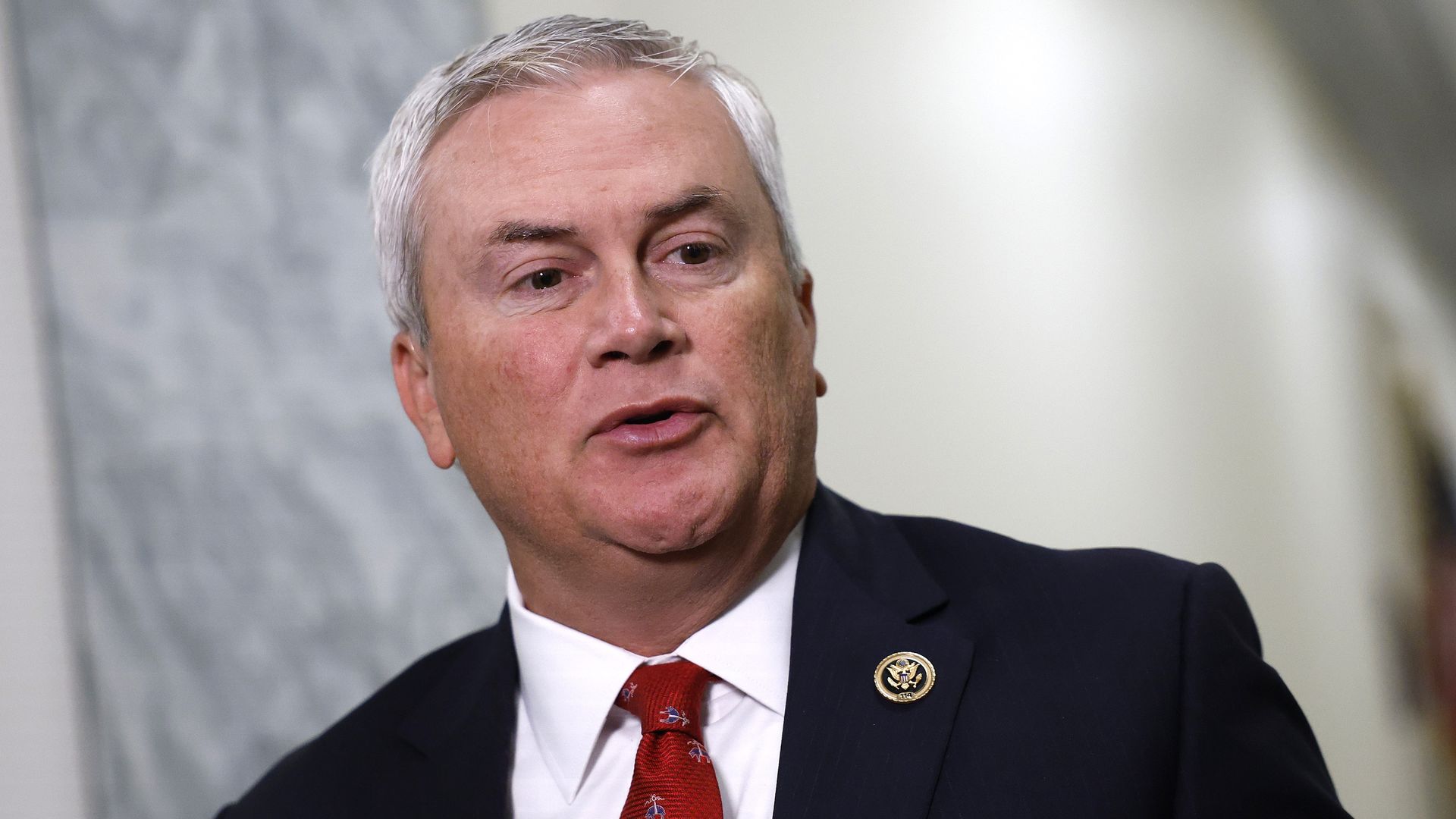
The House Oversight Committee is opening a new front in its investigation of PBMs with an inquiry into their use of foreign entities to allegedly evade U.S. oversight.
Why it matters: PBMs are facing continued heat from both parties for what critics say is a lack of transparency and the companies' role driving up drug spending. The latest investigation is targeting a tool that the industry could be using to get around some of this scrutiny.
Driving the news: House Oversight Committee Chair James Comer today sent letters, first shared with Axios, to two of the biggest PBMs, pressing them about the use of foreign-headquartered entities known as group purchasing organizations (GPOs).
- The letters went to Cigna, the parent of the PBM Express Scripts, and to UnitedHealth's Optum Rx.
- They point to Express Scripts having a GPO called Ascent Health Services that's headquartered in Switzerland, while Optum has Emisar Pharma Services, headquartered in Ireland.
What they're saying: "Ascent, which Cigna Group's Express Scripts created in 2019 and headquartered in Switzerland, appears to be yet another example of the institutional intent at opacity and avoidance of oversight of your company," Comer writes to Cigna CEO David Cordani.
- "The committee is concerned that your company's opaque business practices and relationships, including the creation of new corporate structures abroad, combined with unchecked integration, is hurting patients and costing taxpayers," Comer added in the letter to Optum Rx CEO Patrick Conway.
- The committee is requesting a range of documents, including internal communications about the decision to form the overseas entity.
- Cigna and Optum did not immediately respond to requests for comment.
The big picture: PBMs have been facing oversight scrutiny for years, including at an Oversight Committee hearing in July 2024 at which the top three companies' executives were pressed by both parties.
- PBMs say they are the only part of the drug supply chain that is actually trying to lower costs. They contend that drug companies are trying to shift blame onto them so that the manufacturers don't have to lower prices.
- Legislative efforts are also aimed at PBMs, including a move to "delink" their compensation from the price of a drug in Medicare Part D, and impose new transparency requirements.
- Those legislative efforts were due to be wrapped into December's government funding deal until Elon Musk helped torpedo the broader package. It remains to be seen whether there is appetite to revive parts of the package this year.
2. Sizing up the fall health care agenda

Congress is back next week with a full plate of unfinished health care business. The question is how much can get done if lawmakers get tied up with bigger fights, like avoiding another government shutdown.
- Here's our loose ranking of what could still get enacted by year's end.
Most likely
Health extenders
Health extenders covering continued funding for community health centers or to avert cuts to Medicaid DSH payments to hospitals are routinely addressed in year-end packages, so the underlying programs aren't likely to totally lapse.
- A typical backup is the use of short-term extensions. For example, if there is a continuing resolution on government funding into December, health extenders could be punted to last the same length of time.
On the fence
PBM overhaul
Members of both parties have wanted to target PBM business practices for years, but haven't found a legislative vehicle that can get through both chambers.
- This year could be different. The question is less about the policy than the broader congressional dynamics.
- "You're talking about a series of reforms that had 350 votes in the House," Rep. Jake Auchincloss, a major backer of PBM changes, told Axios.
- "But then, you also are talking about Republican leadership that backed down because of a single tweet," he added, referencing Elon Musk's broadsides last year.
- A major funding package could provide a vehicle for health policies affecting PBMs. But if Congress just opts for a stripped-down CR or if there's a shutdown, it would be much harder to accommodate extraneous items.
Least likely
ACA premium tax credits
Congress is facing a major cliff at the end of the year with the expiration of enhanced Affordable Care Act subsidies that help people afford premiums.
- There's still a chance that lawmakers will agree to a short-term extension, especially if it would phase down subsidies for some higher-income earners.
- But extending an expansion of the ACA still seems like a tall order with complete GOP control of Washington. Some Republicans argue that Democrats created this problem themselves by making the enhanced subsidies expire in the Inflation Reduction Act.
- Many health providers will try to build political pressure for an extension ahead of the midterms.
Medicare Advantage overhaul
There has been increasing scrutiny of Medicare Advantage practices like "upcoding," in which insurers classify patients as sicker to secure higher payments from the government.
- Sens. Bill Cassidy and Jeff Merkley's bipartisan bill to crack down on the practice has received interest from other lawmakers.
- Any effort would face strong opposition from the insurance industry and the possibility of attack ads.
- After taking heat for Medicaid cuts, changing Medicare could be a bridge too far for vulnerable Republicans.
- Medicare Advantage still could resurface after the midterms, given the billions in savings that could be used to offset other priorities.
3. Catch me up: CDC turmoil, COVID vaccine policy

- CDC turmoil: The leadership of the agency is in limbo after director Susan Monarez was fired and a wave of high-level departures gutted the top ranks, Axios' Tina Reed reports.
- Vaccine shakeup: Health Secretary Robert F. Kennedy Jr.'s new COVID policy continues a steady drip of moves that are incrementally raising barriers to accessing shots, Axios' Adriel Bettelheim reports.
- Surprise billing: The process for settling disputes under the No Surprises Act generated at least $5 billion in costs that will likely be reflected in higher health expenses and premiums, researchers wrote in Health Affairs.
- AI hearing: The House Energy and Commerce health subcommittee will hold a hearing at 10:15am ET Wednesday on artificial intelligence's role in health system change.
✅ Thank you for reading Axios Pro Policy, and thanks to editors Adriel Bettelheim and David Nather and copy editor Brad Bonhall.
View archive