August 14, 2025


👋 Hello, hello. We're back with a look at the ways Health Secretary Robert F. Kennedy Jr. has most upended federal vaccine policy and broken with consensus.
- We're still on recess schedule, so we'll be back in your inbox next Thursday, or sooner if there's breaking news.
1 big thing: RFK Jr.'s anti-vaccine revolution
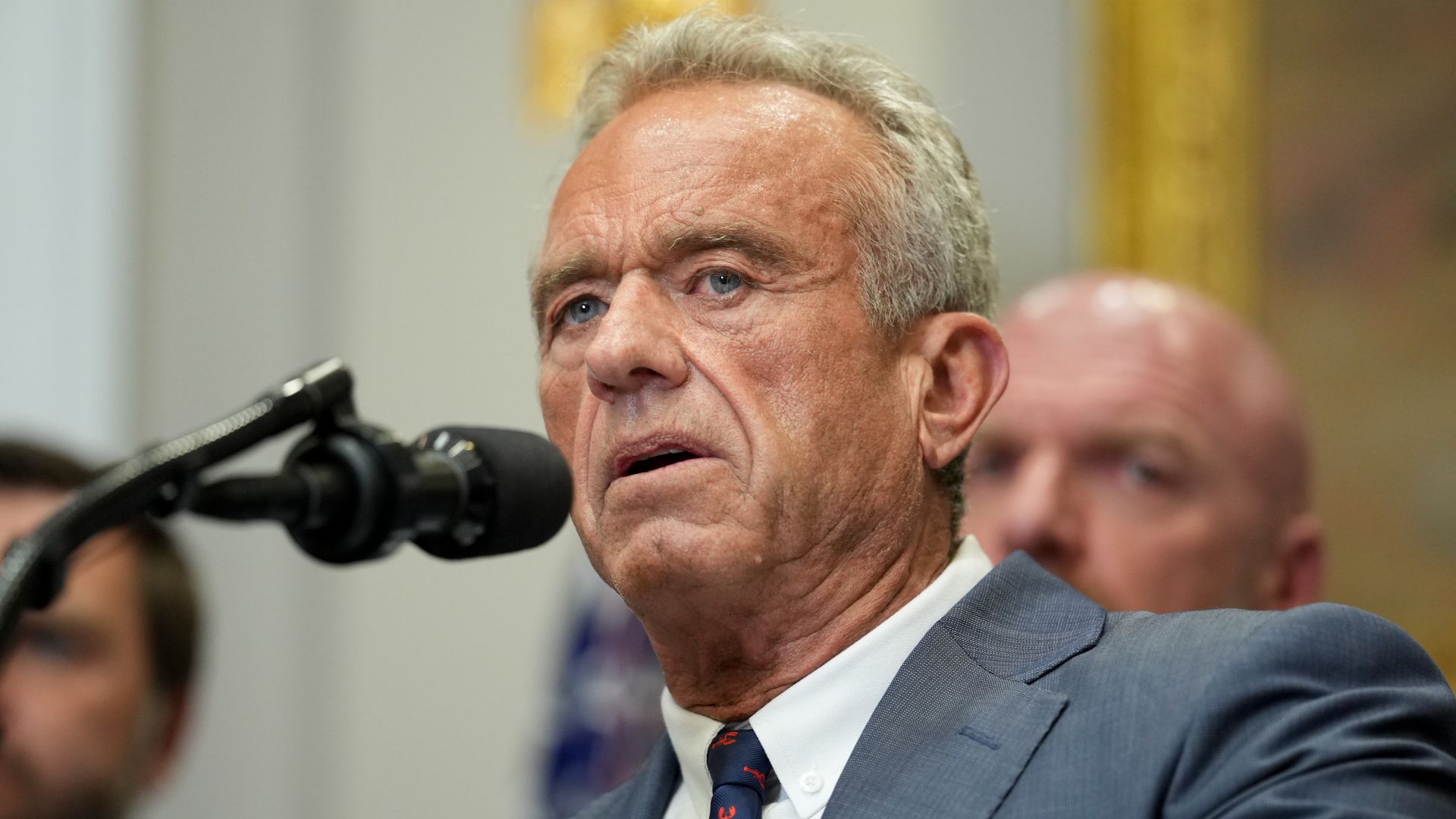
Robert F. Kennedy Jr. has made a dizzying amount of changes to federal health agencies in his first six months as HHS secretary, with the canceling of $500 million in mRNA research contracts the latest in a long list.
Why it matters: Kennedy has upended years of vaccine policy and cut biomedical research funding, and experts worry his revisions could result in a less vaccinated population and more disease outbreaks and deaths.
- "I see a potential here for the dramatic reduction in vaccine access for this country," said Michael Osterholm, director of the Center for Infectious Disease Research and Policy at the University of Minnesota.
With all the rapid changes, it can be hard to track what Kennedy has done so far. Here are the actions that stand out for their impact.
1) Kennedy removed all 17 members of the CDC's Advisory Committee for Immunization Practices in June, saying a "clean sweep" was necessary to "reestablish public confidence in vaccine science."
- Two days later, Kennedy named new members to ACIP, including some who have expressed anti-vaccine views or who signed the Great Barrington Declaration, which proposed letting COVID-19 spread among young, healthy people to reach herd immunity faster.
- Public health experts are concerned that the new ACIP could alter the routine infant and childhood vaccination schedule or restrict vaccines even further.
2) Kennedy straddled the line between recommending vaccinations and endorsing ineffective treatments during the Texas measles outbreak.
- He wrote in a Fox News op-ed that "vaccines not only protect individual children from measles, but also contribute to community immunity."
- But he included an important qualifier: "The decision to vaccinate is a personal one."
- Kennedy has also cited aerosolized budesonide, clarithromycin and vitamin A as "very effective" treatments for measles. There's no scientific evidence that aerosolized budesonide and clarithromycin treatments are beneficial, or that vitamin A can prevent or treat measles.
3) Kennedy announced in May that the CDC was changing its recommended immunization schedule and no longer recommending COVID shots for healthy children or pregnant women, citing a "lack of any clinical data to support the repeat booster strategy in children."
4) This month, Kennedy said his decision to cancel the BARDA contracts to develop new mRNA vaccines was intended to shift funding toward "safer, broader vaccine platforms."
- Scientific consensus is that mRNA vaccines are safe and effective. Scientists worry that halting research could result in fewer medical breakthroughs and less preparation for future pandemics.
5) In July, Kennedy proposed overhauling the Vaccine Injury Compensation Program, a federal court system that helps protect vaccine makers from liability and allows patients to receive compensation from vaccine injury claims.
- He could choose to change the official vaccine injury table, which could lead to more lawsuits.
- Or he could eliminate the court altogether, which could mean more lawsuits in the civil system and result in vaccine makers becoming liable for damages.
6) Kennedy pledged at an April Trump administration Cabinet meeting to investigate and find the root causes of autism by September, and later announced he's establishing an autism disease registry system.
- This is despite studies showing that increased levels of autism are likely due to improved screenings and earlier detection.
- Public health experts are concerned that Kennedy may still try to say there's a link between vaccines and autism, despite research showing no link.
7) HHS adopted a recommendation from the new ACIP panel to remove mercury-containing compound thimerosal from flu shots.
- Anti-vaccine groups have claimed thimerosal is linked to autism, though that claim has been widely discredited.
The other side: "In just six months, Secretary Kennedy has taken bold, thoughtful steps to restore trust in public health and put families at the center of our decision-making," HHS spokesperson Andrew Nixon said in a statement.
- "From strengthening vaccine oversight to expanding transparency and rethinking how we respond to chronic disease, his focus has been on delivering real outcomes for the American people — guided by evidence, transparency and the public interest."
What we're watching: Some public health experts are concerned that Kennedy's actions are laying the groundwork for further restrictions on vaccines, which could result in more disease outbreaks in the U.S.
- "I fear we are going to be right back to where we were in the 1980s, when the making of these vaccines became more and more onerous for the companies who make them," said Paul Offit, director of the Vaccine Education Center at the Children's Hospital of Philadelphia.
- "Vaccines are going to be less available, less affordable, and there is going to be more fear," Offit said.
2. China biotech crackdown may be set for encore


Restrictions on select Chinese biotech companies could be back on the table when Congress returns from recess in the form of an amendment to the annual defense authorization bill from Sens. Bill Hagerty and Gary Peters.
Why it matters: Lawmakers left the Biosecure Act out of last year's version of the legislation, dealing a blow to bipartisan efforts to restrict biotechnology "companies of concern" from participating in government-funded research.
- Lawmakers are trying to balance the danger of firms using patient data for nefarious purposes with concerns from Sen. Rand Paul and some House Democrats, who've worried about a lack of due process for the companies targeted.
Driving the news: The latest version would give OMB responsibility for designating target companies with input from HHS, the Pentagon and other departments and agencies. Companies could appeal the designation within 90 days.
- There would be a five-year window for excluding equipment or services, including previously negotiated contract options.
- The prohibitions wouldn't apply to equipment or services that are no longer produced or provided by companies of concern.
- The grandfathering and administrative process track with the recommendations of the National Commission on Emerging Biotechnology, per BioCentury.
What we're watching: Whether defense-focused lawmakers are willing to provide a vehicle for the measure, or whether there's a desire to keep legislation relatively clean in the face of broader policy and funding battles.
3. Catch me up: Vaccine renewal, pharma ingredients

- COVID vaccine: The FDA might not renew the emergency use authorization for Pfizer's pediatric COVID-19 shot for the upcoming respiratory virus season, The Guardian reports.
- Drug ingredients: President Trump ordered his health officials to stockpile advanced ingredients for drugs the administration determines are critical for national health and security, Axios' Adriel Bettelheim reports.
- Stratus variant: Seven Western states are among 12 with the nation's highest COVID-19 positivity rates as the "stratus" strain drives a summertime surge, Axios' Herb Scribner reports.
4. Document watch: Grant reviews, direct nursing care

- Grant reviews: Trump issued an executive order directing agencies to designate senior political appointees to review grants and funding opportunities "to ensure that they are consistent with agency priorities and the national interest."
- Nursing care: HHS' inspector general analyzed select nursing facilities' use of Medicaid funds on compensation for direct care, as well as facility staffing over the same periods.
- Onshoring manufacturing: The FDA solicited public comment on issues around speeding the establishment of drugmaking facilities in the U.S.
- Kids' mental health: HRSA announced supplemental funding for 19 pediatric mental health care access programs to continue addressing the surge in behavioral health needs among children and adolescents.
✅ Thank you for reading Axios Pro Policy, and thanks to editors Adriel Bettelheim and David Nather and copy editor Brad Bonhall. Do you know someone who needs this newsletter? Have them sign up here.
View archive