July 21, 2025


Welcome back. Republican appropriators are displeased about the deep cuts to NIH in President Trump's FY26 budget.
1 big thing: GOP pushes back on NIH budget cuts
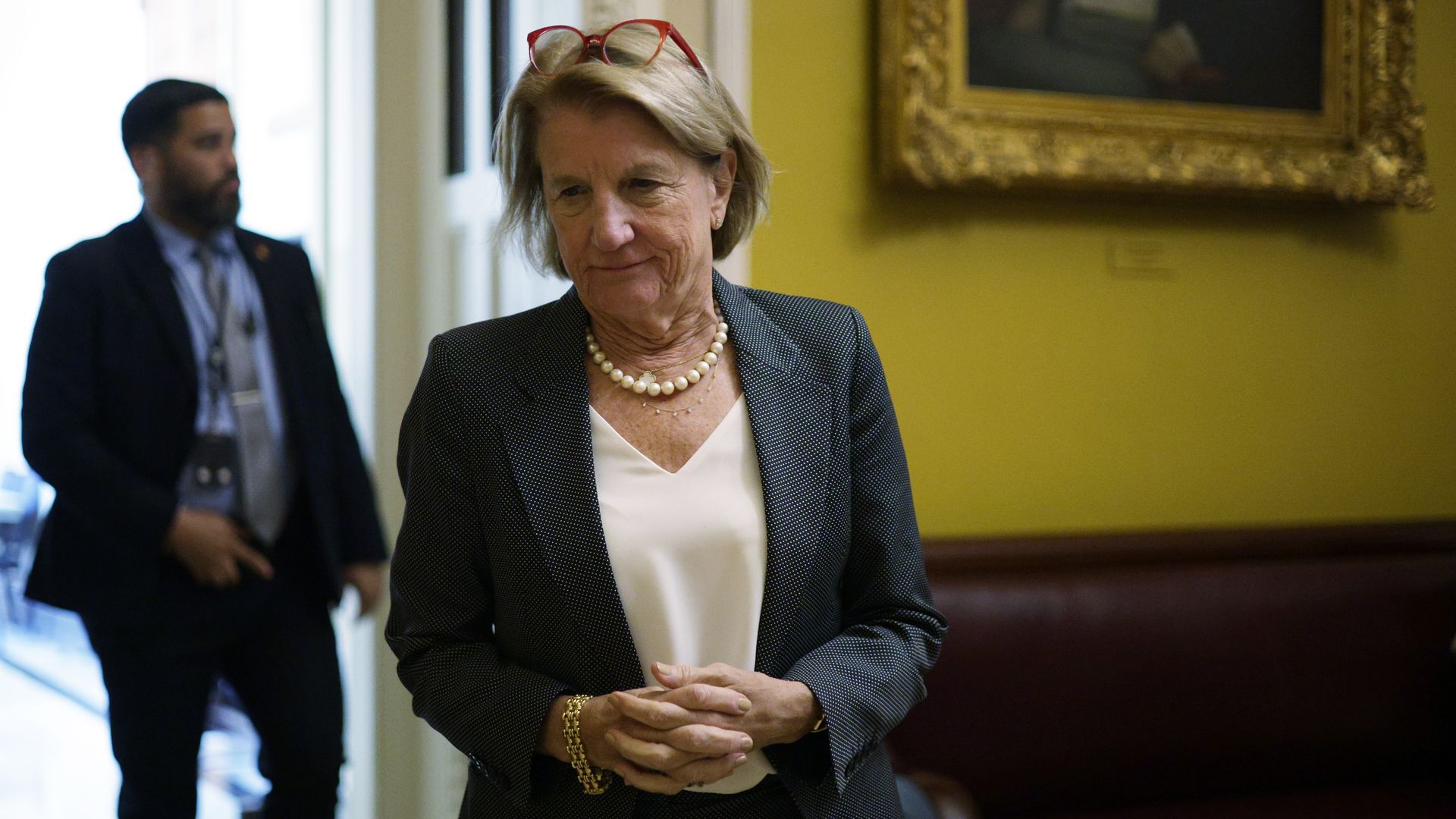
Top Republican appropriators are pushing back on Trump's proposed $18 billion cut to the National Institutes of Health's discretionary budget amid growing signs that the government may limp through the rest of this year on a series of short-term funding deals.
Why it matters: The likelihood of a series of CRs instead of an omnibus package increases the possibility that federal health agencies will be flat-funded past Sept. 30.
What they're saying: House Appropriations Chair Tom Cole said last week that FY26 spending bills including Labor-HHS wouldn't contain cuts as deep as what President Trump's 2026 budget outlined.
- Sen. Shelley Moore Capito, the Appropriations Labor-HHS subcommittee chair, also pushed back on the idea of NIH cuts in the upper chamber, saying that funding the agency was a "high priority" for her.
- "I'm a strong supporter of NIH research, biomedical research.… We're going to be working with the administration on this.… I'm hopeful that we can continue to be the world leader in biomedical research through the NIH when this is all laid to rest," Capito told Axios.
- "Let me just put it this way. There's a lot of support for NIH," said Robert Aderholt, House Appropriations Labor-HHS subcommittee chair. "We want to do whatever we can to support NIH.… Generally speaking, Congress likes NIH."
By the numbers: House Appropriations has set its topline number for the total Labor-HHS title at $184.5 billion.
- That's a drop from last year's $185.8 billion.
- The yearlong CR for 2025 set the Labor-HHS funding at $198.2 billion, with about $48.6 billion allotted to the NIH.
- The Trump administration proposal translates to an NIH funding cut of about 40% for FY26.
What's next: With reconciliation consuming much of the oxygen on the Hill, the Appropriations Committees have been relatively slow getting individual bills marked up and to the chamber floors.
- Aderholt has already signaled that House appropriators' Labor-HHS markup will be pushed into September.
- Capito said that the goal is "hopefully" for Senate Appropriations to mark up a bipartisan Labor-HHS bill by the end of this month.
Reality check: Even if the funding bills do make it out of their respective appropriations committees, they may not all get floor votes.
- Democrats are in no mood to collaborate with Republicans on a full-year deal after the fractious debate over the rescissions package and GOP tax and spending package. They might even be willing to risk a shutdown.
- That likely translates to the status quo for health agencies, including NIH.
2. Trump-level NIH cuts defy CBO analysis

Hypothetical 10% budget cuts to NIH and staff reductions at FDA would result in 53 fewer drugs becoming available over the next 30 years, CBO is estimating.
- But another detail jumped out at us: The scorekeeper says it's unable to estimate the effect of even bigger cuts, such as those in the range of Trump's budget request.
Why it matters: The CBO is in effect saying an almost 40% cut to the NIH is so big that it is unsure it can extrapolate from historical experience to estimate the effects.
What they're saying: "You also asked CBO to analyze the implications of reducing NIH funding by 35% to 38%," the scorekeeper wrote Friday to the ranking members of four House and Senate committees who requested the analysis.
- "CBO has not yet assessed whether historical evidence can be generalized and reliably used to estimate the effects of a reduction in funding of that magnitude."
- Reps. Frank Pallone and Brendan Boyle, and Sens. Bernie Sanders and Jeff Merkley, jumped on this finding.
- "The Trump administration is proposing a nearly 40% cut to the NIH's budget, suggesting the harms could be far greater than what CBO estimates," the press release from their offices states.
- "In fact, the proposed cuts are so enormous that CBO's own model is unable to produce an estimate."
The big picture: Congress is unlikely to actually cut NIH by 40%, as we've written above, but the proposal does show how historic bipartisan support for funding the agency has frayed in the aftermath of the pandemic.
- And CBO's analysis shows how it's even beyond the pale of conventional budget forecasts.
3. Catch me up: FDA drug chief, ACA changes and more

- CDER chief: FDA Commissioner Marty Makary tapped biotech executive George Tidmarsh as the agency's top drug regulator, to serve as director of the Center for Drug Evaluation and Research. More from Bloomberg.
- ACA changes: Democratic-led states sued the administration over its efforts to shorten sign-up periods and tighten eligibility for marketplace plans.
- FDA feud: A biotech company is declining an FDA request to withdraw its treatment for Duchenne muscular dystrophy following patient deaths from liver failure, Axios' Adriel Bettelheim reports.
- Hospitals' buys: Hospitals' purchases of small physician practices are driving up the price of care, a National Bureau of Economic Research study shows.
4. Document watch: Physician pay, outpatient care

- Physician fees: CMS proposed an FY26 payment rule that would give a 3.8% pay bump to practices that agree to be paid based on patient outcomes; change how Medicare pays for many billing codes; and make other revisions.
- Outpatient payments: A hospital payment rule proposes an $8.1 billion boost for outpatient care next year but would decrease what Medicare pays to administer outpatient drugs at off-campus facilities, including chemotherapy.
- Identifying food: FDA proposed revoking 23 standards for identifying foods that officials deemed outdated or unnecessary, as part of efforts to streamline food regulations.
✅ Thank you for reading Axios Pro Policy, and thanks to editors Adriel Bettelheim and David Nather and copy editor Brad Bonhall. Do you know someone who needs this newsletter? Have them sign up here.
View archive