April 02, 2025


Halfway there! Some Senate Republicans are getting an earful from Medicaid expansion states over possible federal spending cuts in reconciliation.
- Have a new job? Let us know here, and we'll include you in Friday's newsletter detailing who's working where.
1 big thing: Medicaid expansion cut worries Senate GOP
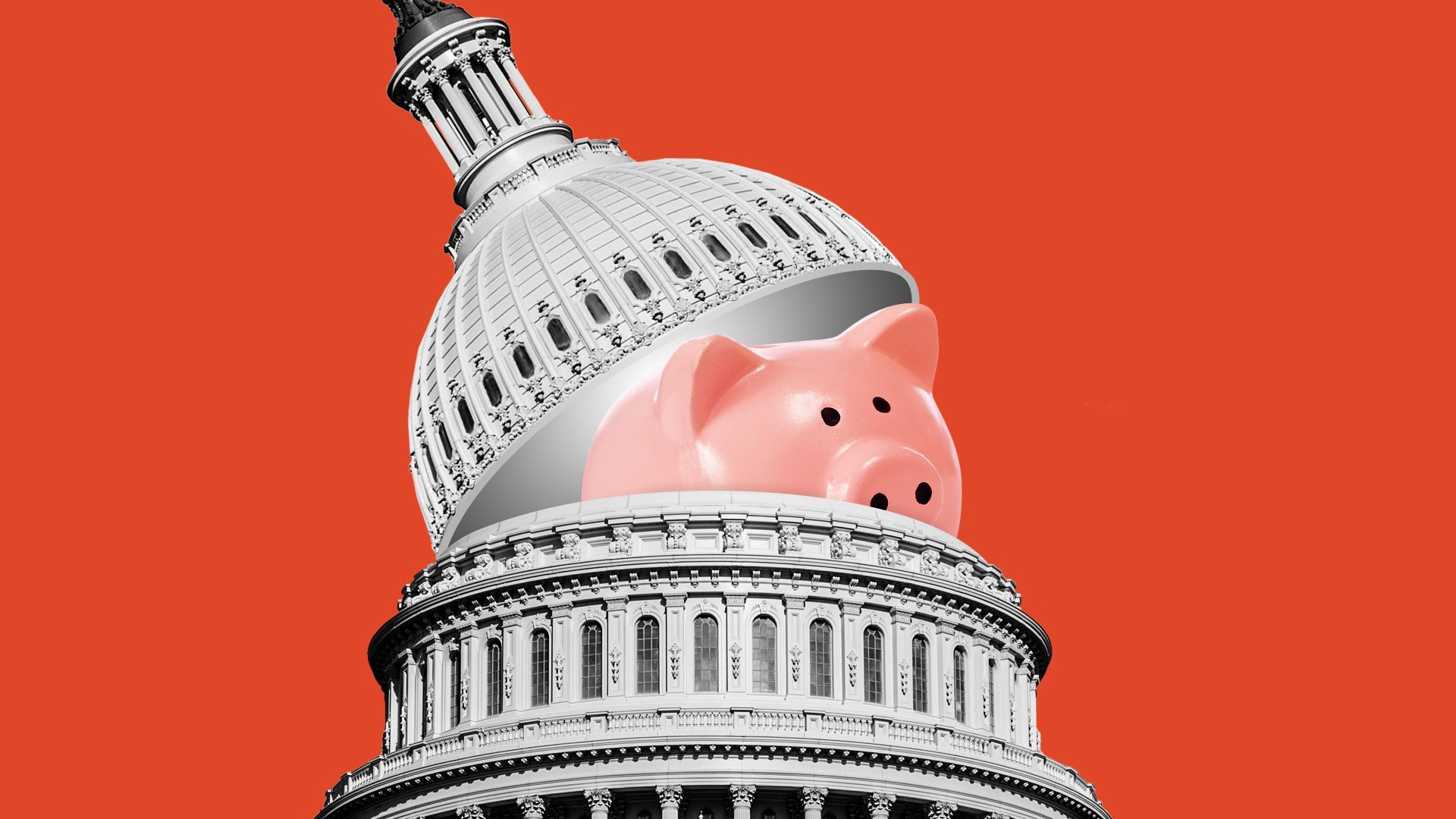
Some key Senate Republicans are expressing concern about a proposal to lower the federal share of spending on Medicaid expansion, saying it could trigger state budget challenges and coverage losses, Peter reports.
Why it matters: The proposal to lower the federal share of costs known as the FMAP has been touted by House Republicans as a way to help pay for tax cuts in the reconciliation bill but faces longer odds in the Senate.
What they're saying: "We're an expansion state.… We voted for it on the ballot, which is important, it's not even like it's a legislative deal," Sen. Josh Hawley told Axios.
- "I would want to hear if that's going to result in benefit cuts to Missourians. If it is, then I wouldn't support that."
- Nine states have "trigger" laws that would automatically eliminate Medicaid expansion if the Federal Medical Assistance Percentage drops below the current 90%. That would end Medicaid coverage for over 3 million people.
- Sen. Thom Tillis noted that his state of North Carolina is one of those.
- "You don't want to put 600,000 people in the state out of an option that they've opted into," he said, adding that he'd leave the door open to lowering the FMAP "over time."
The other side: House Energy and Commerce Chair Brett Guthrie has repeatedly touted the proposal, arguing that it is unfair that the program has a higher reimbursement percentage for able-bodied, working-age adults than for disabled people or children in traditional Medicaid.
- The conservative Paragon Health Institute has also backed the idea.
Between the lines: In the Senate, though, Republicans are hearing from their state leaders that the move could blow a hole in their budgets.
- "I've talked to my state folks about that. That would have a big impact on our state's budget," Sen. Shelley Moore Capito told Peter, while noting she is "trying to stay open to all ideas right now."
- "What state folks will tell you is if you take it from 90/10 down to whatever, 80/20, it's like whoa," Hawley said. "In Missouri we have a balanced budget amendment.… We're going to have to cut something."
- Asked if he was hearing from his state leaders on the issue, Hawley replied, "Oh yes, oh, believe me."
The bottom line: It's unclear how much Medicaid savings lawmakers will ultimately need to find. There could be pressure to look at the FMAP if the savings target is higher.
- President Trump has said he does not want to touch Medicaid other than "fraud," though it's unclear how much he will stick to that pledge.
- "The president said clearly, I was in the Cabinet room, we can't harm beneficiaries," Tillis said, pointing to the expansion enrollees in his state. "Well, you can't have a policy that affects 600,000 people and not harm beneficiaries."
2. Trump-won states had most ACA sign-up growth
/2025/04/02/1743607030652.gif?w=3840)
States that Trump carried last year had the biggest growth in Affordable Care Act marketplace coverage, largely thanks to enhanced premium tax credits that are due to expire at the end of this year, per a new KFF report.
Why it matters: The findings give Republicans another data point to consider as they decide whether to let the subsidies expire and face constituents' coverage losses before the midterms, Victoria reports.
What's inside: KFF studied ACA open enrollment data going back to 2020.
- As of 2025, 88% of the total growth in marketplaces since 2020 was in states that Trump won in the 2024 election.
- On average, states that voted for Trump in 2024 increased enrollment 157%, while states that voted for former Vice President Kamala Harris had only a 36% increase.
- This is the fourth year in a row with record-high ACA enrollment, with 24.3 million people having marketplace coverage. And enrollment in the ACA marketplace has more than doubled since 2020.
Zoom in: KFF also found that the 15 states with the most growth in ACA enrollment since 2020 were also states that Trump won in 2024.
- The six states where enrollment more than tripled since 2020 were Texas, Mississippi, West Virginia, Louisiana, Georgia and Tennessee.
State of play: So far, only two Republican senators, Lisa Murkowski and Thom Tillis, have publicly endorsed extending the enhanced ACA subsidies past 2025, citing concerns over the affordability of insurance in their states.
- Tillis is facing reelection next year, in what's likely to be a competitive Senate race. North Carolina's ACA enrollment rose 93% from 2020 to 2025.
- Trump hasn't weighed in on the ACA subsidies, though he slammed the health insurance program on the campaign trail.
3. Catch me up: FDA vape ruling, DOGE health cuts

- Vape decision: A unanimous Supreme Court ruled today that the FDA acted lawfully when it rejected applications for authorization from makers of flavored liquids used in e-cigarettes. More from NYT.
- DOGE cuts: The federal health cuts included a little-known HHS bureau that was trying to recoup more than $1 billion in improper payments disbursed to providers during the pandemic, Fierce Healthcare reports.
- A messaging problem: The White House is so frustrated by the lack of clear communications at Robert F. Kennedy Jr.'s HHS that it's set up a parallel press shop, Marc Caputo and Brittany Gibson report.
✅ Thank you for reading Axios Pro Policy, and thanks to editors Adriel Bettelheim and David Nather and copy editor Brad Bonhall. Do you know someone who needs this newsletter? Have them sign up here.
View archive