September 25, 2024


Yes, we smell jet fumes. But before Congress blows town, an unusual coalition of senators is laying the groundwork to make it easier to swap biosimilars with brand-name biologic drugs.
1 big thing: Next moves on biosimilars swapping

A biosimilars bill due to be marked up in the Senate HELP Committee tomorrow marks the latest step in congressional efforts to make it easier to swap the products for brand-name biologics to address high drug prices.
Why it matters: If approved, it would allow biosimilars to be deemed interchangeable with their brand-name equivalent once the biosimilar is approved by the FDA, and would loosen requirements for switching studies, Victoria reports.
- The bill mimics a proposal included in President Biden's FY25 FDA budget and also follows recent FDA guidance on interchangeability.
Yes, but: There's a chance the markup could be postponed if the Senate leaves town tonight.
The intrigue: The Biosimilar Red Tape Elimination Act shows how some Republicans are eager to take on brand-name drugmakers in certain areas and is cosponsored by conservative Sens. Mike Lee, Mike Braun, JD Vance and Rand Paul along with Democrat Ben Ray Luján.
- The drug industry opposes the measure, saying it would do away with important scientific standards and help PBMs shift patients to medicines that would boost their profits.
What they're saying: "Biosimilars would be the biggest immediate solution to high pharma health care costs," Braun told Victoria.
- "Pharma companies constantly tweak [biologics] to make them either delayed coming to the marketplace or just difficult to have them as a generic option," he added.
- A Lee aide told Victoria that it's the first time the bill has been slated for markup and that there still may be unspecified changes to work out with committee staff.
- The Biosimilars Council has urged senators to pass the bill, saying that "it will help ensure generic and biosimilar savings."
The other side: Meanwhile, PhRMA has come out against the legislation, saying the bill is "a concerning departure from the current standards for demonstrating and FDA flexibility in determining biosimilar interchangeability."
- "The bill would do away with important safeguards that protect patient safety without addressing the anticompetitive behavior by pharmacy benefit managers," said Andrew Powaleny, a senior director of public affairs at PhRMA, in a statement.
Catch up quick: The FDA issued draft guidance this summer stating that biosimilar manufacturers don't necessarily have to provide switching studies for their products to be deemed interchangeable with the reference drug.
- Switching studies are when a patient alternates between taking the biosimilar and the brand-name biologic to confirm they're interchangeable.
- A version of this was also included in Biden's FY25 FDA budget, in which the agency proposed getting rid of the statutory distinction between the approval standard for biosimilars and interchangeable biosimilar products.
- The FDA noted that the policy change would more closely align with current scientific understanding and harmonize U.S. regulations with jurisdictions such as the European Union.
What's next: Even if the markup is postponed, the bill is likely to come up after the election, along with a narrow patent reform bill also aimed at reducing high drug prices (see below).
2. What we're hearing: Cornyn rosy on patent bill
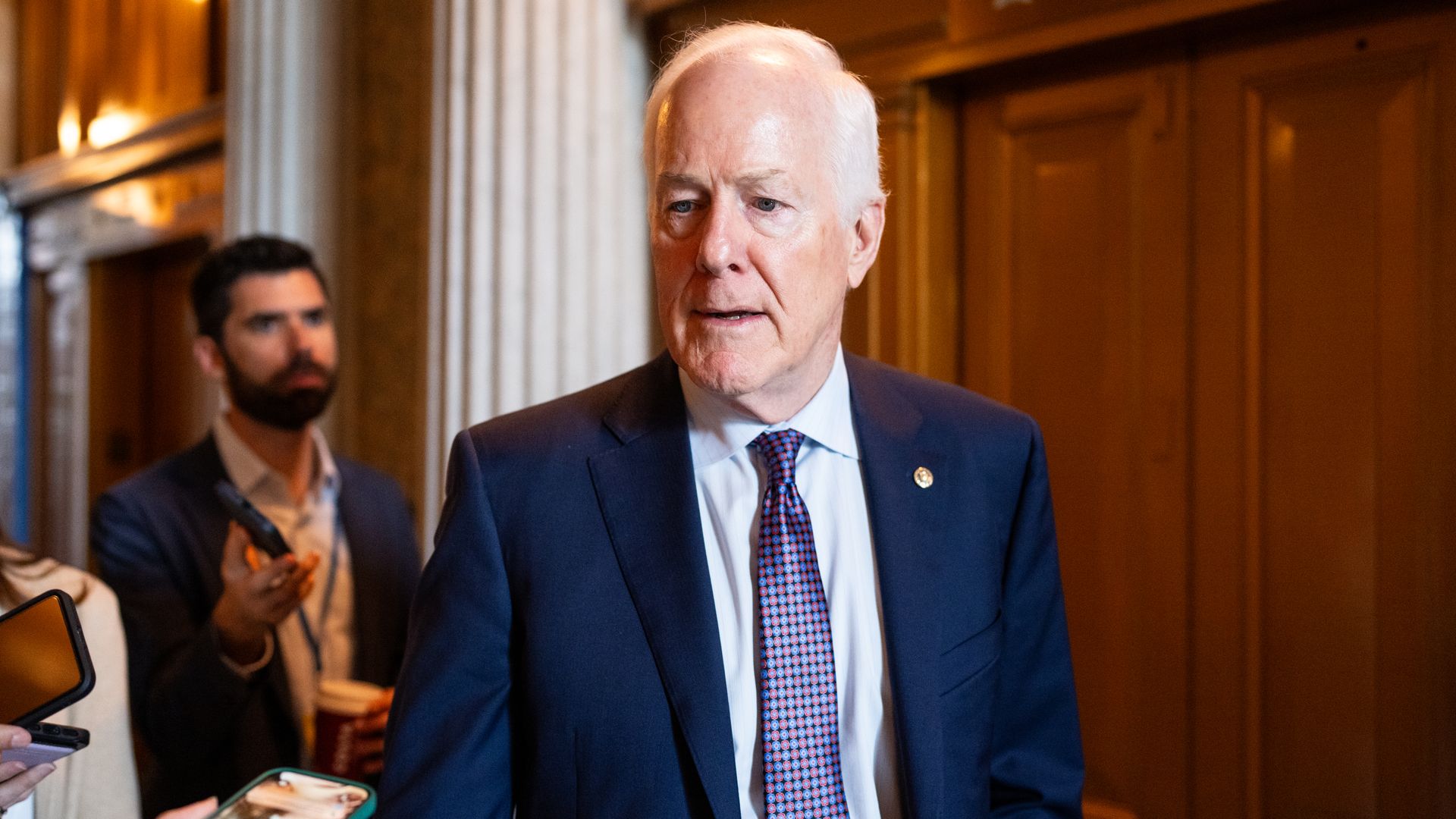
Sen. John Cornyn said he's confident that a bipartisan drug pricing patent bill he cosponsored will pass in the lame duck session, despite a holdup in the House this week, Peter reports.
Why it matters: The measure with Sen. Richard Blumenthal would address high drug prices by cracking down on "patent thickets" that brand-name manufacturers can use to delay competition from cheaper generics, and could be an attractive payfor for a prospective year-end health package.
What they're saying: "It saves about $1 billion, and so my understanding is people are looking at that billion dollars and wondering who gets to spend it," Cornyn told Peter yesterday. "So I think that's what's slowing it down a little bit, but I'm pretty optimistic it will pass."
The big picture: We wrote Monday that the bill was left off the House suspension calendar for this week.
- But a lame duck health package with plenty of extenders for expiring health programs, which will need to be paid for, could provide a convenient must-pass vehicle.
3. Catch me up: ACA subsidies, fraudulent billing

1. ACA subsidies: Senate and House Democrats today introduced legislation that would permanently extend the premium tax credits that lower the cost of ACA coverage and are due to expire at the end of next year.
- Sens. Jeanne Shaheen and Tammy Baldwin are the Senate leads, with Rep. Lauren Underwood carrying the House version.
2. Fraudulent billing: CMS finalized a rule that holds accountable care organizations harmless for spending connected to "highly suspect" billing for urinary catheters. The alleged false billing could involve as much as $3 billion. Background here.
3. Remote monitoring: More oversight is needed to track possible fraud in the remote monitoring of Medicare patients, HHS' inspector general warned in a report.
✅ Thank you for reading Axios Pro Policy, and thanks to editors Adriel Bettelheim and David Nather and copy editor Brad Bonhall. Do you know someone who needs this newsletter? Have them sign up here.
View archive