June 11, 2024

Happy Tuesday! A case before the Supreme Court could leave Congress spelling out intricate details of health policy that are now delegated to federal agencies.
You're invited: Join Peter and Victoria on Thursday at 12:30pm ET for a virtual discussion and live Q&A on what's next for legislation affecting hospitals. Reserve your spot today.
1 big thing: Congress' looming policy burden

Illustration: Sarah Grillo/Axios
A closely watched case at the Supreme Court could put Congress on the hook for spelling out Medicare payment policies, responses to scientific advances and myriad other federal health initiatives, Victoria reports.
Why it matters: Justices will rule within weeks whether to overturn the decades-old legal doctrine called the "Chevron deference" that gives executive branch agencies discretion to interpret unclear laws or ones subject to more than one interpretation.
- Dialing back federal health agencies' expertise could result in widespread confusion and make Congress an arbiter on technical matters when it's struggled to just keep the government funded and punted on reauthorizing major programs.
- "It seems like there could be a very significant backlog," said Michelle Long, a senior policy analyst for the patient and consumer protections program at KFF.
Between the lines: Chevron has been a target of conservatives who support broad deregulatory efforts.
- The case itself surrounds fishing regulations, but health experts say a rollback could trigger a wave of litigation and hinder the administration of programs like Medicare and Medicaid.
Lawmakers may wind up with much more of a say on Medicare payments to health providers, what constitutes a public health emergency, and the regulation of preventive health services and drug approvals.
- Chevron came into play in deciding the duration of short-term health plans, a Trump administration initiative that was challenged and then upheld on the basis of Chevron.
- Down the road, Congress may also have to sort out rules for how AI and automated processes are used to make coverage decisions in employer-sponsored health plans regulated by ERISA.
What they're saying: Some of the biggest challenges Congress will face are making legislative language much more specific, since many bills now leave a great deal of latitude to agencies.
- "They will have to be more explicit in how they craft and the language that they use for legislation," said Long.
- "In a world in which Congress is going to need to potentially be more hands-on, it's going to be more and more important to have built-in talented staff to work on this," said Zach Baron, director of the health policy and law initiative at Georgetown's O'Neill Institute.
Yes, but: Even if the Supreme Court does overturn or narrow Chevron, agencies will still have some authority and there are other types of legal frameworks that could be used to defend their discretion.
2. Sanders looks to subpoena Novo president
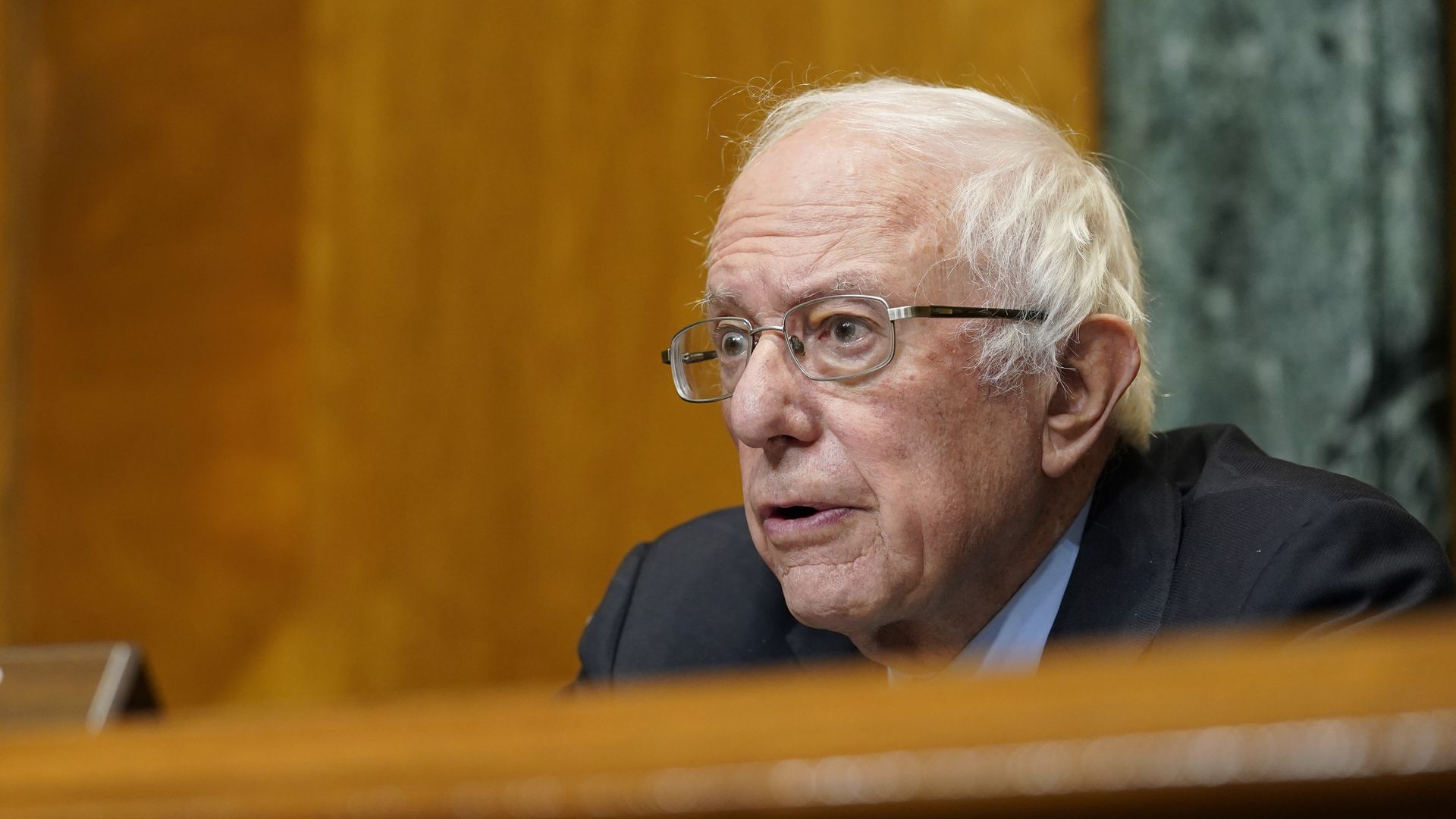
Sanders. Photo: Susan Walsh-Pool/Getty Images
Senate HELP Chairman Bernie Sanders said today the committee will vote next Tuesday on subpoenaing the president of Novo Nordisk to testify on pricing for its blockbuster anti-obesity drugs Ozempic and Wegovy.
Why it matters: It is an escalation in Sanders' pressure campaign to lower the prices for the blockbuster drugs, which sell for considerably less abroad, Peter reports.
What they're saying: "The American people — Democrats, Republicans and independents — are sick and tired of paying, by far, the highest prices in the world for prescription drugs," Sanders said.
- He said the U.S. prices of Wegovy and Ozempic were far higher than the prices paid in other countries.
- The committee sought voluntary testimony, but the company had refused, he said.
The other side: A representative from Novo Nordisk said the company had offered a range of dates to voluntarily testify alongside other stakeholders in the drug pricing system, such as PBMs.
- The company said it had been responsive to Sanders' staff and that a subpoena is "unnecessary."
What's next: Earlier this year, Sanders scheduled a subpoena vote for other drug company executives, but ended up canceling it when they agreed to voluntarily testify.
- Subpoenas are quite rare for the HELP Committee.
3. NIH hit for misrepresenting risky mpox research

Illustration: Rebecca Zisser/Axios
NIH misrepresented risky research on mpox — previously known as monkeypox — and denied that the work was proposed and approved when queried by Congress, a new House Energy and Commerce Republican staff report concludes.
Why it matters: The findings raise more questions about whether NIH conducted or assisted in risky "gain of function" research — a common investigative theme House Republicans have pursued this session, Victoria reports.
What's inside: The report details an experiment described in a 2022 Science magazine interview with an NIAID researcher that envisioned inserting segments of a lethal strain of mpox into a more transmissible strain of the virus.
- After repeated denials, HHS ultimately admitted that the research team had been granted approval for the experiment in 2015 but that the work wasn't done as envisioned.
- The report lays out recommendations around biosecurity to ensure future transparency, including potentially requiring an independent board to approve gain of function experiments.
NIH didn't immediately respond to a request for comment.
Between the lines: Gain of function research can be valuable in predicting future pandemic threats, but it can also generate risks by introducing new, potentially more dangerous viruses.
- There is debate over the technical definition of such research, as former NIAID director Anthony Fauci highlighted in his testimony before the House's COVID Select Subcommittee last week.
4. Catch me up: E&C markup, Medicare solvency

Illustration: Tiffany Herring/Axios
1. 13-bill markup: House Energy and Commerce is set to mark up a set of mostly non-controversial health bills starting Wednesday at 10am ET, including one to streamline out-of-state Medicaid screening and enrollment for kids with complex medical conditions and a measure to enhance states' Medicaid validation process to cut down on fraud.
2. Medicare solvency: The House Budget Committee has a hearing on Medicare and Social Security solvency and the programs' effects on the federal budget this Thursday at 10am ET.
3. Long COVID: The National Academies of Science, Engineering and Medicine this afternoon is laying out a new working definition of long COVID encompassing the signs, symptoms and conditions following initial infection.
4. Hospital lawsuit: The Supreme Court will review a lawsuit brought by more than 200 hospitals that serve low-income populations that accuses Medicare of shortchanging them by about $1.5 billion a year. More from Reuters.
✅ Thank you for reading Axios Pro Policy, and thanks to editors Adriel Bettelheim and David Nather and copy editor Amy Stern. Do you know someone who needs this newsletter? Have them sign up here.
View archive