March 14, 2024

Weekend's calling, gang. Here's the very latest on the eleventh-hour push to get PBM reforms into the next government spending package.
- We'll be back in your inbox as soon as details emerge on the HHS portion of the spending deal.
📅 Join us in D.C. on March 20 at 6pm ET for a reception examining ways to improve kidney care. Guests include Rep. Mike Kelly and American Kidney Fund CEO LaVarne A. Burton. Register here to attend.
1 big thing: A late push on PBM reforms

Illustration: Sarah Grillo/Axios
The top lawmakers on the Senate Finance Committee pushed on multiple fronts today to try to wrap a PBM overhaul into the second government funding package — including appealing for help from the White House, Peter reports.
Why it matters: The six-bill minibus is likely the last legislative vehicle for such policy changes before the election.
What they're saying: Finance Ranking Member Mike Crapo tried to enlist the Biden administration's help at a hearing this morning with HHS Secretary Xavier Becerra on the department's FY25 budget request.
- "I'm asking now that the president step up and use the bully pulpit to get this legislation moved in this Congress," Crapo said, noting that the budget was silent on PBMs.
- Becerra pledged to work with the committee and referenced a recent White House listening session on PBMs that was at times highly critical of the drug supply chain players.
- The Finance Committee last year advanced a package that would have changed the way PBMs are paid in Medicare, by no longer tying compensation to the price of drugs.
Between the lines: Finance Chair Ron Wyden told Axios today that he recently spoke with House Energy and Commerce Chair Cathy McMorris Rodgers about PBM legislation.
- He declined to get into specifics, including whether there was any progress bridging a divide over whether changes should be limited to Medicare or extended to commercial health insurance.
Wyden and Crapo also jointly appeared at an event with pharmacists this morning outside the Capitol calling for action on PBMs. Crapo said at the event that he hoped for action "within the next few days."
Reality check: Often, lawmakers use public events to ramp up pressure when behind-the-scenes talks haven't borne fruit.
- Negotiators also are dealing with a range of contentious non-health issues to get the funding deal done and may be reluctant to add complicated health policy to the mix.
2. Senate plan would coordinate dual-eligible care
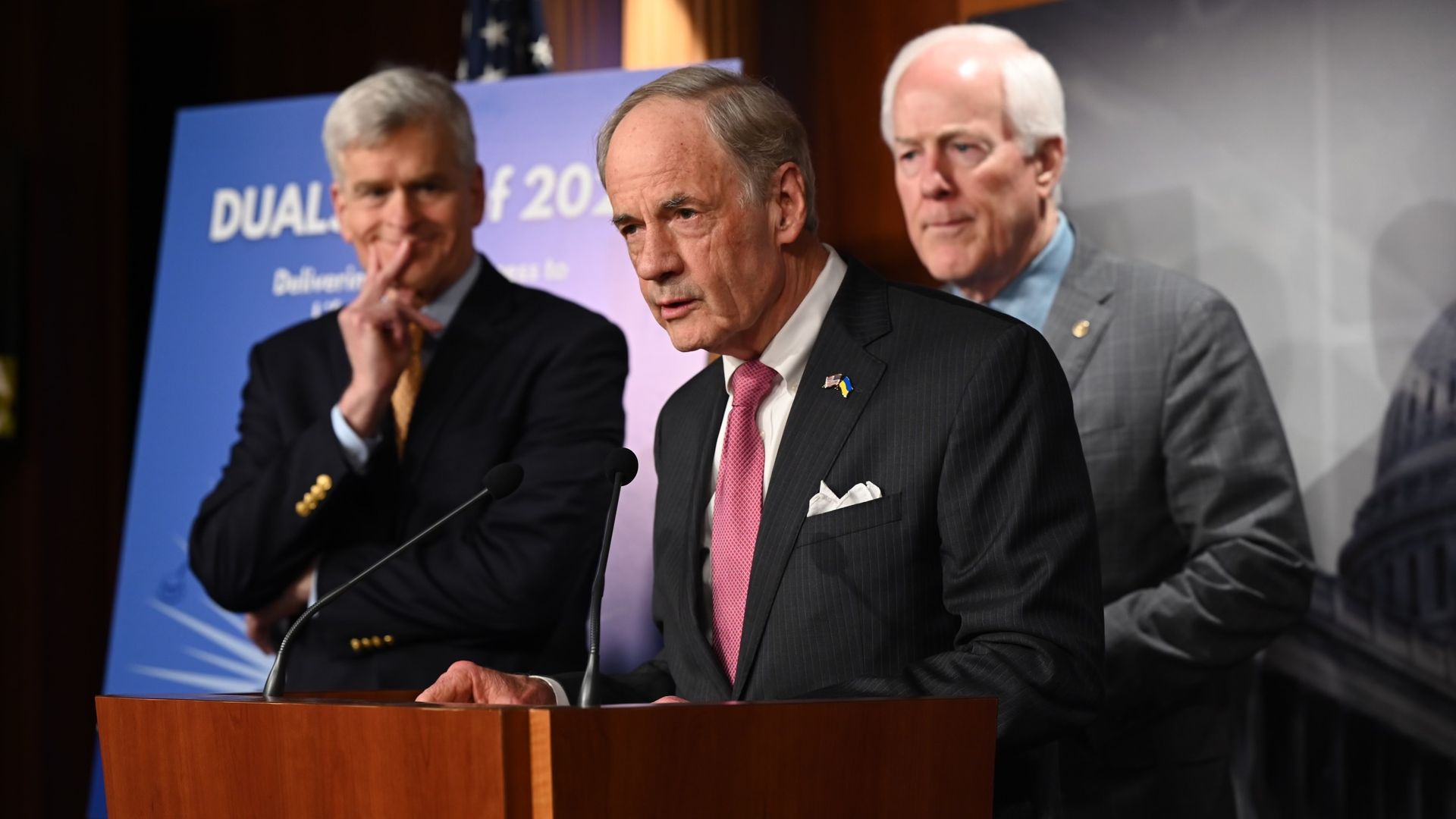
Carper at a press conference on dual eligibles. Photo: U.S. Senate photographer
A bipartisan group of senators today outlined a plan for integrating Medicare and Medicaid services for the more than 12 million people who are eligible for both programs, Victoria reports.
Why it matters: The programs aren't linked, and so-called dual eligibles often have trouble navigating between them to obtain care, long-term services and medical equipment.
What's inside: The DUALS Act of 2024 would require states and CMS to develop and implement a single integrated health plan for all dual-eligible beneficiaries.
- It would designate a care coordinator for each beneficiary to help assess plan offerings, as well as try to reduce third-party marketing of multiple plans targeted at beneficiaries.
- The legislation is sponsored by Sens. Bill Cassidy, Tom Carper, John Cornyn, Mark Warner, Tim Scott and Bob Menendez. The group has been working on the bill for several years.
By the numbers: 12.2 million mostly low-income patients with complex medical needs are jointly enrolled in Medicare and Medicaid.
- Despite making up a small percentage of total federal health program enrollees, dual eligibles account for a disproportionate share of spending.
- They could generate billions of dollars for health insurers that manage entitlement benefits, because the cohort is expected to grow and generates higher levels of reimbursement.
- Lawmakers argued that their legislation would help reduce federal spending while improving health outcomes.
What's next: Cassidy said the group has discussed the bill with leaders of the Senate Finance Committee.
- Carper said he planned to seek out Rep. Lisa Blunt Rochester, a member of the House Energy and Commerce Committee, today about taking up the cause on the House side.
✅ Thank you for reading Axios Pro Policy, and thanks to editors Adriel Bettelheim and David Nather and copy editor Brad Bonhall.
- Do you know someone who needs this newsletter? Have them sign up here.
View archive