
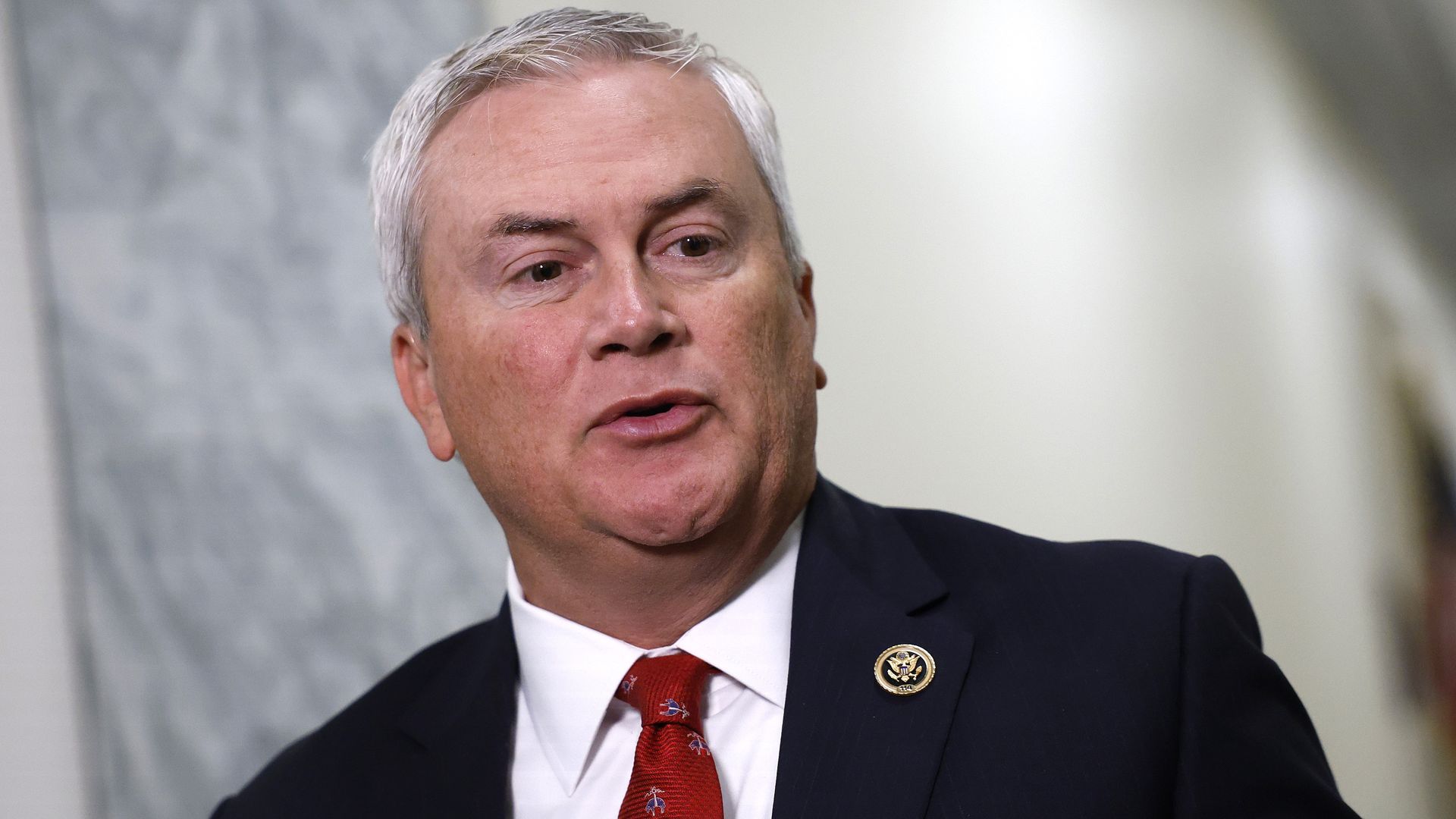
Comer at the Capitol in July. Photo: Kevin Dietsch / Getty Images
The House Oversight Committee is opening a new front in its investigation of PBMs with an inquiry into their use of foreign entities to allegedly evade U.S. oversight.
Why it matters: PBMs are facing continued heat from both parties for what critics say is a lack of transparency and the companies' role driving up drug spending. The latest investigation is targeting a tool that the industry could be using to get around some of this scrutiny.
Driving the news: House Oversight Committee Chair James Comer on Thursday sent letters, first shared with Axios, to two of the biggest PBMs, pressing them about the use of foreign-headquartered entities known as group purchasing organizations (GPOs).
- The letters went to Cigna, the parent of the PBM Express Scripts, and to UnitedHealth's Optum Rx.
- They point to Express Scripts having a GPO called Ascent Health Services that's headquartered in Switzerland, while Optum has Emisar Pharma Services, headquartered in Ireland.
- Optum said Friday that Emisar is headquartered in Delaware, and has employees in both the U.S. and Ireland.
What they're saying: "Ascent, which Cigna Group's Express Scripts created in 2019 and headquartered in Switzerland, appears to be yet another example of the institutional intent at opacity and avoidance of oversight of your company," Comer writes to Cigna CEO David Cordani.
- "The committee is concerned that your company's opaque business practices and relationships, including the creation of new corporate structures abroad, combined with unchecked integration, is hurting patients and costing taxpayers," Comer added in the letter to Optum Rx CEO Patrick Conway.
- The committee is requesting a range of documents, including internal communications about the decision to form the overseas entity.
The other side: "PBMs support and practice transparency that allows employers to make cost-effective choices, and keep patients informed. This work is critically important to pushing back on drug companies' high prices," said Greg Lopes, a spokesman for the PBM trade group PCMA.
- "The committee's continued focus solely on PBMs misses the mark and will do nothing to lower drug costs. Drug prices, set solely by drug companies, are the root cause of high drug costs," he added.
- Cigna and Optum did not immediately respond to requests for comment.
The big picture: PBMs have been facing oversight scrutiny for years, including at an Oversight Committee hearing in July 2024 at which the top three companies' executives were pressed by both parties.
- PBMs say they are the only part of the drug supply chain that is actually trying to lower costs. They contend that drug companies are trying to shift blame onto them so that the manufacturers don't have to lower prices.
- Legislative efforts are also aimed at PBMs, including a move to "delink" their compensation from the price of a drug in Medicare Part D, and impose new transparency requirements.
- Those legislative efforts were due to be wrapped into December's government funding deal until Elon Musk helped torpedo the broader package. It remains to be seen whether there is appetite to revive parts of the package this year.
The story has been updated with comment from Oprtum and the trade group PCMA.
