

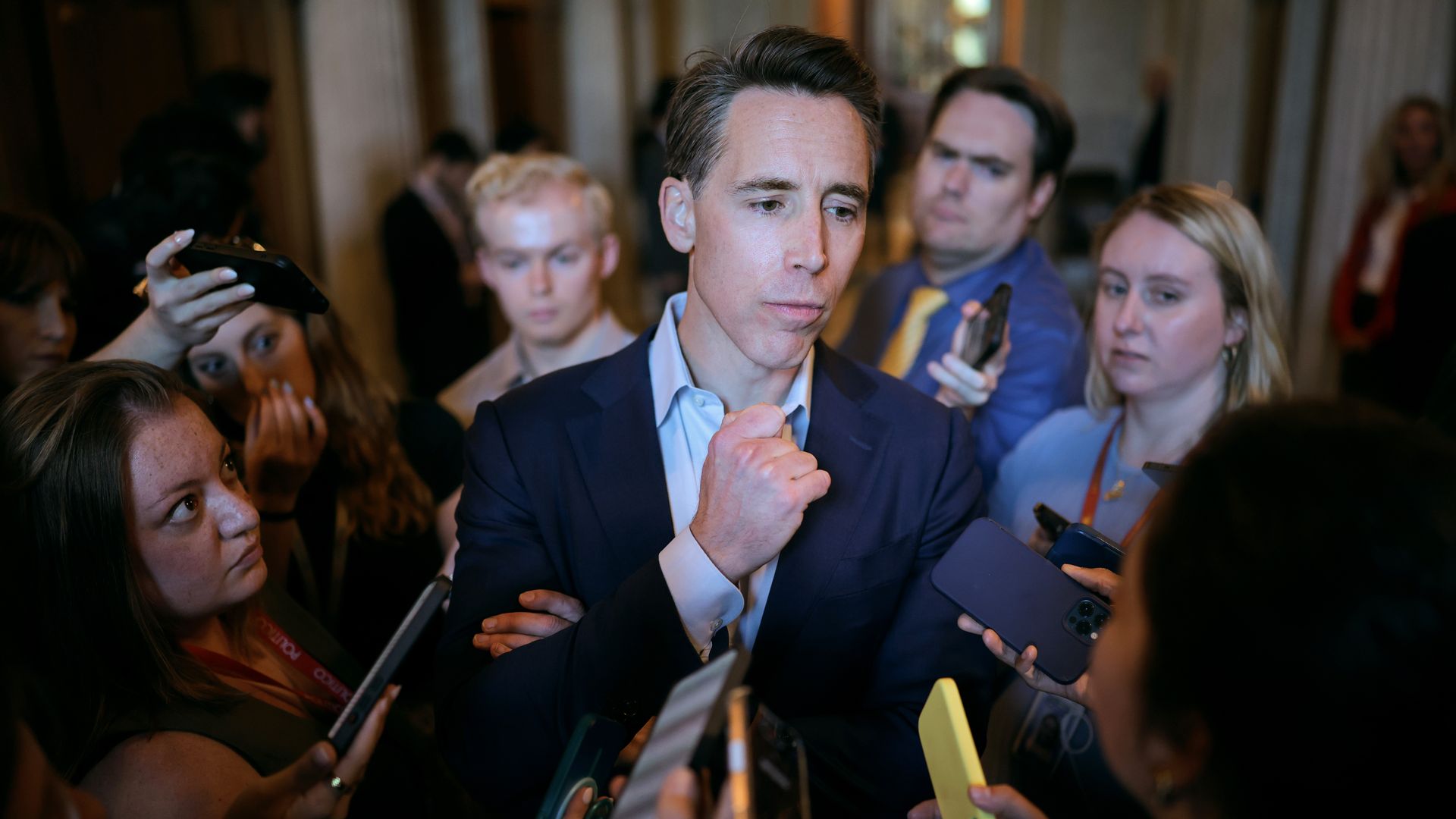
Hawley in the Capitol. Photo: Kayla Bartkowski / Getty Images
The Senate's deeper cuts to Medicaid funding in the reconciliation package are setting off alarms with some GOP senators, complicating the path to passage ahead of a vote as soon as next week.
Why it matters: Senators placed further limits on Medicaid provider taxes and state-directed payments that are a major concern for hospitals that could lose funding, including rural facilities that are a key constituency for many senators.
What they're saying: Sen. Josh Hawley said he was "alarmed" and "really, really surprised" by the provider tax changes that emerged in the Senate Finance Committee text.
- "It just baffles me," he told reporters Monday night. "I'd invite them to come explain that to people in Missouri: We're going to close your hospitals in rural America so we can pay for Green New Deal subsidies that Joe Biden championed? I mean, good Lord."
- Sen. Susan Collins said after a briefing for GOP senators Monday night that she also has concerns about the provider tax measures, though she wouldn't elaborate.
- Hawley also told reporters he was unhappy with the way the text retained a House cost-sharing provision that would require a $35 copay for Medicaid enrollees. "That's not good," he said. "It sounds to me like this needs some work."
Driving the news: Hospitals, which already had concerns with the House-passed language, are sounding increasingly loud warnings.
- American Hospital Association CEO Rick Pollack said the Medicaid cuts "will strain emergency departments as they become the family doctor to millions of newly uninsured people" and could "force hospitals to reconsider services or potentially close, particularly in rural areas."
The other side: Hardline conservatives like Sen. Ron Johnson are pulling in the opposite direction, saying the bill doesn't go far enough in reducing the deficit.
- Johnson told reporters Monday that if the package went to the floor as is he would vote "no," and he didn't think it could be fixed by the July 4 recess.
Further complicating matters are different factions in the House who are expressing their dissatisfaction with the Senate's changes to the bill.
- Rep. Jeff Van Drew said in a statement that he opposed the Senate changing the provider tax provision and it was "a nonstarter" for him. Van Drew was one of the House's Medicaid holdouts who pushed against some of the more stringent savings proposals.
- Other points of contention for House lawmakers outside of health include the Senate's changes to the SALT cap and moderating the energy tax credit phaseouts.
