Provider tax freeze becomes latest reconciliation hurdle


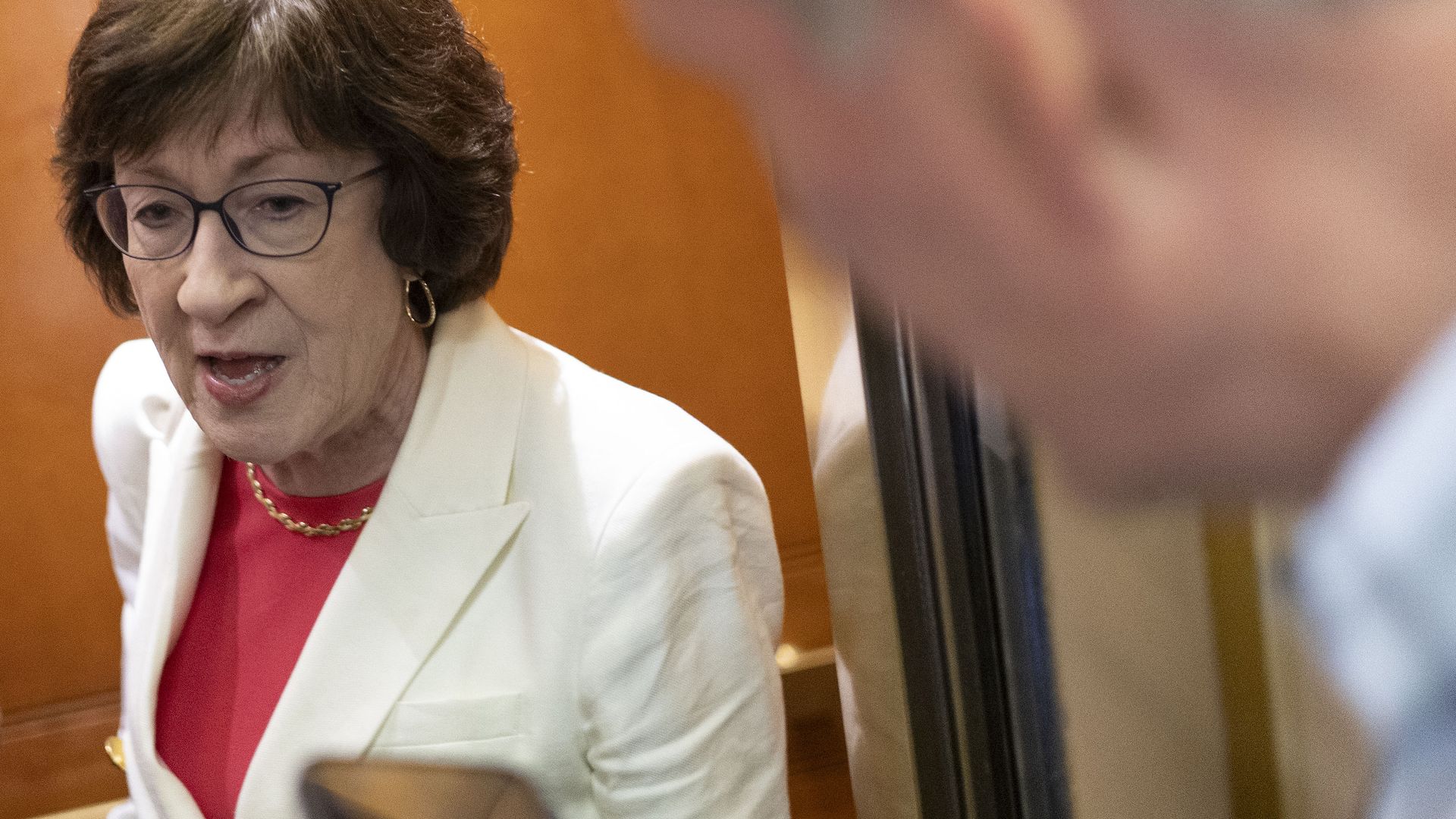
Collins in the Capitol. Photo: Alex Wong / Getty Images
Senate GOP Medicaid holdouts are signaling they are on board with Medicaid work requirements in the House-passed reconciliation package but have concerns over the provider tax provisions and their possible impact on rural hospitals.
Why it matters: To win enough votes in the Senate, Republicans will have to address how states can tax providers to help pay for their share of Medicaid costs. There's more consensus around work requirements, a major source of coverage losses.
What they're saying: Sen. Susan Collins told reporters Monday that she finds the House work requirement "acceptable" but has questions about a moratorium on new provider taxes and its effects on program finances.
- "I'm very concerned about not only low-income families but our rural hospitals," she said.
- "If rural hospitals close, what's the difference between that and a benefit cut?" said Sen. Josh Hawley, who said he spoke with President Trump on the phone Monday and that they agreed they didn't want to cut Medicaid benefits.
- Hawley said he told Trump that his issue with provider taxes was freezing them at the current rates, which he said would put rural hospitals in his state in a "very bad condition."
- Sen. Jim Justice was also concerned about the provider tax, telling reporters Monday that if the tax is restricted, "the state is either going to have to bail out or you're going to have a lot of nursing homes really get hurt."
Between the lines: Another sticking point for Hawley is the way the House bill would require a co-pay for Medicaid beneficiaries to see a doctor. He likened it to a "sick tax" on low-income people.
State of play: Senate Republicans will meet throughout the week to try to work out the final details of the bills.
- It's expected that some bill text for the committees with jurisdiction over less controversial provisions may roll out this week.
- But the Senate Finance portion that will contain both the tax and the Medicaid measures is likely to be one of the last to emerge.
The big picture: Senate leaders are trying not to make sweeping changes as they push an ambitious timeline of passing the measure by the July Fourth recess.
- While moderates are concerned that the provider tax measures already go too far, lobbyists are on guard for the possibility that Senate leaders could seek to go beyond a freeze and lower the provider tax threshold or adjust state-directed payments.
- Both options would generate additional savings but could result in billions of dollars in cuts to federal Medicaid funding.
