
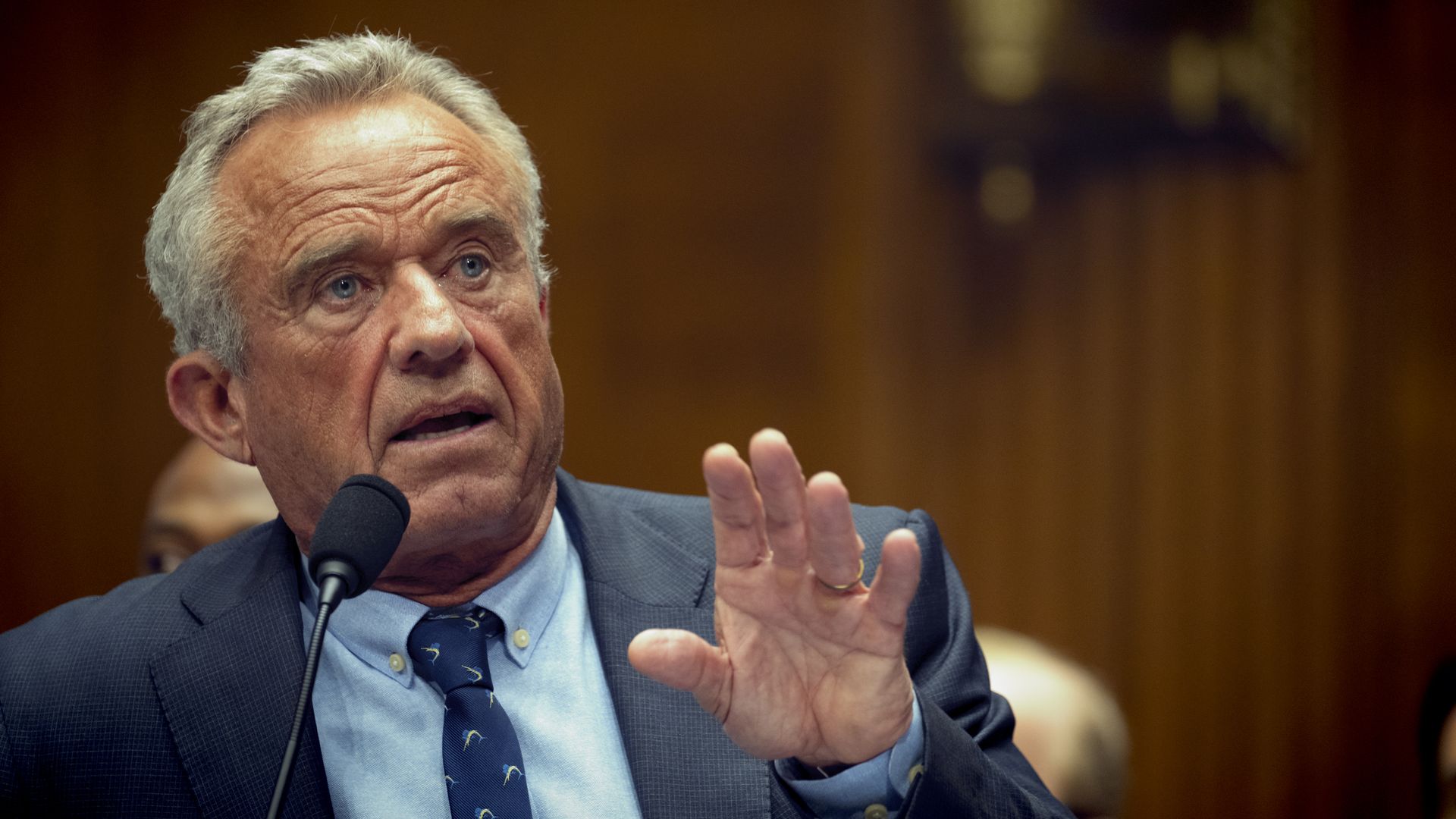
Kennedy at the Senate HELP Committee last week. Photo: Marvin Joseph / The Washington Post via Getty Images
HHS Secretary Robert F. Kennedy Jr. doubled down on pledges to address chronic disease and consolidate federal health programs in testimony before Senate appropriators Tuesday.
- It was the third time in a week that Kennedy has defended the Trump administration's FY26 budget priorities on the Hill, and while he faced pointed criticisms from Democrats, senators on both sides of the aisle reiterated their support for biomedical research.
Catch up quick: Trump's budget proposed deep cuts for HHS and its operating agencies, including almost $18 billion in cuts to NIH.
- It also proposed a $3.6 billion cut to CDC.
What they're saying: Senate Appropriations Labor-HHS Chair Shelley Moore Capito offered muted criticism of Kennedy's reorganization of the federal health bureaucracy and encouraged him to work closely with Congress.
- "I am concerned that our country is falling behind in biomedical research. This should be a concern that we all share and make investments in," Capito added, listing some medical treatments that NIH helped develop.
Capito also criticized the layoffs of occupational safety workers in her home state.
- "I support the president's vision to right-size our government, but as you and I have discussed, I do not think eliminating NIOSH programs will accomplish that goal," she said. "I encourage you to look closely at all of NIOSH's offices and bring back additional critical staff."
- Senate Appropriations Chair Susan Collins pressed Kennedy to restore the low-income home energy assistance program that the FY26 budget seeks to eliminate, and Kennedy responded in the affirmative.
The other side: Labor-HHS Appropriations Ranking Member Tammy Baldwin pressed Kennedy on who was making the decisions on terminating NIH funding grants, and whether DOGE was the entity making the final call.
Kennedy said his priorities for HHS included consolidating programs to better tackle mental health and addiction, combating the opioid crisis, addressing nutrition and physical activity, and emphasizing healthy eating.
- He also said he was equipping the FDA to remove harmful chemicals from food and ending gain-of-function research at NIH.
