
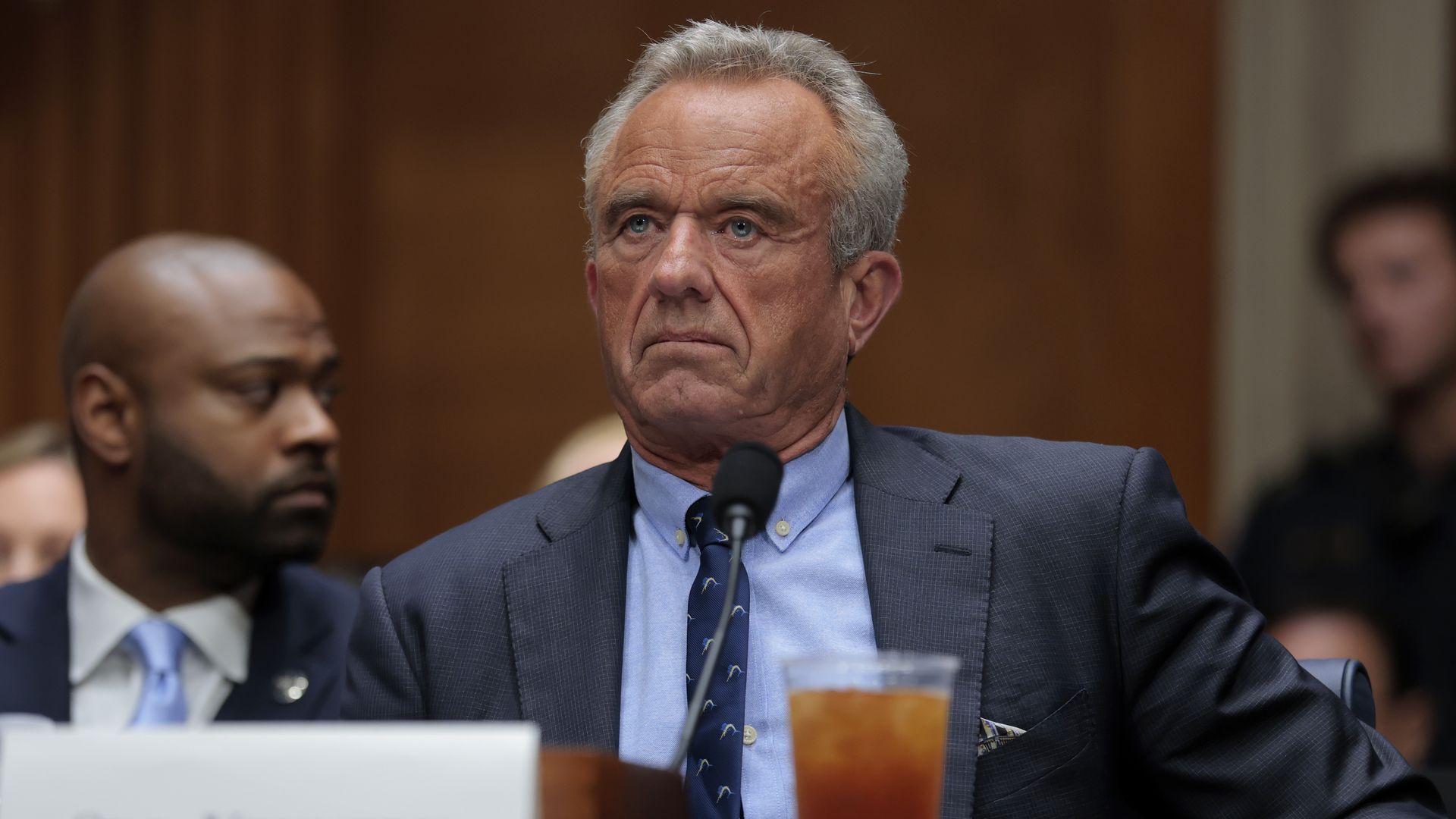
Kennedy Jr. testifies before the HELP Committee. Photo: Anna Moneymaker/Getty Images
HHS Secretary Robert F. Kennedy Jr. on Wednesday faced House and Senate lawmakers for the first time since being confirmed — and didn't backtrack from some of his most controversial views on vaccines and federal research cuts.
Here are five takeaways from his appearances before the House Appropriations and Senate HELP committees:
1. Kennedy didn't categorically recommend the measles vaccine
Under intense questioning from Sen. Chris Murphy, Kennedy did not definitively say that people should get the measles vaccine.
- "Are you recommending the measles vaccine or not?" Murphy said.
- "I am not going to just tell people everything is safe and effective if I know that there's issues," Kennedy responded.
- "I said at the hearing this morning that I was recommending the measles vaccine," Kennedy then replied.
- Kennedy appeared to be referring his statements at the Appropriations hearing that he "probably" would give the measles vaccine to his child if he had one today.
- Adding to the confusion, under questioning from Sen. Maggie Hassan, Kennedy then did appear to recommend the measles vaccine. "I've said that the best way to stop the spread of measles is through vaccination," he said.
The bottom line: Kennedy did not consistently and clearly recommend the measles vaccine under different questions throughout the day.
2. HELP Chairman Bill Cassidy was not an aggressive questioner
Cassidy was perhaps the most closely watched senator going into today's hearings, given his public struggle during the confirmation process with whether to confirm Kennedy given his vaccine criticism.
- Cassidy took a more measured approach during his questioning today, and did not focus on vaccines.
- Cassidy had pressed for the hearing, saying it was a way for Kennedy to "set the record straight" on his moves at HHS, rather than "anonymous sources" in the press.
- That's not to say Cassidy did not press Kennedy on some fronts. For example, the chairman asked about the shuttering of HHS's "long COVID" office.
- Kennedy said that was driven by the White House but he is committed to long COVID research.
3. Kennedy tried to reassure on layoffs
Kennedy faced a range of questions about HHS's paring of the federal health workforce, including FDA and CDC employees.
- He and lawmakers sometimes seemed to be talking past one another, with Kennedy insisting that vital functions had not been harmed, and that the department was simply being streamlined.
- When lawmakers brought up specific problems, Kennedy assured them he would look into them.
- For example, when Sen. Patty Murray pointed to a constituent of hers whose cancer care at the NIH clinical center was delayed for weeks because of the cutbacks, Kennedy said "I don't think that should happen to anybody" and asked for the patient's information.
4. NIH cuts drew bipartisan concern
Senate Appropriations Chair Susan Collins pressed Kennedy on the department's move to cap NIH funding for universities' overhead research costs at 15%.
- The move has set off alarm from universities and researchers who say the move amounts to damaging cuts that will undermine biomedical research.
- Collins called the move "arbitrary" and "one size fits all" and said it would hurt basic research.
- Kennedy defended the move as being in line with how private foundations fund research, but also referred to "a plan" for how to address the issue at places like the University of Maine and University of Alabama, which he said he would share in private.
- HELP Ranking Member Bernie Sanders pointed to a report his staff released finding NIH has dispensed 35% less funding for researchers so far this year compared to last year.
5. Kennedy and Bernie Sanders find some common ground
Some of the less divisive moments came between the odd couple of Sanders and Kennedy when it came to lowering drug prices.
- Kennedy said he "absolutely" would work with Sanders on legislation to lower U.S. drug prices to be in line with what other countries pay.
- Sanders noted President Trump's executive order on drug pricing this week, but said it is likely to be thrown out in court and legislation is needed to make lower prices actually take effect.
- Passing legislation is unlikely, though, given the more traditional free market drug pricing ideas of GOP congressional leadership.
