
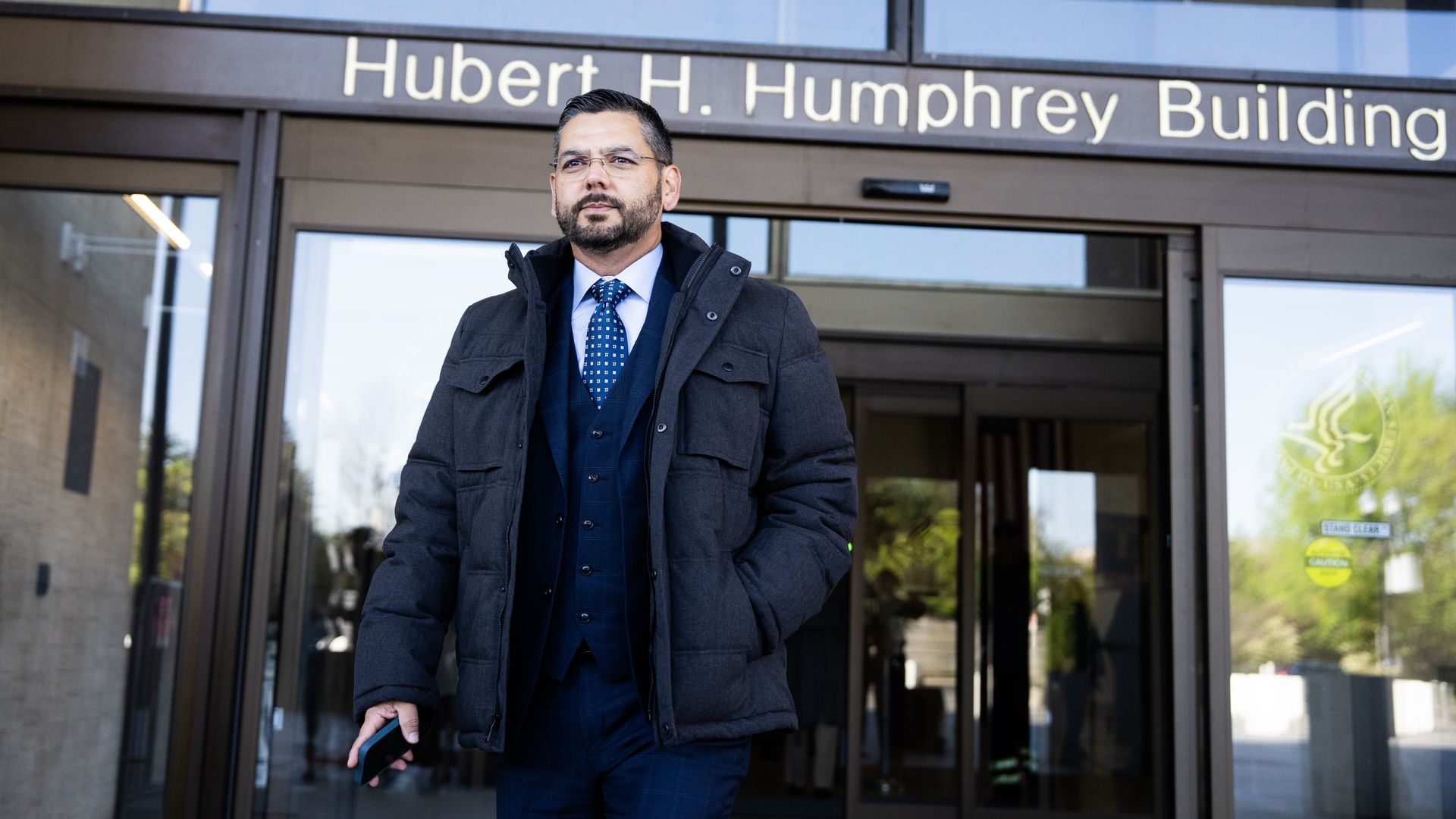
Ruiz outside HHS headquarters. Photo: Tom Williams / CQ-Roll Call via Getty Images
The Medicaid debate is giving Democratic physician-lawmakers an opening to highlight issues of access and affordability — and the damage they say Medicaid cuts would inflict on doctors and hospitals.
Why it matters: A newly launched Democratic Doctors Caucus views hammering Republicans on potential cuts to the Medicaid program as a political winner — and could pair the issue with what the lawmakers contend is anti-science sentiment that's endangering public health.
State of play: Democratic-aligned groups have been trying to increase the ranks of Democratic doctors in the House.
- In the House, up until now, Reps. Raul Ruiz, Ami Bera and Kim Schrier have been outnumbered by a GOP Doctors Caucus whose membership has ranged from 10 to 20.
- But with the election of freshmen Kelly Morrison, Maxine Dexter and Herb Conaway, the Democrats gained "critical mass," in Ruiz's words, and formally launched the caucus in March.
Driving the news: Ruiz, an emergency physician from Coachella, California, said the group wants to showcase policies that would improve access to care, reduce costs and protect the integrity of public health systems. He also sees a role in combating misinformation, including from federal agencies.
- He said the group is emphasizing how Medicaid cuts would reduce access to health care for everyone by not just cutting insurance coverage but also reducing resources to physicians and hospitals.
- "We are on the front lines of really speaking to the health effects on not just people who use Medicaid, but even people who are not on Medicaid," he said.
- "In my district, there are several hospitals that function within the margins.… If there's any significant Medicaid cuts, then they would have to close their doors."
The big picture: Morrison, an OB-GYN who practiced in Minnesota for over 20 years, sees the caucus as a voice "for protecting America's place as a huge generator of medical and scientific breakthroughs, and of expanding access rather than reducing access."
- HHS Secretary Robert F. Kennedy Jr.'s actions laying off thousands of health workers at HHS, and his statements around vaccines and the measles outbreak, have also been fodder for the lawmakers.
- The group held a press conference outside HHS headquarters protesting Kennedy's nomination and have regularly weighed in with critical statements on the effects of his staffing and funding cuts.
- "I would just stress again that we need to be supporting science as the starting point for policy making," said Conaway, a primary care physician from New Jersey, who said he and the other doctors plan to "continue to call [Kennedy] out when he puts forward outrageous policy proposals."
Reality check: Being in the minority means the physician-lawmakers can't really influence legislation other than through their rhetoric.
- They see potential openings to working with the GOP Doctors Caucus on issues like Medicare physician payment cuts, prior authorization and health care workforce shortages.
- But they say the history and difference in underlying philosophies can't be discounted.
- "When you consider that the GOP Doctors Caucus was formed kind of in opposition to the Affordable Care Act, and the Democratic Doctors Caucus is being formed when we're really trying to lean into standing up to protecting Medicaid … we're sort of coming from different places," Morrison said.
