

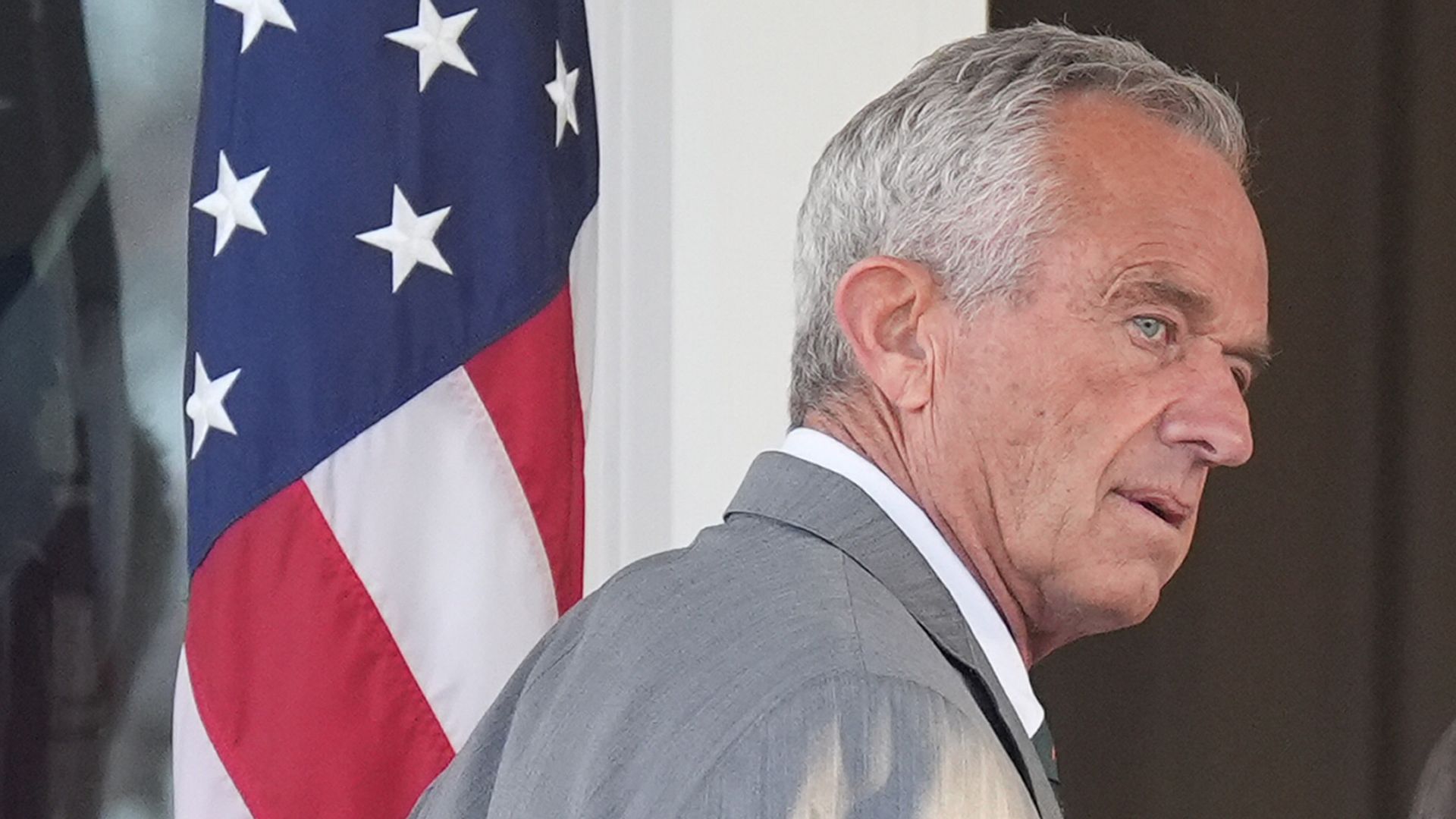
Kennedy. Photo: Niall Carson / PA Images via Getty Images
HHS Secretary Robert F. Kennedy Jr.'s sweeping changes to the federal health bureaucracy have ruffled feathers on the Hill, and not just Democrats'.
Why it matters: Canceled federal grants and programs, layoffs and dysfunction within the department are bumping up against Congress' power of the purse and testing relationships even with some Hill Republicans.
Here are four pressure points to watch as Congress returns from its break:
Layoffs and reorganization
Arguably Kennedy's biggest move so far was laying off a big swath of the federal workforce and reorganizing the department.
- 10,000 federal workers lost their jobs, including 3,500 at FDA and 2,400 at CDC.
- Congressional Democrats have loudly blasted the move as illegal, saying it threatens medical research, food safety and other vital health functions. Republicans are being more circumspect.
- But key Hill Republicans weren't briefed ahead of time about the March 27 announcement.
- An HHS spokesperson told Axios on Wednesday that bipartisan staff-level briefings with relevant congressional committees were completed last week, during which it was "explained that HHS is implementing changes in accordance with all statutes and executive orders."
- "We briefed the Hill before reorganization plans had been finalized to capture congressional feedback," the spokesperson said, adding that Kennedy would testify before six committees with health policy jurisdiction in May and "we remain committed to collaborating with our friends in Congress."
NIH indirect cost cuts
Even before Kennedy was confirmed, NIH in February announced that the agency was unilaterally changing how it reimburses research institutions for overhead and administrative costs.
- The policy change would cap indirect cost reimbursement at 15%, though many universities were receiving much higher percentages than that, with the average around 28% but some up to more than 60%.
- Universities, some of which are among the largest employers in their states, were rocked by the unexpected news and argued that the higher reimbursement rates were vital to keep key biomedical research going.
- At the time, Senate Appropriations Chair Susan Collins said she opposed the "poorly conceived directive imposing an arbitrary cap."
- Collins also pointed out that such a cap directly violated the FY2024 appropriations bill, which prohibited the use of funds to modify NIH indirect costs.
- The proposal is now tied up in court but continues to grate on lawmakers from both parties.
Canceled grants
DOGE-directed cuts and the restructuring prompted HHS to cancel federal grants across a range of health programs.
- The decision affected billions in funds to state and local health departments that focused on COVID-19 vaccination and prevention and substance use disorder support programs.
- The NIH also terminated hundreds of grants to universities and institutions conducting research on vaccines, DEI and LGBTQ issues, and infectious diseases such as HIV/AIDS, per a recent KFF Health News analysis.
- A leaked OMB draft document first reported by the Washington Post last week called for about $40 billion in further discretionary funding cuts to HHS, which would include eliminating a variety of health programs and entire offices within the agency.
- All of this sets up a potential clash between the branches over appropriations and authorization authority. Congress has until now had the power to set funding levels and establish agencies. The administration's actions are challenging that.
- Democrats have put out statements declaring how Congress controls the power of the purse, but whether GOP lawmakers will push back still seems up in the air.
Vaccines
Most of the focus on Kennedy remains on his criticism of vaccines — and how that is influencing policy. Although Congress doesn't have direct control over which shots are recommended, lawmakers could conduct oversight.
- Senate HELP Chair Bill Cassidy, who expressed discomfort with Kennedy's vaccine views before securing some commitments and casting a pivotal vote to confirm him, has since tried to highlight areas of agreement with Kennedy.
- When Kennedy called the measles vaccine the "most effective" way to fight spread of the disease, Cassidy called it an "important message."
- But when top FDA vaccine official Peter Marks was pushed out, Cassidy called it a "loss to the FDA."
- Kennedy's advocacy of vitamin A and cod liver oil as ways to fight the virus has only further stoked suspicions and worried experts.
- Kennedy "is using his platform to spread lies and misinformation even while a measles outbreak spreads across the country," E&C Ranking Member Frank Pallone wrote on X.
