
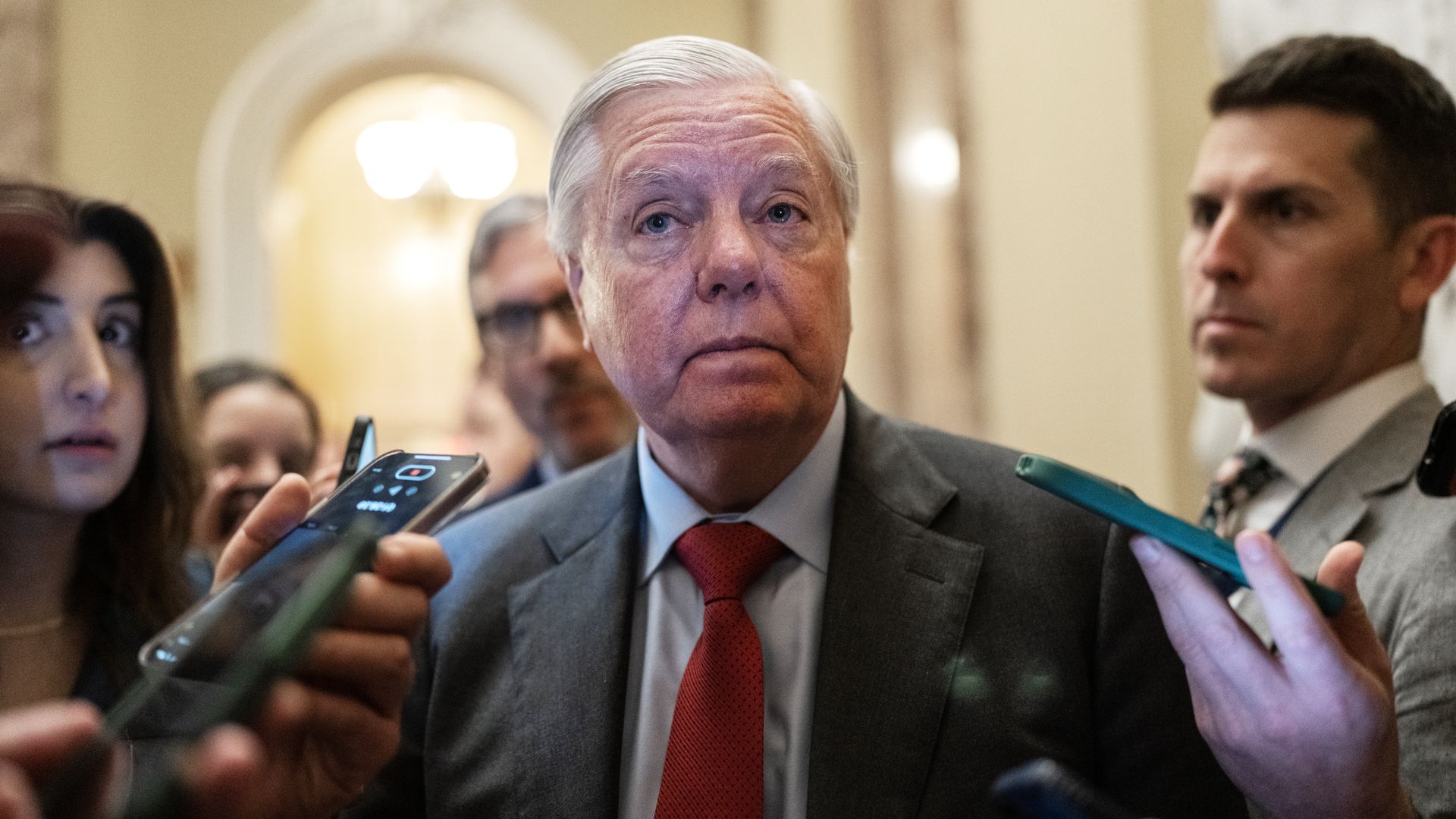
Graham. Photo: Tom Williams/CQ-Roll Call via Getty Images
The Senate is looking to vote on its budget resolution this week or next — but the full implications for Medicaid likely won't be known until later.
Why it matters: Major changes to Medicaid would generate savings to help pay for extending tax cuts in reconciliation. Senate Republicans are leaving their options open by punting the big decisions until after a budget resolution is adopted.
Driving the news: Senate Budget Committee Chair Lindsey Graham told reporters late last week that the budget is likely to set low minimum targets for spending cuts.
- That would give committees flexibility to go higher later in the process, without locking them into steep targeted spending cuts they might not be able to hit.
"The authorizing committees are going to cut until they run out of votes," Graham said. "So to those who want to cut spending, the only problem you'll have is being unable to convince 49 of your colleagues of what you want to cut."
- Graham said the discussion on the details of spending cuts would come after the budget resolution, when lawmakers start drafting the actual reconciliation bill.
- "There will be a process where you can make your case before the authorizing committee and say 'This item should be cut, and here's why,'" he said.
Between the lines: For committees like HELP, that could mean a low target of around $1 billion in savings, which the panel could always exceed in the final bill.
- For the Finance Committee, which oversees Medicaid, the picture is more complicated, because the panel also oversees taxes, and the budget resolution instructions will also have to reflect tax cuts.
- That will make it difficult to discern at first how much is intended for tax cuts and how much is intended for Medicaid cuts.
Yes, but: Conservatives in the House are eager to lock in spending cuts in the budget and could put up a fight against the Senate's strategy of punting the discussion to later.
- The House budget called for at least $1.5 trillion in cuts.
- But Senate Republicans are generally more uneasy than the House GOP with Medicaid cuts.
The bottom line: As Graham's comments indicate, the danger for the Senate in locking in a high spending cut target is that they might not be able to get the votes.
- That would leave the chamber stuck and unable to unlock the fast-track reconciliation process to bypass a filibuster.
- Setting low targets now assures some flexibility later on — if the House goes along.
