
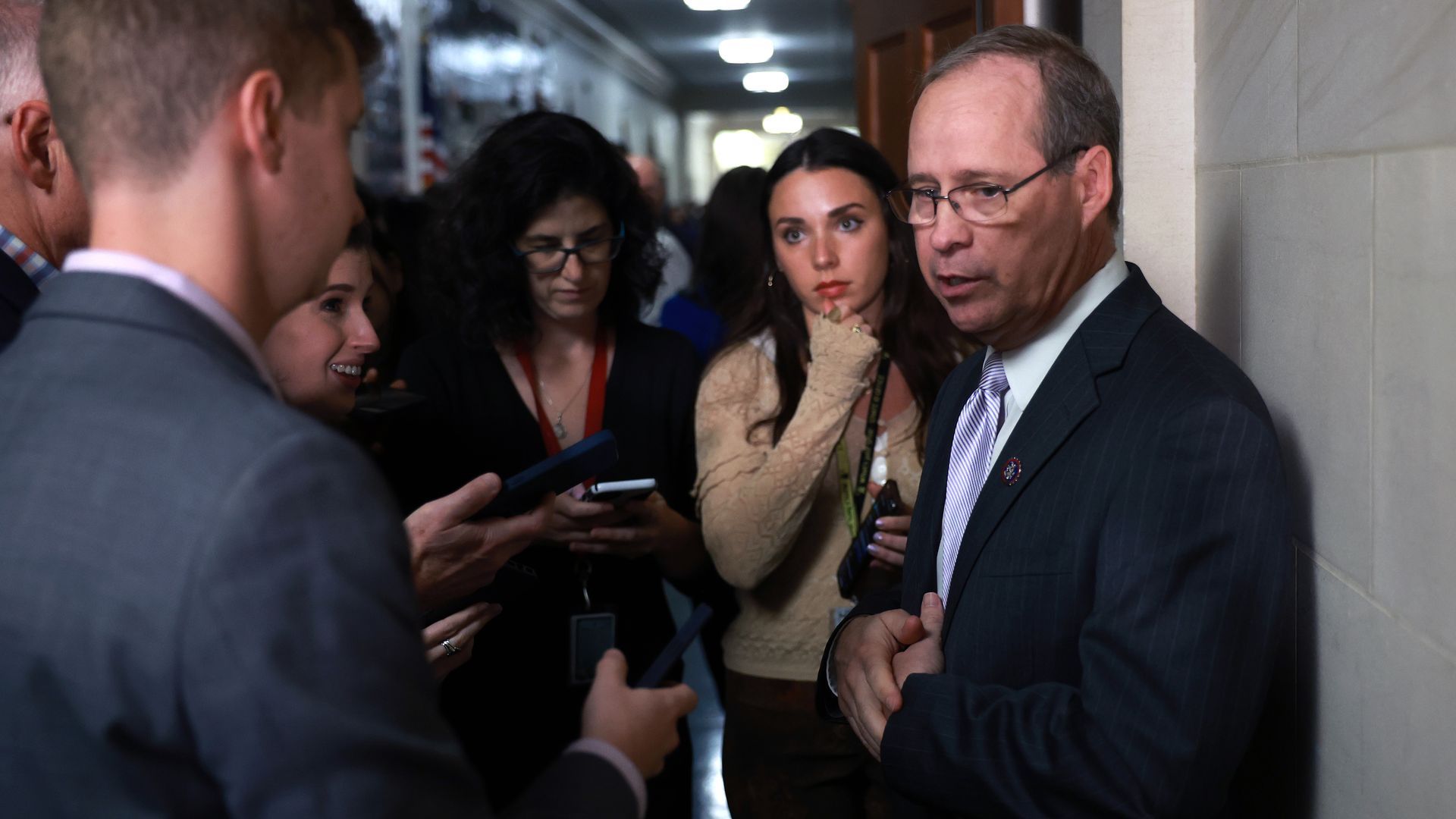
Rep. Greg Murphy. Photo: Joe Raedle/Getty Images
Medicare Advantage is facing new scrutiny from both parties as policymakers hunt for ways to pare federal spending.
Why it matters: There are billions of dollars in potential savings from MA changes, but the program is a political third rail given the influence of insurers and the perils of igniting attacks about cutting Medicare.
Driving the news: In recent days, lawmakers including Sen. Bill Cassidy, Sen. Elizabeth Warren and Rep. Greg Murphy have argued that the program is overpaying the insurers who administer it by billions of dollars.
- Murphy, cochair of the GOP Doctors Caucus, even floated using Medicare Advantage savings as a payfor in a "doc fix," which is slated to be included in the reconciliation bill.
By the numbers: A MedPac report this month found that just in 2025, MA is spending $84 billion more on its enrollees than if those same people were enrolled in traditional Medicare.
- Murphy pointed out that estimate on X, writing that it is "insurance companies bankrupting the American citizen for profit."
What they're saying: CMS Administrator-designate Mehmet Oz raised some eyebrows at his confirmation hearing last week when he criticized insurer practices in MA, including "upcoding," or classifying a patient as sicker to receive higher payments.
- Under questioning from Warren, Oz even agreed that it is "more rational" to get savings from MA than Medicaid, which is currently a focus of the reconciliation bill. He did caveat that by telling Warren he was agreeing based on how she framed the question.
Yes, but: Although MA could provide huge savings for a reconciliation bill, its inclusion is still a long shot.
- Republicans are already facing blowback over potential cuts to Medicaid, and adding Medicare would be even more politically dangerous, even if the changes in question are favored by many policy experts.
- "This is the Willie Sutton thing, right? This is where the money is," said Loren Adler, a health policy expert at Brookings, referring to MA.
- The political challenge, though, is that "the other party can say you cut Medicare without differentiating between, you know, good versus bad cuts," Adler added.
The other side: "Thirty-four million Americans choose Medicare Advantage because it's far more affordable and delivers better outcomes than fee-for-service," said AHIP president Mike Tuffin. "We welcome the opportunity to build on the compelling success of Medicare Advantage and strengthen the program for the future."
- A growing proportion of seniors have been choosing MA plans, many of which provide additional benefits not found in traditional Medicare, though at a cost. AHIP also challenges MedPac's methodology on its potential savings estimate.
Between the lines: Administrative action might be a more likely avenue for MA changes, though that also carries political risks. Especially given Oz's comments, there are regulatory ways to crack down on upcoding, for example.
- The Paragon Health Institute, a policy think tank close to the Trump administration, has also called for MA reforms.
- "I think in general we need to decrease subsidies to insurers across the board," said Brian Blase, president of Paragon and a former Trump health official. "They're over-subsidized. And there's real problems when insurers get most of their revenue from the government rather than from the private sector."
