
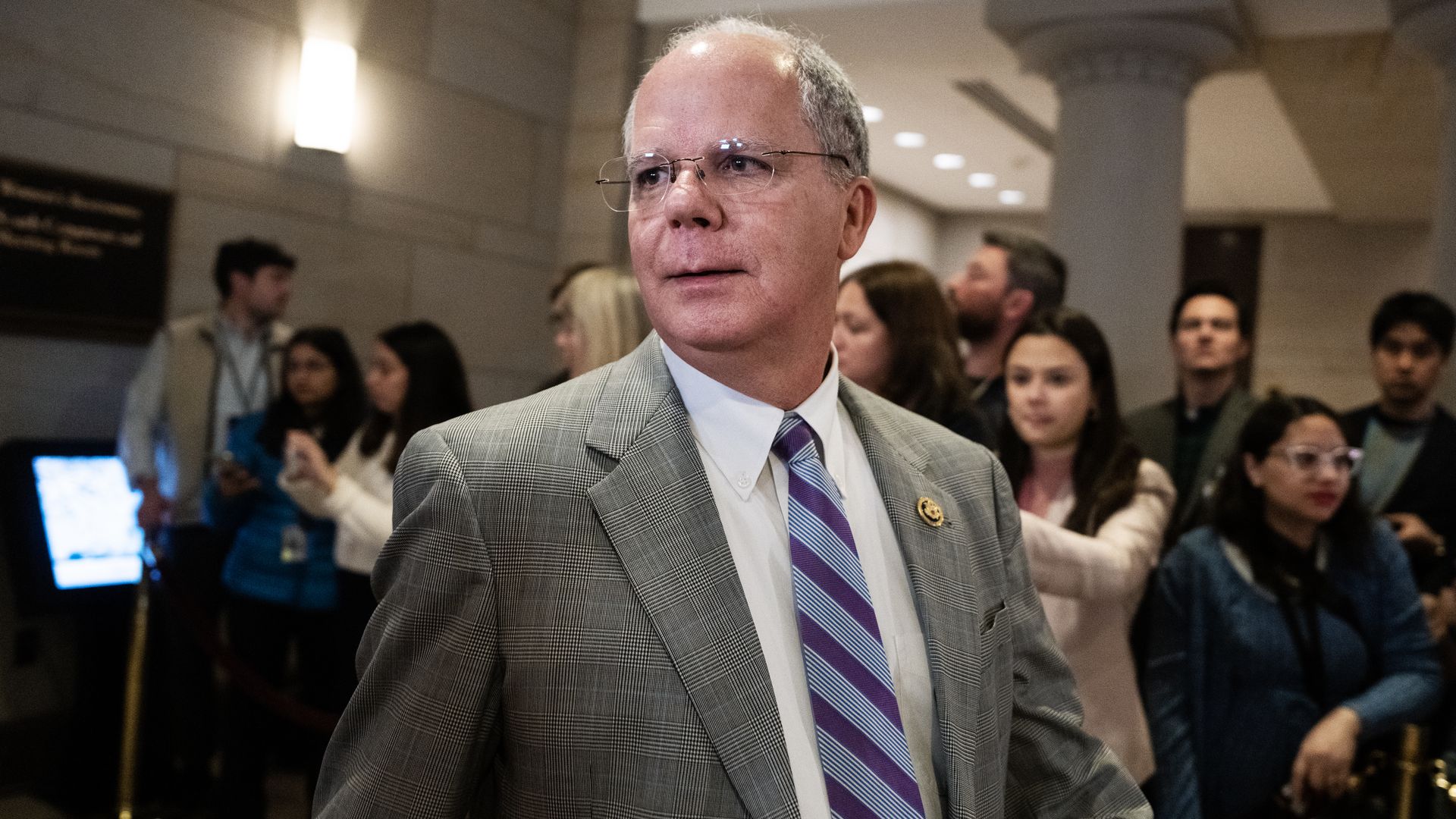
Guthrie in the Capitol. Photo: Tom Williams/CQ-Roll Call via Getty Images
House Republicans continue to weigh major changes to Medicaid, as long as they are targeted at the expansion population of the program with incomes up to 138% of the federal poverty level, according to a key chairman and other sources.
Why it matters: Over 20 million people get health coverage through the Affordable Care Act's Medicaid expansion, according to KFF. Overhauls could generate major savings in reconciliation but also risk pushing more people off the safety net program.
Driving the news: House Energy and Commerce Chair Brett Guthrie told Axios on Tuesday that he is eyeing lowering the federal share of costs, or FMAP, for the expansion population, or even a per capita cap that applied only to the expansion group.
- "I think it's time that we reform [the] entitlement program, particularly in the expansion area," Guthrie said.
- He said he wants to make sure Medicaid works for "the disabled, the destitute, the people that Medicaid was originally designed for."
- "It's just unfair that the system's set up that if you're a disabled child in Kentucky and you go to the doctor, the federal government pays 72 cents on the dollar, if you're a healthy able-bodied adult, it pays 90 cents," he said, referencing a proposal to lower the 90% FMAP for the expansion.
Nine states have "trigger" laws that would end the Medicaid expansion if the federal share of funding were lowered.
Between the lines: Speaker Mike Johnson appeared to take changes like Guthrie suggested off the table in an interview with CNN last week.
- But sources say that House Republicans are distinguishing between the traditional Medicaid population and the ACA expansion population.
- Johnson did not make the distinction in his public comments on CNN, flatly stating "no" when asked if he will establish funding caps or lower the FMAP.
- A source familiar with the speaker's position said he's likely to be open to reforms if applied to the expansion population, noting that his comments were meant to signal that Republicans will protect the beneficiaries Medicaid was intended to serve.
- The source added that the speaker will continue to coordinate with and follow the lead of the White House, Guthrie and the other committee chairs.
Yes, but: No decisions have been made about including any such changes in the reconciliation bill, and there are still major obstacles, including the Senate and possibly President Trump.
- Trump has repeatedly said he does not want to "touch" Medicaid except for fighting "fraud." It is far from clear that Trump will follow through on a strict reading of that pledge, and "fraud" could be given an expansive definition.
- Senate Republicans are also generally less interested in a Medicaid overhaul, wary of the political blowback in their states.
The bottom line: It is not yet clear what the final savings target will be for Medicaid in the utlimate budget blueprint both chambers agree to — which Guthrie noted.
- "We have to figure out how we're going to get to a number," he said.
