
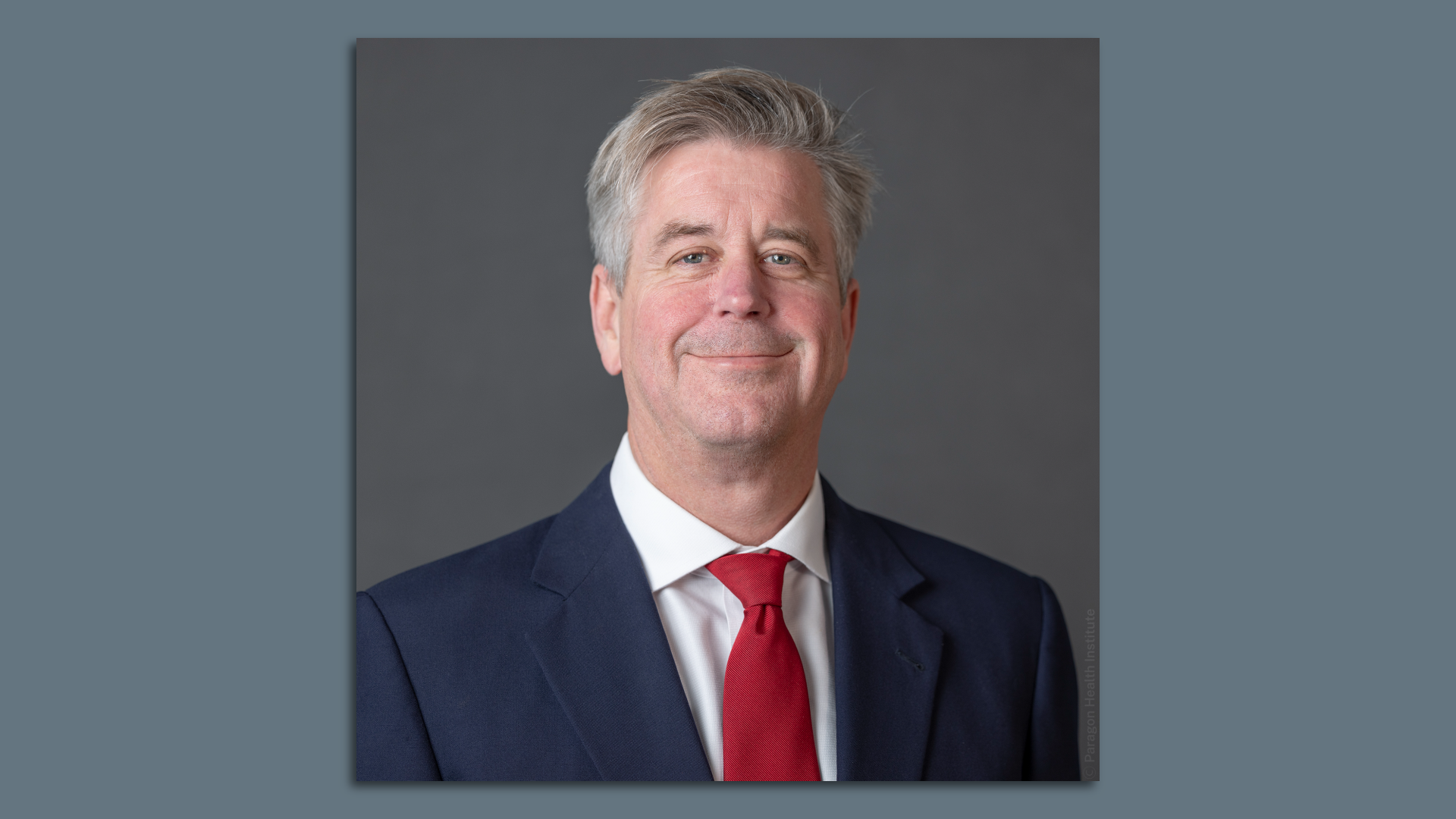
Long. Photo credit: Paragon Health Institute
Ryan Long spent years on the Hill as a health care aide for lawmakers including former Speaker Kevin McCarthy. Now he's joined Paragon Health Institute as director of congressional relations and senior research fellow.
- Long spoke about the year ahead for health and the legislative outlook. The remarks have been edited for length and clarity.
Why join Paragon now?
I was up on the Hill at the inception of Paragon. So I saw the type of team they built, and a lot of people I respected, and [had] done a lot of great work and a lot of great research on free market health care policy.
- And so when there was an opportunity … it just felt like the right fit at the right time.… 2025 is going to be a really busy year in health care policy and having an ability to hopefully be engaged in that part of the process. I thought, one, it would be fun, but two, it's important.
Why is 2025 going to be a big year in health care?
It's something that the Hill has talked about, the need to empower patients and get a more patient-centric health care system.… And I think anytime you have a new administration come in, whether it's Republican or Democrat administration, there's a window to try to get policies advanced.
- This incoming administration has indicated that they want to be forward leaning when it comes to health care policy.
- With a trifecta in the House and the Senate and administration, there's a lot of opportunity to pass things that have been discussed for a while that have not made it to the finish line for one reason or another.
What specific policies do you think will pop up?
In terms of what's going to be on the agenda, that's not necessarily our prerogative to set. That's really going to be up to the leadership in the House and Senate and the administration. So I guess that's somewhat of a TBD.
How did you get into health care policy?
Like a lot of people, it was just sort of the opportunity. My first job on the Hill was for Charlie Norwood from Georgia, who was a dentist on Energy and Commerce. I was just an LC for him, but it was when we were doing Patients' Bill of Rights, which he was very involved in.
- That sort of led to an opportunity to go work for Joe Barton when he needed a health care staffer, and I had been working for a member who was steeped in health care. So that was sort of how I got my start.
What's the biggest challenge working in the speaker's office?
Depending on the margin with 220 to 230 different opinions … it's trying to find the sweet spot after listening to all the various factions within the conference. Enough to get consensus to move a product.
- The committees are the people that are going to be developing the product, but ultimately, you have to work with them. You have to work with the different members and caucuses to find something that can pass. Sometimes that's easy and sometimes it's not.
What's the area you're most passionate about?
Going back to when I first started on Energy and Commerce, I was the FDA counsel. So that will always be a passion of mine, to ensure that we have a regulatory system that accepts innovation and doesn't stifle new technologies coming to market, because I think those are so important for patients.
- But you know, the longer that I've done it, the more I've become interested in identifying and eliminating federal policies that distort the health care market and needlessly increase federal spending.
