
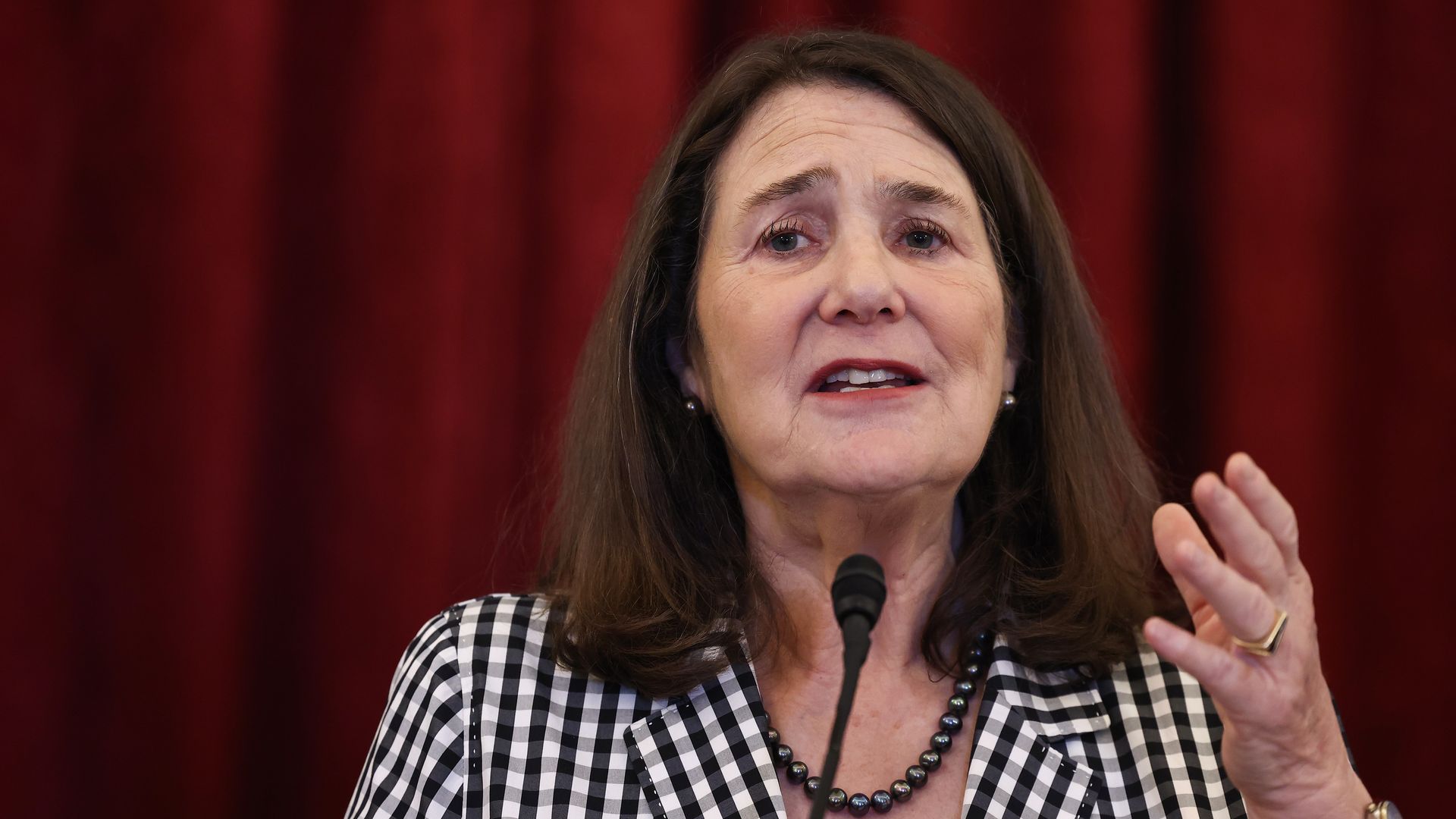
DeGette. Photo: Jemal Countess/Getty Images for Breakthrough T1D
Reps. Diana DeGette and Larry Bucshon have released a framework for how to approach a potential next iteration of the 21st Century Cures Act that's aimed at updating the law based on current technologies.
Why it matters: Cures, a landmark bill passed eight years ago with broad bipartisan support, invested in biomedical research and enabled faster approval of new medicines.
- An update could have big implications for NIH and FDA, as well as to what treatments patients are allowed to access.
What's inside: The lawmakers' white paper details specific next steps for what they dub a "Cures 2.1" based on responses to a request for information. Options include:
- Creating an environment that enables quick deployment of innovative technologies for improving health outcomes.
- Building a health care infrastructure that enables information sharing and evidence gathering among systems.
- Fostering innovations that improve public health, reduce the chronic disease burden and put patients first.
The lawmakers also the RFI revealed interest in addressing artificial intelligence in the health care space.
Context: The 21st Century Cures Act was signed into law in 2016 with the aim of helping the FDA modernize its systems and get innovative treatments to patients.
- It also gave the FDA new authorities by establishing the breakthrough devices and the regenerative medicine advanced therapy programs. And it allocated funding to the NIH for the "Cancer Moonshot" and brain research programs.
- DeGette introduced the Cures 2.0 bill in 2021. Some of its elements, including the establishment of ARPA-H and the NIH's long COVID research program, have become law already.
Between the lines: DeGette, who is slated to be the new health subcommittee ranking member on House Energy and Commerce, highlighted how she believed the initiative could have bipartisan appeal in the 119th Congress.
- "Building on the success of previous Cures legislation is vital to further the innovation that is necessary in health care," she said. "There is a clear path for us."
- But with Bucshon's departure at the end of the 118th Congress, she'll have to find a new Republican partner.
