
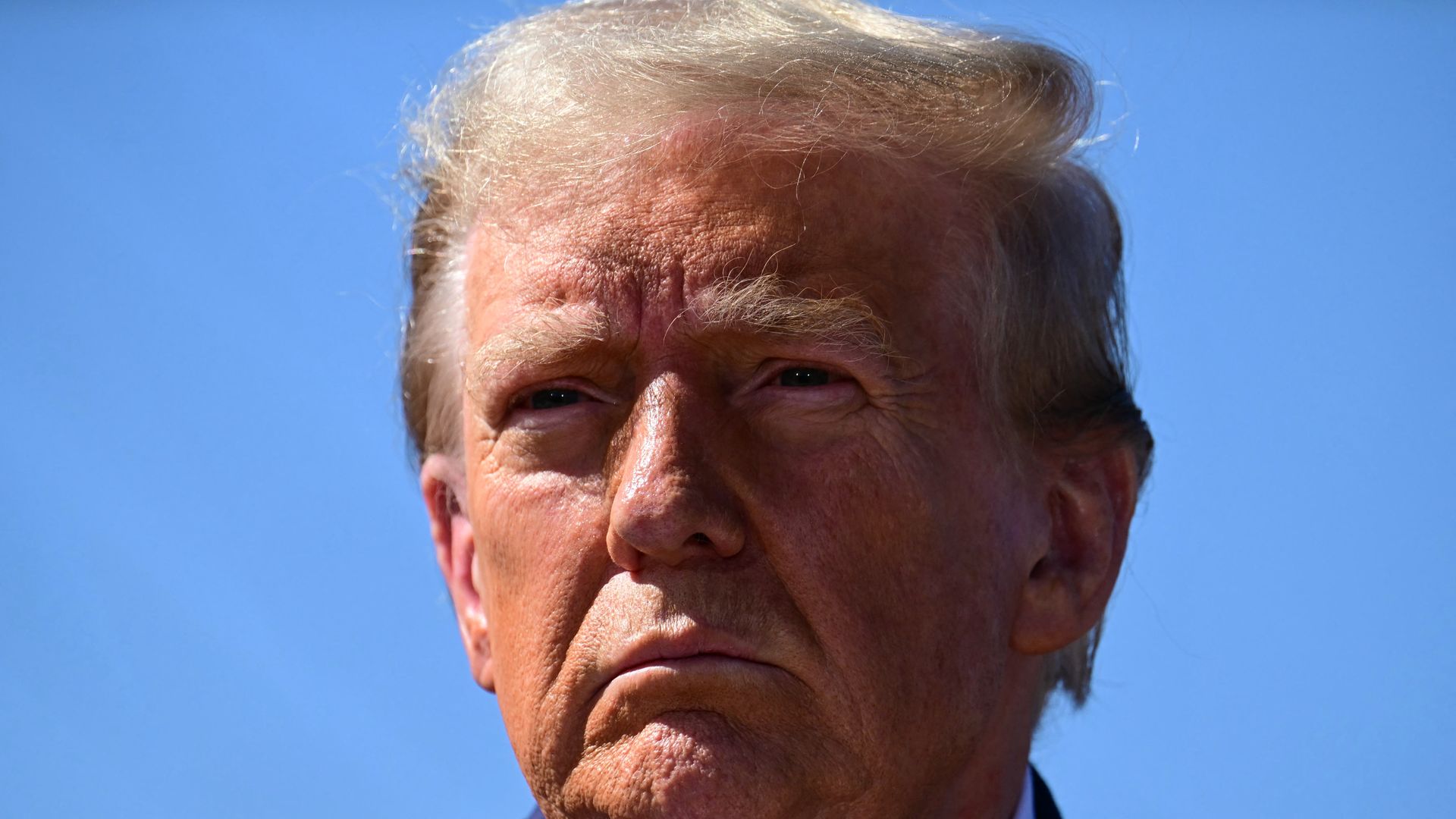
Trump in Swannanoa, N.C., on Oct. 21. Photo: Jim Watson/AFP via Getty Images
Former President Trump's return to the White House will scramble the health policy landscape in wildly unpredictable ways, with key decisions potentially hinging on the backgrounds and leanings of whomever he brings in to fill key positions.
Why it matters: Trump's campaign took great pains not to stake out detailed policy proposals, and it's still not clear how closely he'll embrace ideas in the Heritage Foundation's Project 2025.
But here's what experts are expecting:
- Medicaid could be in for a major rewrite attempt that would slash the federal share of program costs and add work requirements.
- The Affordable Care Act's enhanced subsidies probably won't get extended before they expire in 2025 — unless congressional Democrats have the leverage to cut a deal with Trump.
- Trump could try to overhaul federal health agencies like NIH and the CDC, which Republicans believe made questionable decisions during the COVID-19 pandemic.
Between the lines: The amount of scrutiny health policy gets could depend on Robert F. Kennedy Jr. 's role in the transition and if Trump allows him to "go wild" on public health issues — and whether other advisers listen to him.
The big picture: Medicaid could consume a lot of the new administration's energy if Trump heeds the advice of conservative think tanks and GOP lawmakers.
- A blueprint from Paragon Health Institute, co-written by former Trump administration economic adviser Brian Blase, would phase out the 90% federal share of Medicaid costs for the Affordable Care Act expansion population, giving states the same federal funding for all Medicaid enrollees.
- Under the plan, only households below the federal poverty level could still qualify for Medicaid, while those above the poverty level would instead be eligible for tax credits to buy coverage on Affordable Care Act exchanges.
- The administration is expected to give states more deference to experiment with safety-net programs, including requiring some low-income adults to work, attend school or volunteer as a condition of coverage.
Yes, but: Don't bet too much money on a major overhaul going through, now that 40 states and D.C. have expanded Medicaid.
Despite years of promises, Trump hasn't come up with a health care plan that could replace Obamacare. But he could try to expand coverage arrangements that don't comply with the ACA, such as bare-bones "short-term" health insurance.
- These lightly regulated plans could pull healthy people out of the ACA's individual market. The Biden administration last spring reversed a policy from Trump's first term that expanded access to the plans.
Trump's second term is also likely to have a big focus on reshaping the federal health agencies, taking his cues from congressional Republicans.
- They already laid the groundwork this year with a plan for NIH that would remove the agency's authority over "gain-of-function" research and reduce the number of institutes from 27 to 15.
- The plan also would streamline research areas and establish a congressionally mandated commission to oversee the NIH, along with a separate independent oversight entity to review high-risk research proposals.
What we're watching: The biggest unknown — and one that will be watched closely throughout the country — is what Trump will do on reproductive health.
- That's going to depend heavily on how Trump's Justice Department interprets the Comstock Act, a 19th century law that banned the interstate mailing of "obscene" material like pornography, as well as abortion drugs and contraception.
- Trump could rescind a Biden administration legal memo saying Comstock didn't prohibit the lawful mailing of abortion drugs, and use it to shut down the mailing of abortion pills, as well as equipment used in procedural abortions.
The bottom line: Such a move would amount to a de facto national ban on abortion — even though Trump has claimed he would veto a national ban.
