
Illustration: Maura Losch/Axios
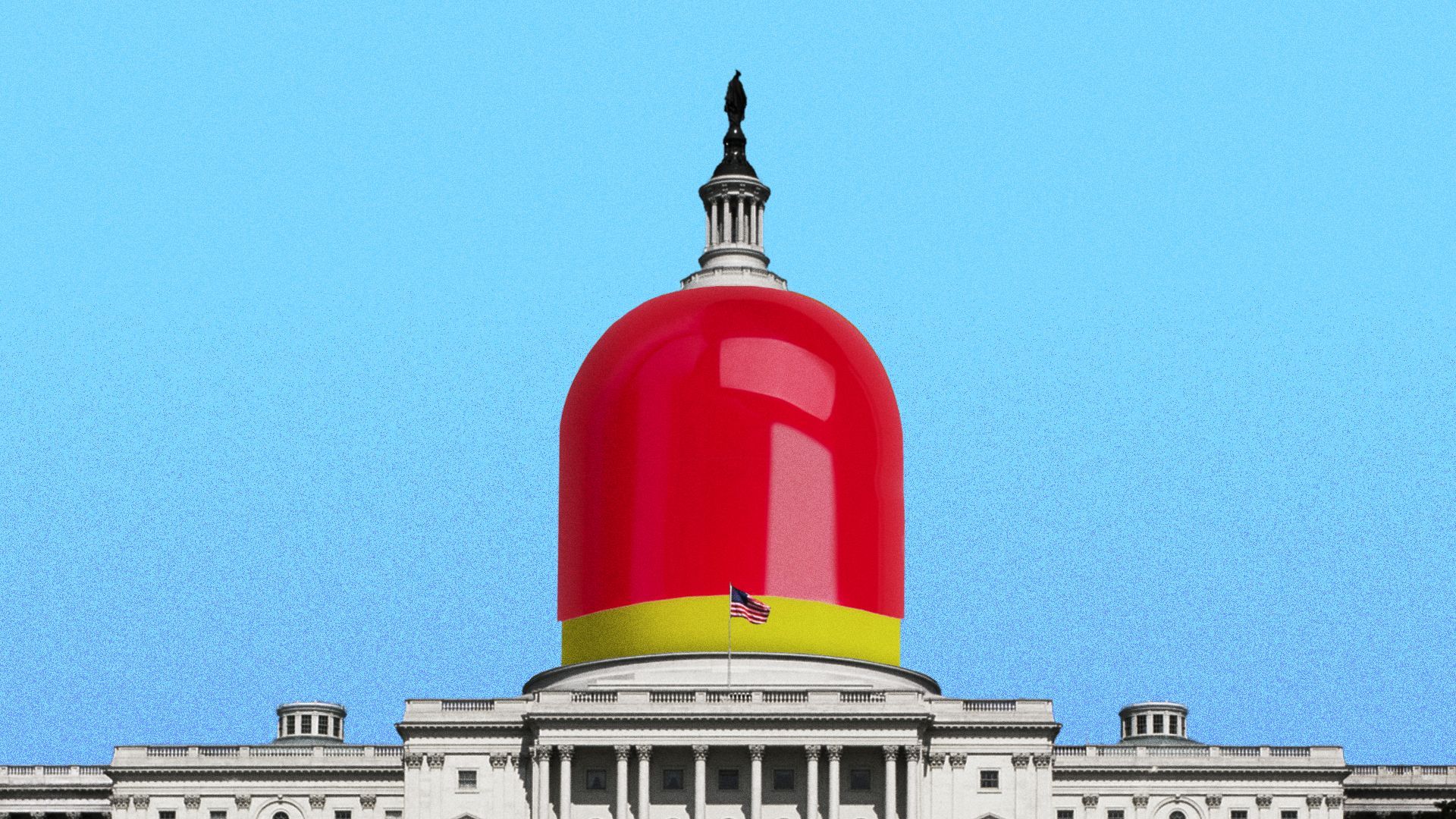
Senators are set to relaunch the debate over revamping the drug patent system Thursday, when the Judiciary Committee marks up a pair of bills that could raise the bar for who can challenge patents and what inventions are eligible for protection.
Why it matters: The chamber in July hotlined legislation that cracks down on a tactic known as a "patent thickets" that drugmakers can use to delay competition from cheaper generic drugs.
- The bills up for consideration — the PREVAIL Act and the Patent Eligibility Restoration Act, or PERA — are viewed as pharma-friendly and are drawing criticism from patient and consumer groups that contend they could undercut competition and raise drug prices.
Driving the news: The PREVAIL Act would change the process for challenging patents by requiring petitioners to have standing, either by having been sued or threatened with a patent infringement lawsuit.
- That could freeze out third parties that want to test the validity of a patent early in the drug development process.
- "I think it will certainly help the branded side of the pharmaceutical industry, to the extent that it does make it more efficient to and economical to defend your patent against validity challenges," Chris Bruno, a patent lawyer at McDermott Will and Emery, previously told Axios.
- PERA would amend what kinds of inventions are eligible for patent protection and make it easier for certain scientific discoveries like gene therapies to be patented.
Between the lines: Patient advocacy groups and biosimilar trade associations oppose the measures, saying they'd make it easier for drug manufacturers to wall off products with patents.
- "We are trying to lower drug prices, and both PREVAIL and PERA take us in exactly the opposite direction," David Mitchell, president of Patients for Affordable Drugs, told Axios. "Both of them, in different ways, will weaken our ability to undo bad patents and will encourage the issuance of bad patents."
- "PREVAIL will make it more difficult for generic and biosimilar manufacturers to challenge expensive brand-name drug patent thickets and bring lower-cost medicines to patients," the Association for Accessible Medicines and its Biosimilars Council said in a statement.
- "PERA will enable brand-name drug manufacturers to build even larger thickets and charge higher prices," the group continued.
Mitchell has questioned why Senate Judiciary would mark up bills he sees as undercutting work the committee has done this Congress to crack down on IP abuses, specifically the patent thicket bill.
- "We have made clear that we think these bills will effectively undo much of what we are working to achieve with patent reform and competition bills in Congress, and will effectively cause drug prices to go up," said Mitchell.
The other side: Sen. Thom Tillis, the main GOP cosponsor, said the patent bills are necessary to modernize the IP system and advance U.S. technological leadership.
- "Some people want the status quo.… Biotech, a number of other emerging sectors need relief, or we're just going to stifle innovation," Tillis said, adding that the legislation is being marked up is "in and of itself, historic."
- The PREVAIL Act "is a positive step that would provide needed reforms" to the patent board and "promote innovation across all technologies," PhRMA spokesperson Megan Van Etten said in a statement.
- The pharmaceutical trade association hasn't taken a position on PERA.
What we're watching: Multiple Judiciary Committee members haven't showed their hands on how they'll vote, adding a measure of suspense to the markup.
- But lead Democratic sponsor Chris Coons told Axios on Tuesday that he's optimistic and that Democratic support is "moving in the right direction."
