
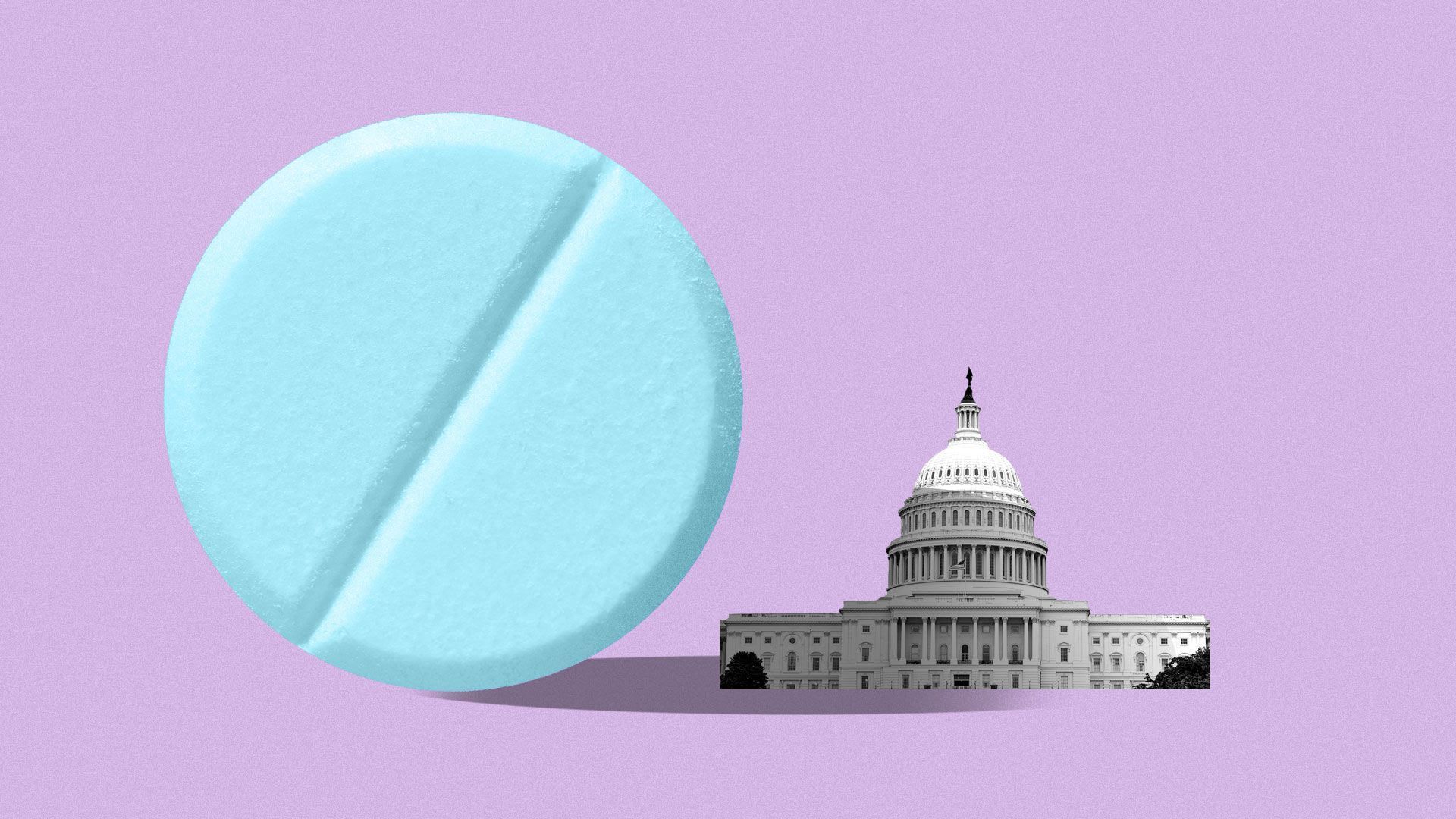
Illustration: Aïda Amer/Axios
PhRMA today is launching a new seven-figure ad campaign defending the drug patent system as Congress ratchets up scrutiny of IP protections, the group tells Axios.
Why it matters: The move highlights the growing threats the big industry group sees in patent reform legislation that could be part of a year-end health deal, and in the Biden administration's increased openness to consider using march-in rights to break patents unilaterally.
- PhRMA notes the digital and traditional media ads are "educational" and not specifically targeted at any particular policy proposal.
What they're saying: The effort is meant to counter "misinformation" spread by the industry's critics, Robert Zirkelbach, chief public affairs officer at PhRMA, told Axios.
- "What we're trying to do is provide better balance and education around the unique [U.S.] system and how it works," he said, adding the status quo lets companies innovate while allowing for eventual competition from cheaper generics and biosimilars.
- "More new medicines means more generic medicines ... Innovation. Competition. Lower Costs. Thanks to IP," reads one ad.
The other side: There's bipartisan concern in Congress that drug companies are gaming the patent system simply to delay competition from cheaper alternatives.
- A bill from Sens. John Cornyn and Richard Blumenthal would save $3 billion, according to the CBO, by cracking down on some of these practices.
- An even bigger potential hammer is from the Biden administration, which last year put out a "framework" for using executive authority known as march-in rights to break patents, with the goal of lowering drug prices.
- Still, the administration hasn't exercised this power and rejected a request to do so last year for a prostate cancer drug.
Between the lines: Asked if there are instances of drug companies gaming the system to fend off competition, Zirkelbach said: "I certainly am not able to speak to every patent practice of all of our companies, so I wouldn't dare to do that."
- "But I think a lot of those claims are based on I think a misunderstanding of the way the system works," he added.
- He noted that the U.S. Patent and Trademark Office has to approve a patent, and that a company can make adjustments to make a drug easier to administer or to treat other conditions after its initial approval.
The big picture: Protecting the IP system is another front in a multi-pronged battle the pharmaceutical industry is fighting, including pushing for reforms to PBM practices and the 340B program, as well as going to court to try stop Medicare drug price negotiations.
