
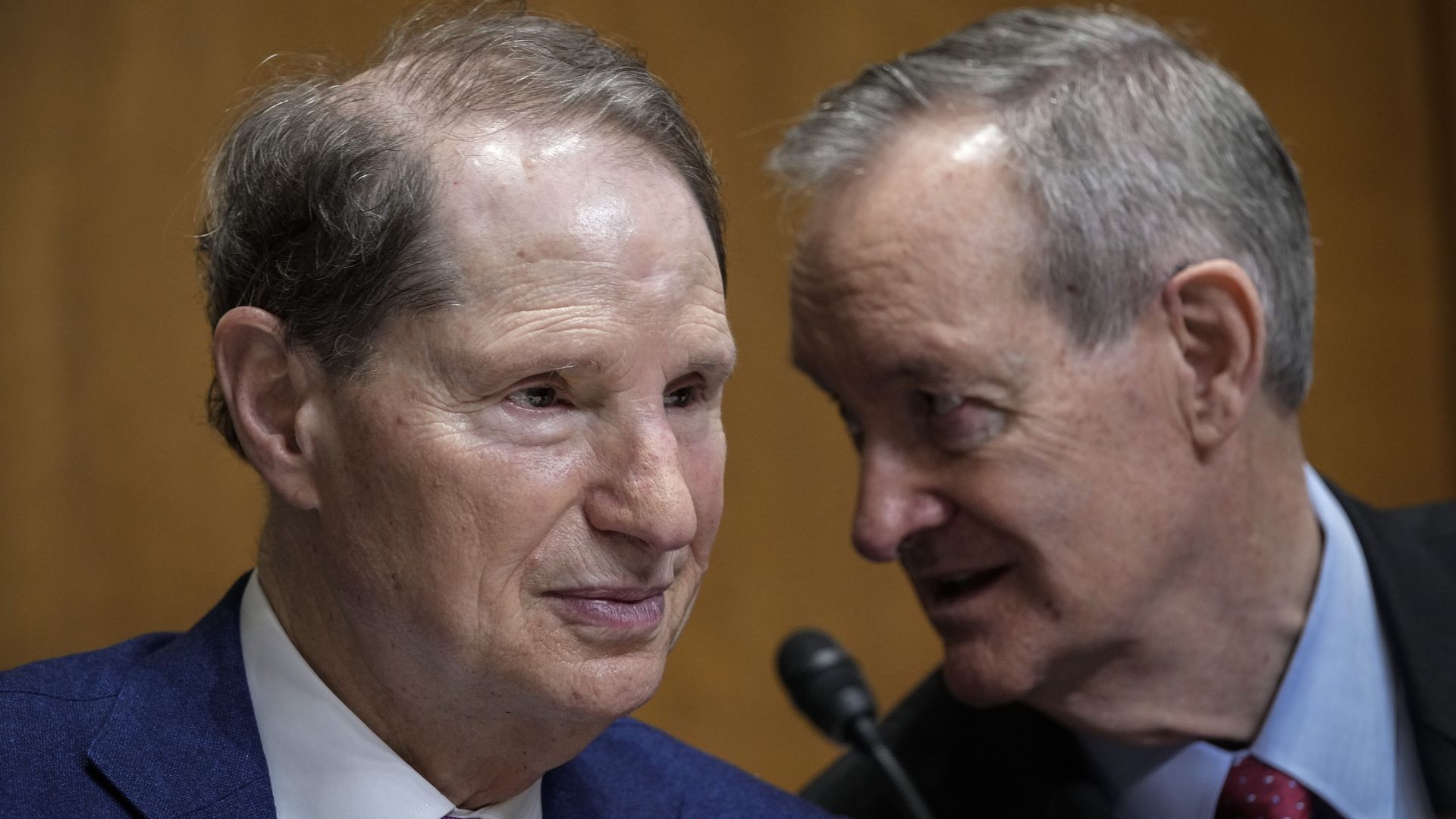
Senate Finance Chair Ron Wyden and Ranking Member Mike Crapo. Photo: Drew Angerer/Getty Images
Senate Finance Committee leaders are pushing to create a new program in Medicare to stir hospitals and physicians to enter into purchasing agreements aimed at easing persistent drug shortages.
Why it matters: Shortages have reached an all-time high, driving up health spending while limiting access to chemotherapy drugs, some antibiotics and common generics.
What's inside: A discussion draft from Senate Finance Chair Ron Wyden and Ranking Member Mike Crapo would give providers incentive payments of 5% to 25% of a drug's price plus bonuses to enter into purchasing practices that satisfy new standards for supply chain resiliency and reliability.
- There would be minimum three-year contracts with manufacturers for generic drugs that present high shortage risks, and required contingency contracts with backup suppliers to shore up competition.
- The draft also would amend Medicaid's Drug Rebate Program to enable reductions or waivers to the inflation rebate for certain generic drugs in the event of shortage risk.
- The changes would take effect in 2027.
What they're saying: Wyden singled out group purchasing organizations, or GPOs, for putting profits ahead of patients.
- "Middlemen like GPOs should not be able to do business with Medicare if their contracting practices are actively worsening the drug shortage challenge in America," he said.
Catch up quick: The Biden administration last month issued a drug-shortage plan that called on Congress to reward hospitals for maintaining adequate supplies of key drugs, among other measures.
- Medicare also proposed incentives for hundreds of small hospitals to establish and maintain a six-month buffer stock of essential medicines.
- The American Society of Health-System Pharmacists said that drug shortages have reached an all-time high — with 323 medicines now in short supply.
- Generic drugs comprise the majority of drugs in shortage at any given time, with many costing less than $1 per unit.
