
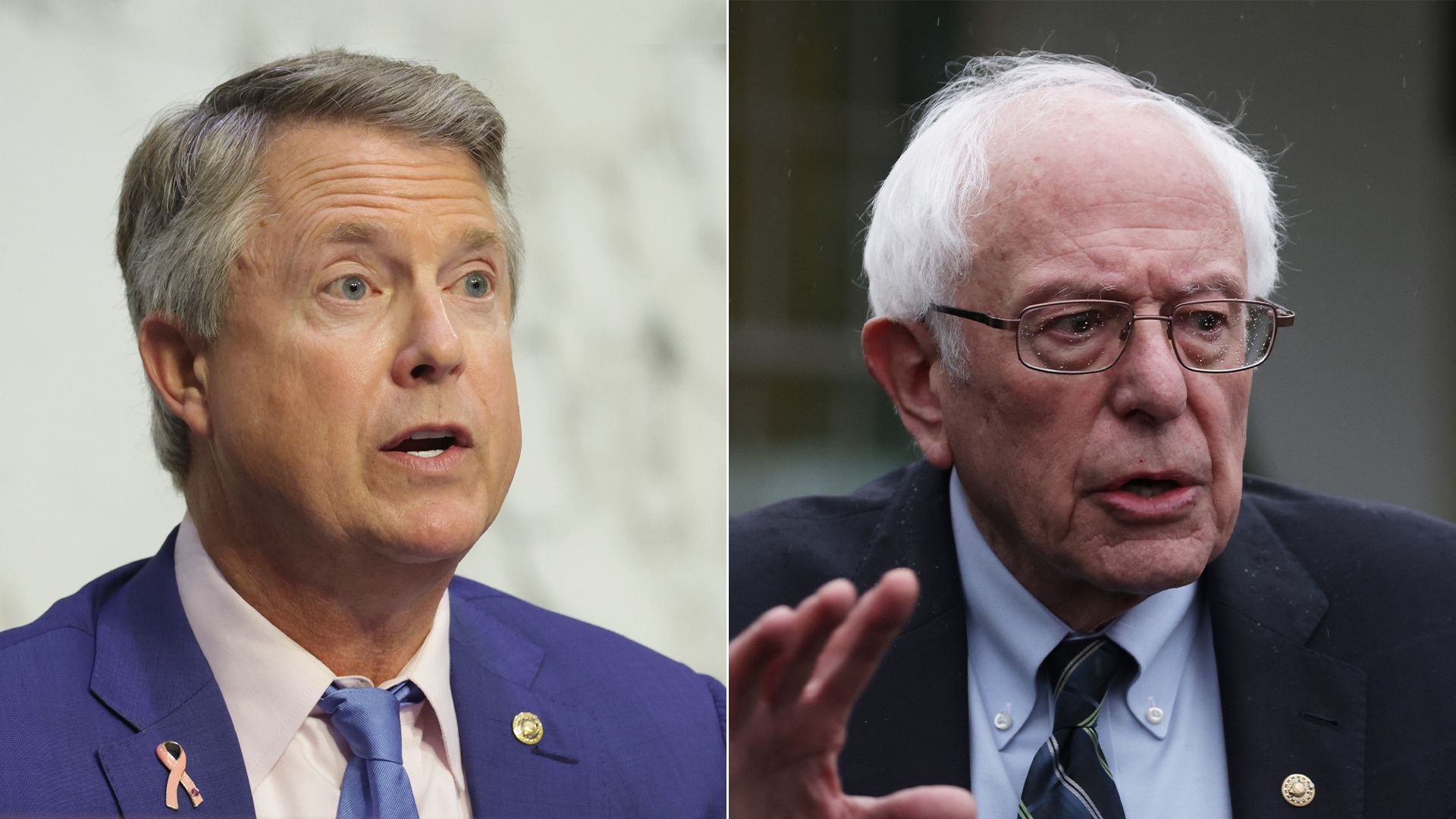
Sens. Roger Marshall (left) and Bernie Sanders. Photos: Kevin Dietsch/Getty Images, Alex Wong/Getty Images
Now that the Senate HELP Committee has advanced its primary care legislation, we're diving into some takeaways from Thursday's markup and looking at what's next.
- As a reminder, this bill would boost funding for community health centers from $4 billion to $5.8 billion per year, triple funding for the National Health Service Corps, and take other steps to try to address a shortage of primary care doctors, nurses and mental health professionals.
- But significant hurdles remain, including:
1) Republican misgivings
HELP Chairman Bernie Sanders got his bipartisan vote, with lead GOP sponsor Sen. Roger Marshall as well as Sens. Mike Braun and Lisa Murkowski joining all the panel's Democrats.
- But Ranking Republican Bill Cassidy, as well as a majority of Republicans on the committee opposed the measure over, among other things, the fact that new spending isn't entirely offset. That highlights the tough path to getting the package passed on the floor.
- As Cassidy noted, including this bill in an end-of-year funding package, usually the most likely path, generally requires sign-off from committee leaders and chamber leadership in both parties. The measure is certainly not in a place where that can happen at the moment.
- The House does have bipartisan agreement on a more modest increase for community health centers at the committee level, but that legislation has its own problems. The broader bill containing that provision was abruptly pulled from the floor this week amid chaos on funding the government.
2) Jockeying over hospital payfors
- The legislation pokes at the powerful hospital industry with a range of payfors, which can also save consumers money.
- Those include banning hospital facility fees for certain services such as telehealth and requiring off-campus hospital departments to have unique identifiers to address what critics call "dishonest billing," a reference to when health systems charge higher hospital rates for services that can be delivered in a doctor's office.
- Cassidy cited the opposition of hospital industry groups as part of his case against the bill. And on the Democratic side, Sen. Ed Markey offered and then withdrew an amendment to remove the provision on site neutral payments in telehealth, saying it would "rob Peter to pay Paul."
- Other senators, like Braun and Sen. Maggie Hassan, spoke more critically of hospital practices and defended the site-neutral provisions.
3) Problems for Payfors in general
Even though it takes on hospitals, the bill is far from fully paid for at the moment. Backers say they will address that down the road, including by using payfors borrowed from other committees.
- But as we reported on Wednesday, there are not yet firm commitments from Finance or Judiciary on those fronts.
- "It pretends to be paid for but it's not," Cassidy said.
- Still, grouping the varying measures into a year-end package is often the way to smooth over such problems.
- Another of the existing payfors drew concern from Democratic Sen. Tammy Baldwin over the way it would draw down the Prevention and Public Health Fund.
The bottom line: Sanders said in a statement that he and Marshall "will work with Senate leadership in the coming weeks to move this bill forward and ensure that millions more Americans can get the health care they deserve."
