August 14, 2024


🐪 Happy Wednesday! Hope your recess is going swimmingly.
🎉 We'll be back in your inbox Aug. 21 with our special Democratic convention edition, and of course you'll hear from us sooner if there's energy policy news you need to know.
🎶 Today's last song is from the University of Michigan's Barry Rabe: "St. Thomas" by Sonny Rollins.
1 big thing: Walz propels green jet fuel hopes
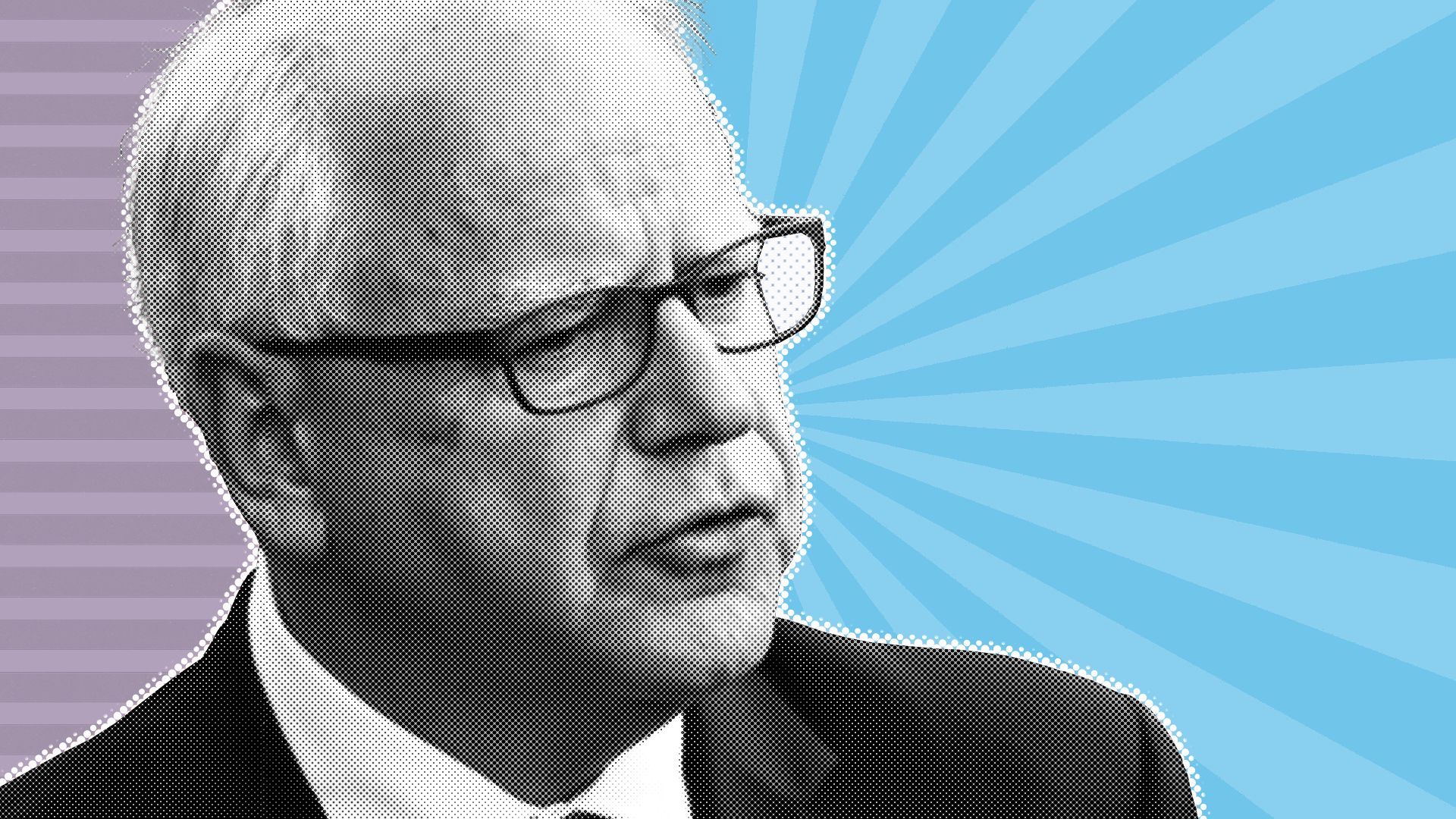
Democratic VP pick Tim Walz's embrace of sustainable aviation fuel in Minnesota could shorten a long runway for the industry, Daniel writes.
Why it matters: Aviation accounts for roughly 3% of global emissions and could reach 22% by 2050. The airline industry currently has few viable options to wean itself off petroleum-based conventional jet fuel.
The big picture: Walz's campaign with Vice President Kamala Harris is likely to feature his goal of growing Minnesota's economy while decarbonizing a polluting industry, SAF supporters say.
- "I'd be surprised if we don't hear him talking about SAF on the national stage," said Peter Frosch, CEO of Greater MSP, which is spearheading a Minnesota SAF hub aimed at scaling up the industry.
- As governor, Waltz signed a SAF tax credit into law last year and launched the hub with founding partners Delta, Bank of America, Xcel Energy and EcoLab.
- "We have all the components right here in Minnesota," Walz told Brownfield Ag News last year. "We've got a refinery nearby, we've got North America's top-rated airport, and, of course, we are the leaders in biofuels."
Between the lines: The Inflation Reduction Act included a $1.25-a-gallon federal tax credit for SAF that achieves at least 50% lower emissions than conventional jet fuel.
- But that 40B credit expires at the end of this year, subsumed by the 45Z tax credit for clean fuels.
- SAF producers could claim the 45Z credit but may see less benefit from making SAF than with other fuels, such as renewable diesel, said John Hebert, a policy advisor for transportation at Third Way.
Reality check: SAF is derived mostly from plant oils and cooking fats. It faces doubts that producers can ever churn out enough fuel for the airline industry — and whether it's truly a net climate benefit.
- The Biden administration has set a goal of 3 billion gallons of SAF by 2030, which would be key to achieving net-zero carbon emissions from the transportation sector.
- In 2023, just 158 million gallons of SAF were produced globally and 24.5 million gallons were consumed in the U.S.
- "We're probably not on track" to meet Biden's goal, Hebert said.
What's next: Renewable fuels producers are pressing Congress to extend the existing IRA tax credits as the Treasury Department works on guidance for the 45Z tax credit, which is scheduled to begin incentivizing clean fuels production Jan. 1.
- Bipartisan legislation was introduced in July to extend the 40A biodiesel tax credit, and similar legislation supporting SAF is expected soon.
- "There is growing apprehension around these tax credits, and as a result of that you're going to see increased pressure to extend the existing suite of tax credits," said Geoff Cooper, the Renewable Fuels Association's CEO.
2. Startups saddle up in Wyoming

Wyoming, a leading coal mining state, has been morphing into a key place to develop next-gen climate technologies like carbon removal, nuclear and wind, Axios' Katie Fehrenbacher writes in Climate Deals.
Why it matters: The state shows how an "all of the above" energy region can aggressively attract low-carbon energy sectors in a changing world.
The big picture: Wyoming still gets 71% of its electricity from coal, but Gov. Mark Gordon has pledged to help the state go carbon-negative to fight climate change.
- The goal has sometimes made him unpopular with his Republican peers.
- His vision is to use carbon capture tech as a means to get there instead of shutting down coal plants.
Driving the news: A number of novel startups will develop their first projects in the state.
- Last week, direct air capture company Spiritus said it had chosen Wyoming's Natrona County to build its first project.
- Wind startup Airloom Energy, based in Laramie, Wyoming, is developing its pilot project in the city and is hiring workers from the state's mature wind industry.
- The state's wind sector has grown significantly, providing 21% of the state's electricity.
Zoom in: These types of next-gen climate technologies are joining Wyoming's growing clean energy sectors of advanced nuclear and wind.
- Advanced nuclear company TerraPower, backed by Bill Gates, is building its first demonstration reactor in Kemmerer, Wyoming. The state has ample uranium ore reserves, including the type that many advanced reactors need.
- Wyoming Sen. Cynthia Lummis told Nick in June: "We're just a state that doesn't have knee-jerk reactions to nuclear energy. It's something that's been in our legacy DNA for a long time."
Read the whole story here, and subscribe to Climate Deals for the latest news and analysis across carbon, solar, wind, batteries and more.
3. Catch me up: Public lands, solar and Podesta

🗣️ 1. Panned management: BLM's initial guidance for its sweeping new public lands rule, released last week, is unsurprisingly drawing Republican criticism.
- ""With this guidance, BLM continues to threaten the Western way of life and leave local communities out of the conversation," Natural Resources Chair Bruce Westerman said in a statement.
☀️ 2. U.S. (solar) cellular: The Biden administration this week more than doubled the quota for tariff-free imports of solar cells — from 5 GW to 12.5 GW.
- The tariff rate, started under former President Trump, will remain 14.25%.
- China currently dominates the cell market. Solar Energy Industries Association chief Abigail Ross Hopper called the move "an important bridge for module producers to access the supply they need while the United States continues to progress on solar cell manufacturing."
🌊 3. Risky business: Top Democrats are probing insurance regulators' efforts to integrate climate risk into the industry's practices.
- "We are already seeing the implications of the insurance crisis spilling over into various segments of the economy," they wrote to National Association of Insurance Commissioners president Andrew Mais.
👀 4. ICYMI: White House climate adviser John Podesta said he's met with the architects of the Senate permitting overhaul to correct "problematic" parts.
- For more from Podesta on lame-duck legislating and the IRA, check out Daniel's story from yesterday.
✅ Thank you for reading Axios Pro Policy, and thanks to editors Chuck McCutcheon and David Nather and copy editor Brad Bonhall.
View archive