March 27, 2024

🐪 Happy Wednesday and happy recess! With Congress out of town, we're turning our attention today to the states — New Mexico in particular.
🎶 Today's last tune is from New Mexico Gov. Michelle Lujan Grisham (featured below): "Misty" by Ella Fitzgerald.
1 big thing: NM's transmission challenge
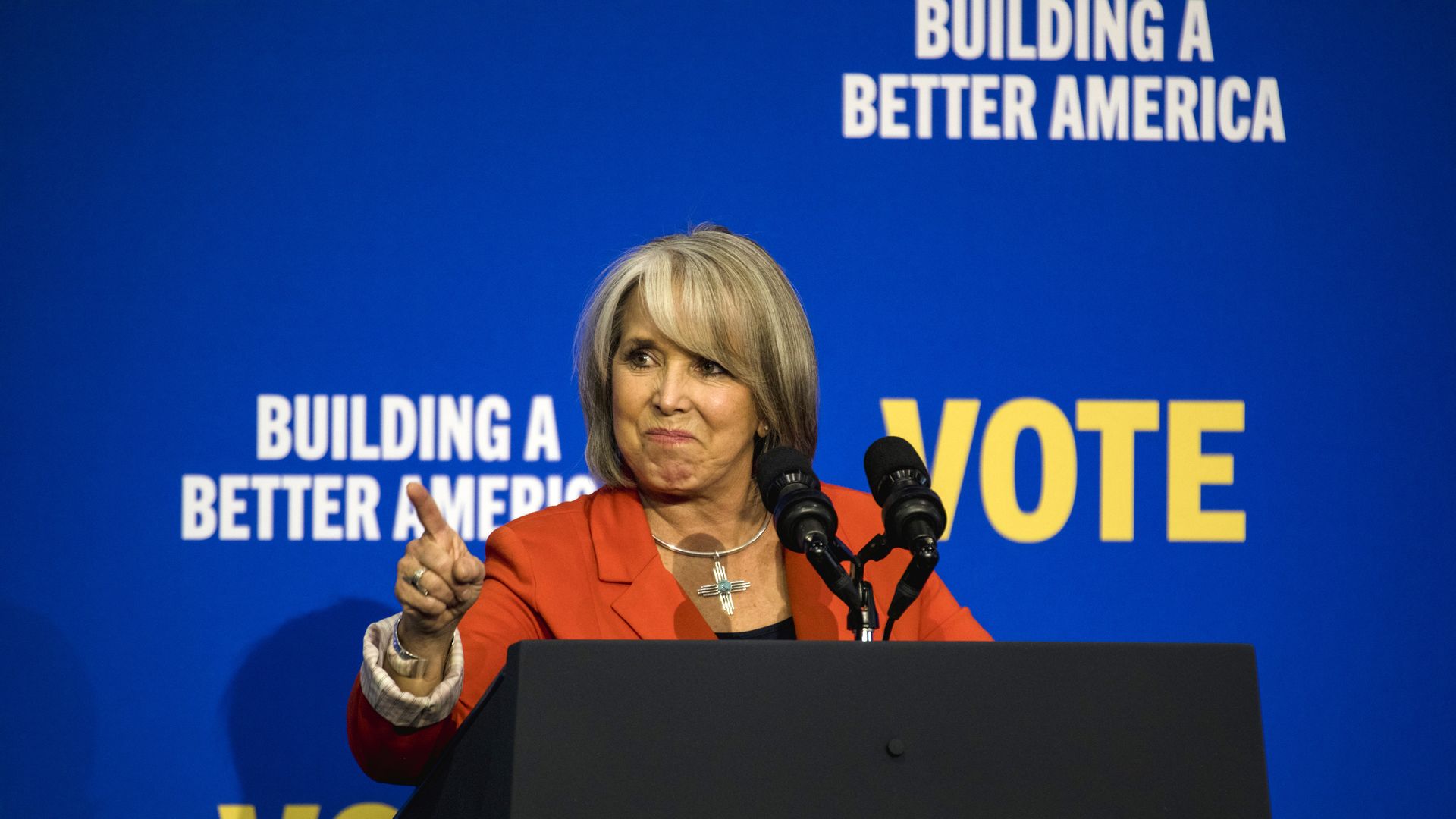
Lujan Grisham in 2022. Photo: Adria Malcolm/Bloomberg via Getty Images
New Mexico Gov. Michelle Lujan Grisham is confident the SunZia transmission line will stay on track despite recent challenges from tribes, Nick and Jael write.
Why it matters: The long-delayed project to send renewable power from New Mexico to West Coast population centers is a symbol of the biggest challenges to the energy transition.
- The governor talked with Axios about New Mexico's transition plans and what Washington can learn from the states about climate policy.
Driving the news: Lujan Grisham said she believes SunZia will get built. She commended the Biden administration for getting the federal permitting process across the finish line.
- But she said the company behind the project "could have done a little more work collaborating with sovereign nations."
- Having the state "invest some time and energy there, I think, can mitigate a lot of that," she said. But "it may not interrupt all those lawsuits, and it might change some of [the] design."
Context: The project broke ground last year — after nearly two decades of planning and permitting.
- But tribes and environmental groups have sued to stop it, and construction was briefly suspended last year in response to tribal concerns.
- Pattern Energy, the company behind the project, "has always put the protection of tribal cultural resources at the forefront of this project and will continue to do so," a company spokesperson said in an email.
Between the lines: This is a big project for New Mexico, which has an energy transition law, a net zero goal by 2050 and is looking to become a player in renewables.
- The lengthy process to get projects like SunZia in the ground is one obstacle that Lujan Grisham sees.
- Modernizing the grid, she said, is taking too long, and that compounds supply chain challenges in the renewable energy industry.
- "I can build another 40,000 acres of solar fields," she told us. "I can quadruple the amount of battery storage we have. I can have two of North America's largest wind energy farms … but I can't put enough of those green electrons onto antiquated grids."
2. Bonus: MLG on oil, Chaco
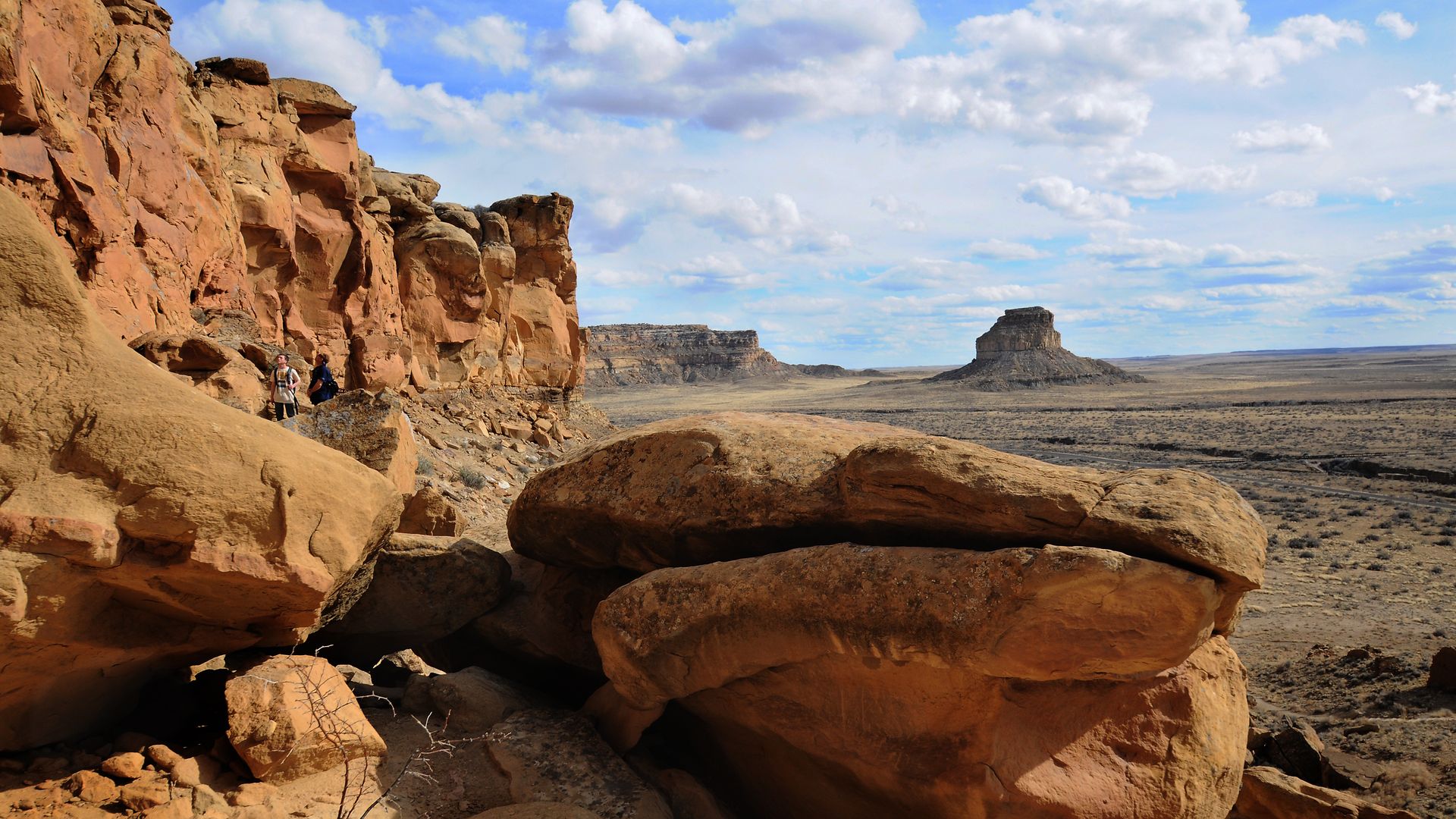
Chaco Culture National Historical Park in northwest New Mexico. Photo: Robert Alexander/Getty Images
A few more notes from our interview…
🛢️ 1. Threading the needle: New Mexico is the nation's second-largest oil producer, and Lujan Grisham isn't inclined to shut off the spigots immediately.
- New Mexico has a lot of federal land, and given her state's commitment to developing renewables, she doesn't see this as a zero-sum game.
- "For me, the debate has been about accountability. And if I can't minimize how much is produced, it better be the cleanest … barrel of oil and the cleanest liter of gas in the world."
- To those who'd like to end production in New Mexico, she says: "Texas would still be able to get that oil out of the Permian. So if your goal is to produce less oil, you're not doing enough about that."
🔮 2. Chaco futures: The governor thinks the Biden administration's protections for Chaco Culture National Historical Park will endure through a potential next GOP administration.
- But she also noted the disparate tribal views on Chaco, with the Navajo Nation opposed to the oil and gas buffer zone.
- "Sometimes people assume that a sovereign nation's interests [are] on the side of land, sacred sites, archeological issues … but sometimes it's their own fossil fuel industry issues."
💧 3. Climate impacts: Lujan Grisham is convinced she'll eventually get her strategic water supply proposal through the state legislature, something she sees as a direct response to New Mexico's changing climate.
- "You can see how dry New Mexico is," she said. "I can see changes in soil quality in a 60-mile drive from Santa Fe to Albuquerque."
- She's proposed a $500 million plan to treat brackish water from underground and oil and gas wastewater for industrial uses, but it flopped this year and has drawn some environmental criticism.
3: Exclusive: New oil antitrust letter

Illustration: Natalie Peeples/Axios
Senate Republicans are about to ask the Federal Trade Commission to "follow the law" on recent oil and gas mergers, Jael has learned.
Why it matters: The antitrust regulator is facing pressure from the left to clamp down on oil and gas industry consolidation.
Driving the news: Minority Leader Mitch McConnell and 37 GOP senators plan to send a letter to FTC Chair Lina Khan as soon as today arguing against Senate Democrats' request for oil and gas antitrust action.
- Led by Sen. Ted Cruz, the letter rebuts specific arguments Democrats have made about how mergers could affect competition in the oil and gas sector, according to a copy shared with Axios.
- "Our Democratic colleagues may be entitled to their own opinions, but a fair and unbiased review of these mergers must be based upon actual facts."
Zoom in: The letter also argues that ceding to Democrats' wishes would be equivalent to "anti-fossil fuel policy preferences" that Congress "has not authorized the Federal Trade Commission to regulate."
- This point matters because if the FTC did wade into the waters of oil mergers, it could get kicked around a federal court system already weighing SCOTUS' new "major questions" doctrine.
- That's the originalist legal notion that agencies should not be acting beyond the texts of specific statutes.
Flashback: The FTC under President Trump wound up opposing a giant coal industry deal during the last year of his presidency.
4. Bingaman still favors national renewable standard
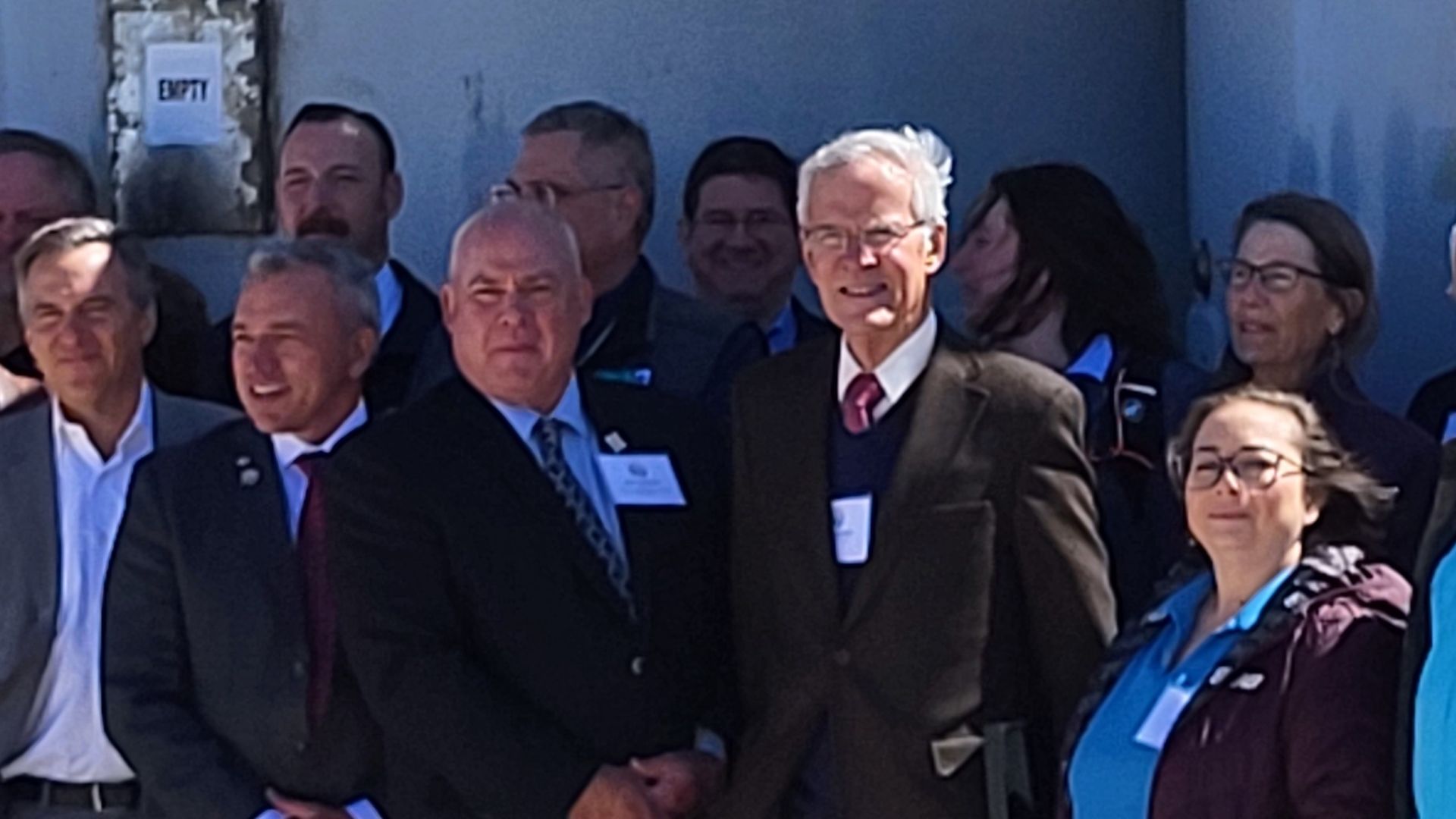
Bingaman (second from right) at WIPP. Photo: Chuck McCutcheon/Axios
Former Senate ENR Chair Jeff Bingaman says an idea he championed in Congress — a national renewable portfolio standard — still has merit, Pro Energy editor Chuck McCutcheon writes.
Why it matters: Advocates of a mandate for states to generate or procure a certain percentage of electricity from solar, wind or other renewable technologies say it would speed development of those sources.
What they're saying: A national RPS remains "conceivable," Bingaman said on the sidelines of an event celebrating the 25th anniversary of the Waste Isolation Pilot Plant (WIPP), an Energy Department site in southeast New Mexico storing waste generated by nuclear weapons plants.
- "You have to have enough flexibility in it that you can take into account different circumstances with the states," the New Mexico Democrat said. "Obviously the idea to do something significant was the sun right here in New Mexico, but other [states] have to look for other renewable sources."
The big picture: Thirty states and Washington, D.C., have active renewable or clean energy requirements, and three other states have voluntary renewable goals.
- The Senate in 2005 narrowly backed a national standard sought by Bingaman that would have required 10% of electricity to come from renewable sources by 2020.
- But House Republicans opposed a broad mandate and it never became law.
Fun fact: Apart from writing a 2022 book on Congress' dysfunction, Bingaman said he's enjoying a quiet retirement in Santa Fe. "I'm not doing much," he said with a smile.
5. Catch me up: Letters galore

Illustration: Shoshana Gordon/Axios
☢️ 1. Big nuclear bucks: The Biden administration is conditionally offering a $1.5 billion loan to restart a nuclear power plant in Michigan.
- It's a signal the decarb cash spigot is opening ahead of the election, coming days after DOE announced about $6 billion for various decarbonization projects in heavy industry.
💨 2. Wind gets a win: Biden's given a federal green light to the South Fork offshore wind project off New York state's coast.
💌 3. From California with love: California Democrats wrote the state Public Utility Commission requesting a fresh look at proposals for fixed charge rates.
🔥 4. From EPW with fire: Senate EPW ranking member Shelley Moore Capito sent a missile of a letter to EPA today criticizing implementation of the IRA's methane reduction fee.
- Joe Manchin has his own letter criticizing how the agency is handling the program.
💰 5. Conservative rally: Right-wing activists are publicly ramping up pressure on lawmakers to invalidate the SEC's emissions disclosure rule through a CRA.
✅ Thank you for reading Axios Pro Policy, and thanks to editors Chuck McCutcheon and David Nather and copy editor Amy Stern.
View archive