
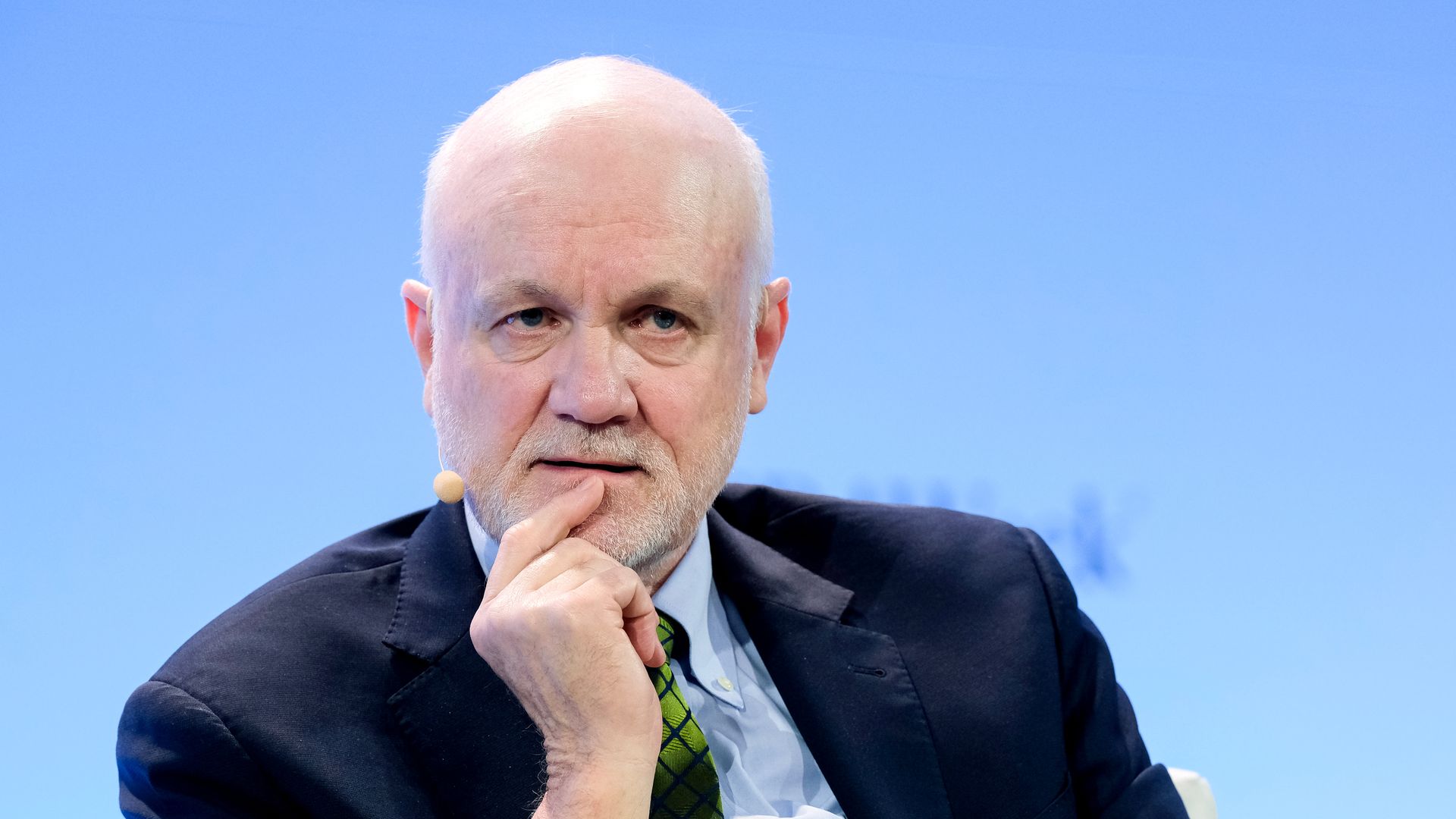
Christie in March. Photo: F. Carter Smith / Bloomberg via Getty Images
FERC Chair Mark Christie, leading his final meeting Thursday, pointed to this week's PJM capacity auction results as a further sign that power grid shortfalls are an imminent threat.
Why it matters: Christie leaves as FERC comes under intensifying pressure from the Trump White House to address rising electricity demand.
- Christie — whom Trump declined to renominate for another term — was seen as a bulwark against DOGE's attempts to cut staff and funding at agencies and independent commissions like FERC.
What he's saying: "The biggest single takeaway is: We absolutely need new generation," Christie said. "It is that tight in PJM right now. So the reliability threat is not on the future horizon. It is now here."
- PJM, the country's largest grid operator, hit the cap for power capacity prices in the Mid-Atlantic region in a move likely to spur more congressional grumbling about rate hikes.
Between the lines: The commission also approved requests from two grid operators to speed up more power plants.
- The Midcontinent Independent System Operator (MISO) and Southwest Power Pool (SPP) will fast-track power projects through the interconnection review process to address reliability concerns.
- And FERC approved PJM's plan to fast-track up to 50 power plant projects to be studied to connect to the grid to address near-term grid reliability concerns.
Friction point: The fast-tracking faces pushback from renewable energy advocates who criticize the emphasis on fossil fuels.
- FERC's approval is a "dangerous misstep" that ignores "widely acknowledged market realities," said Carrie Zalewski, the American Clean Power Association's vice president of markets and transmission.
