
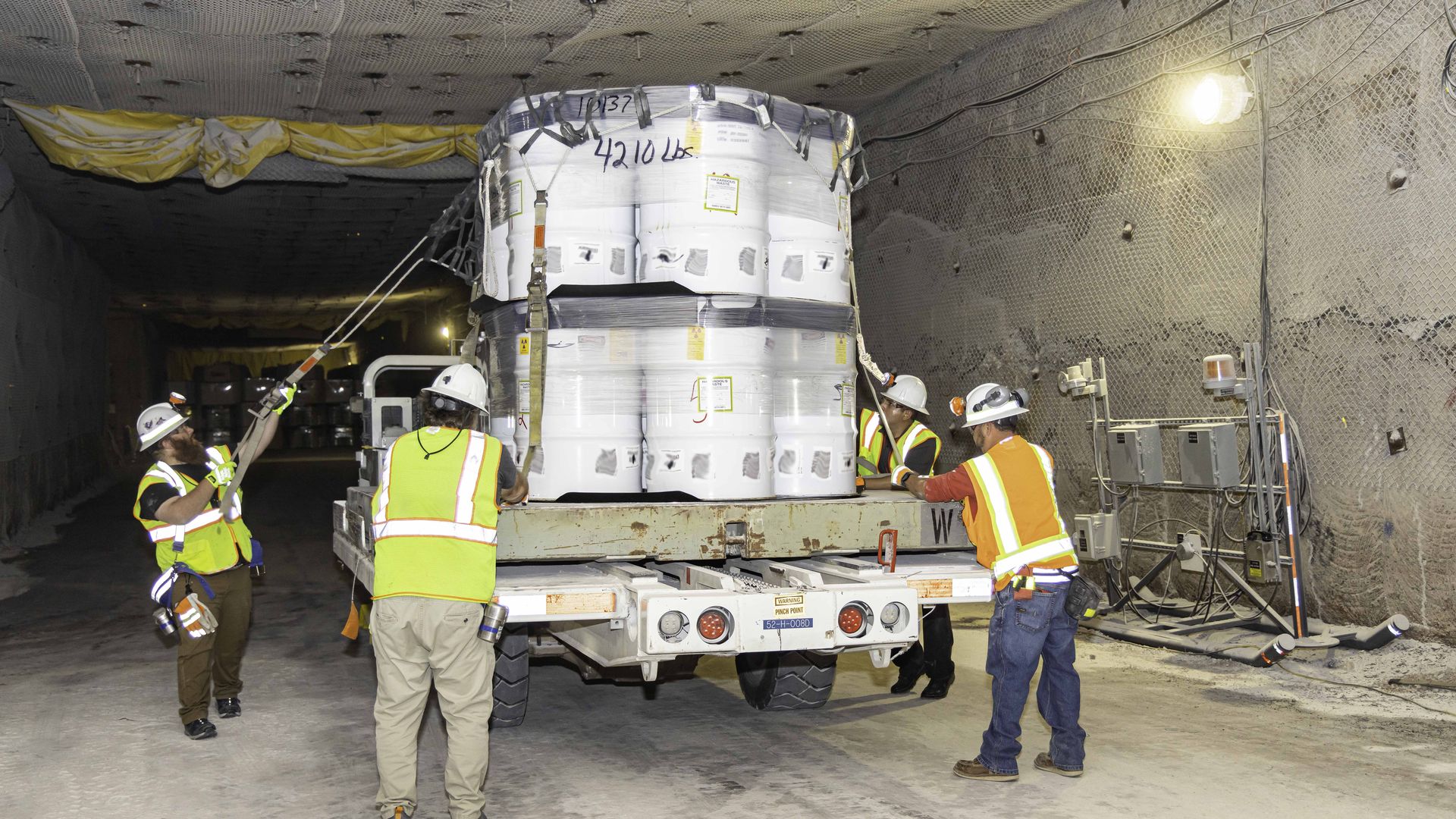
Drums of waste are unloaded underground at WIPP. Photo: Roy Neese/Salado Isolation Mining Contractors LLC
The Energy Department sees numerous challenges to finding a second spot to permanently bury nuclear waste from weapons plants — including proving the need for one to Congress, a new report says.
Why it matters: New Mexico officials required DOE in 2023 to study finding a new waste repository located outside the state.
Context: The state already hosts the Waste Isolation Pilot Plant (WIPP), the nation's first deep geologic burial site for radioactive rubbish, in its southeastern corner.
- Since 1999, discarded tools, gloves and other plutonium-contaminated materials have been buried 2,150 feet underground at WIPP.
- The state has authority to regulate "mixed" hazardous and radioactive waste under RCRA.
Driving the news: The department issued its report last month summarizing work toward finding a future home for transuranic, or TRU, wastes.
- "Effectively demonstrating the need for a second repository is a critical first step to securing the necessary congressional authorization and funding for a second TRU waste repository," the report says.
- It said that based on its 2023 inventory of waste across the nuclear weapons complex, WIPP has enough capacity to store all known and potential waste.
- As a result, it said, "effectively demonstrating the need to receive authorization and funding for a second TRU waste repository at this time may be challenging."
The department released a more recent inventory of its waste this month and said in a statement that it "remains confident that WIPP has adequate statutory capacity for defense TRU waste needs."
The other side: Don Hancock of Albuquerque's Southwest Research and Information Center faulted the report for not more broadly involving entities outside of the agency's Environmental Management program.
- The report is inadequate because all of the appropriate DOE actors weren't involved," Hancock told Axios.
