
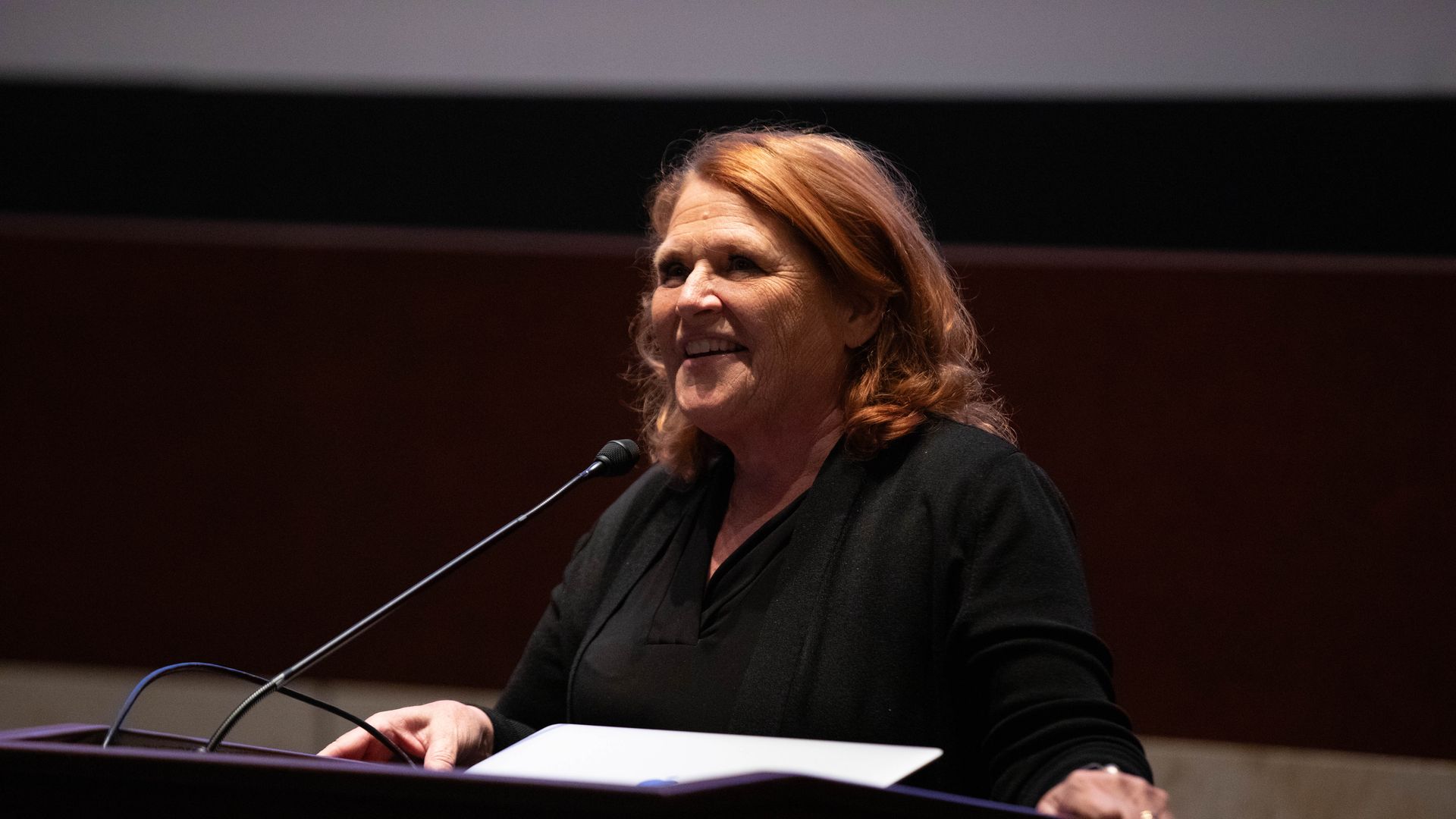
Heitkamp in September. Photo: Brian Stukes/Getty Images
A group led by prominent former lawmakers is working with the Hill to draw up a roadmap for the post-Chevron legislative world.
Why it matters: The demise of agency deference at the hands of the Supreme Court has huge implications for environmental regulations and legislating on energy policy.
- It's forcing lawmakers to rethink how they negotiate and draft bills.
Driving the news: The working group, organized by the Bipartisan Policy Center and chaired by former Sens. Heidi Heitkamp and Mel Martinez, plans to issue a "playbook" next year on the new legal landscape.
- It's already met several times with member offices and committee staff, discussing how to draft bills and provide more guidance to agencies.
- "In our initial discussions, it's been interesting, because a lot of people who watch this very closely have said that the agencies have been preparing for a long time for the reversal of Chevron," Heitkamp told Axios. "But somehow, Congress has not."
- Other members include former Rep. Allyson Schwartz, Congressional Management Foundation CEO Jen Daulby and NRDC managing litigator Jared Thompson.
Context: The Loper Bright decision upended Chevron, a long-standing precedent in which courts deferred to agency experts in their interpretation of the law.
- Agencies had relied on it to defend all sorts of environmental regulations and to respond to threats like climate change that aren't explicitly spelled out in the law.
Between the lines: Lawmakers — particularly Republicans — think this means Congress will have to be more specific in how it delegates to agencies, but as some members have already noted, that's not going to be easy.
- Congress is often vague because lawmakers want an agency to respond to future problems, or because it's easier to negotiate legislation when both sides think the executive branch will interpret the law how they want.
- Both Heitkamp and Martinez said they think this is a problem of political will, rather than staff capacity.
- "They want to get something done, and they take a shortcut," Heitkamp said.
