
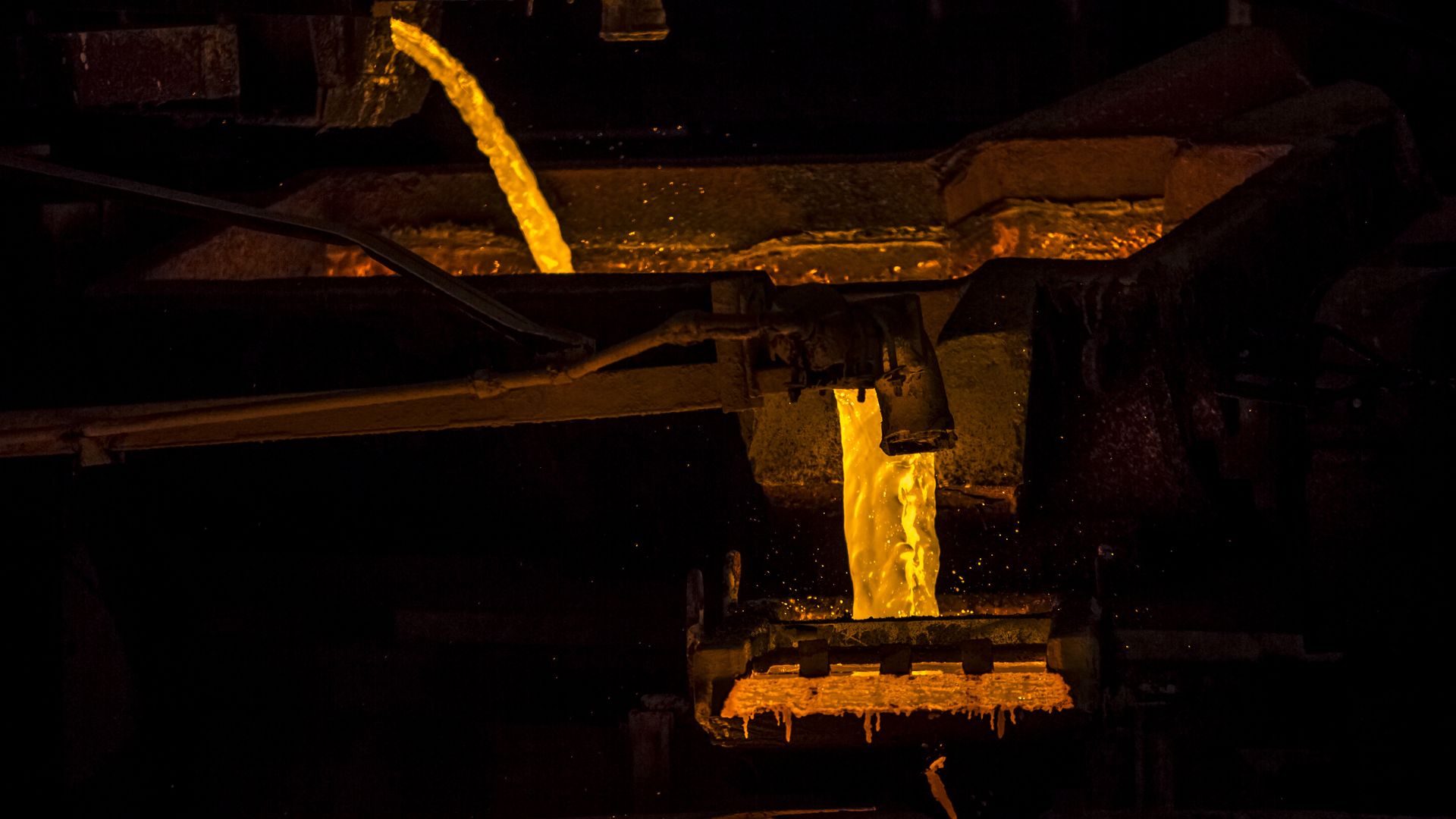
Molten copper pours into ceramic molds to form plates at a copper smelter facility in Ilo, Peru. Photo: Dado Galdieri/Bloomberg via Getty Images
The Energy Department is allowing copper refineries to qualify for a new tax benefit under the Inflation Reduction Act.
Why it matters: Copper processing is integral to an industrial energy transition, as it's used in solar, wind, EVs and other sectors.
- The U.S. does relatively little of that work. But the IRA might change that.
Driving the news: The Energy Department on Monday released its first-ever "critical materials" list and included copper, a metal integral to basic electrical wiring — and key to decarbonization technologies.
- This decision will let copper refineries, processing plants and recycling projects qualify for the federal 48C advanced energy project tax credit, which the IRA expanded. The law also set DOE's list as a qualifying criteria.
- DOE also now lists electrical steel as a "critical material," so proposals to process that industrial material can qualify as well.
What they're saying: "As we electrify vehicles, those require more copper. As we increase transmission and distribution lines, those require more copper. Other forms of electrification will require more copper," said Diana Bauer, deputy director of DOE's advanced materials and manufacturing technologies office.
Between the lines: Another qualifying rubric for the credit is the U.S. Geological Survey's "critical minerals" list, which also counts for the IRA credit. But the USGS did not include copper on its document, despite a loud political push to do so.
The intrigue: Bauer told Axios the DOE list differs from the USGS document because it is more focused on demand projections for materials as opposed to a more domestic-focused assessment of available resource supplies.
- DOE also notes different legal definitions of a "critical material" and a "critical mineral."
- This list will also feed into programs funded by the bipartisan infrastructure law to boost battery materials production, Bauer added.
How 48C works: Applicants can apply to DOE for a credit that can total up to 30% of their investment in a project during the given taxable year.
- The amount can be reduced to as low as 6% of the investment, depending on whether an applicant fails to meet certain wage and apprenticeship requirements.
Yes, but: 48C is a competitive credit with a limited amount of funding available and materials processing projects will be competing with solar, wind and geothermal energy ones.
