U.S. startup to supply battery materials to Panasonic

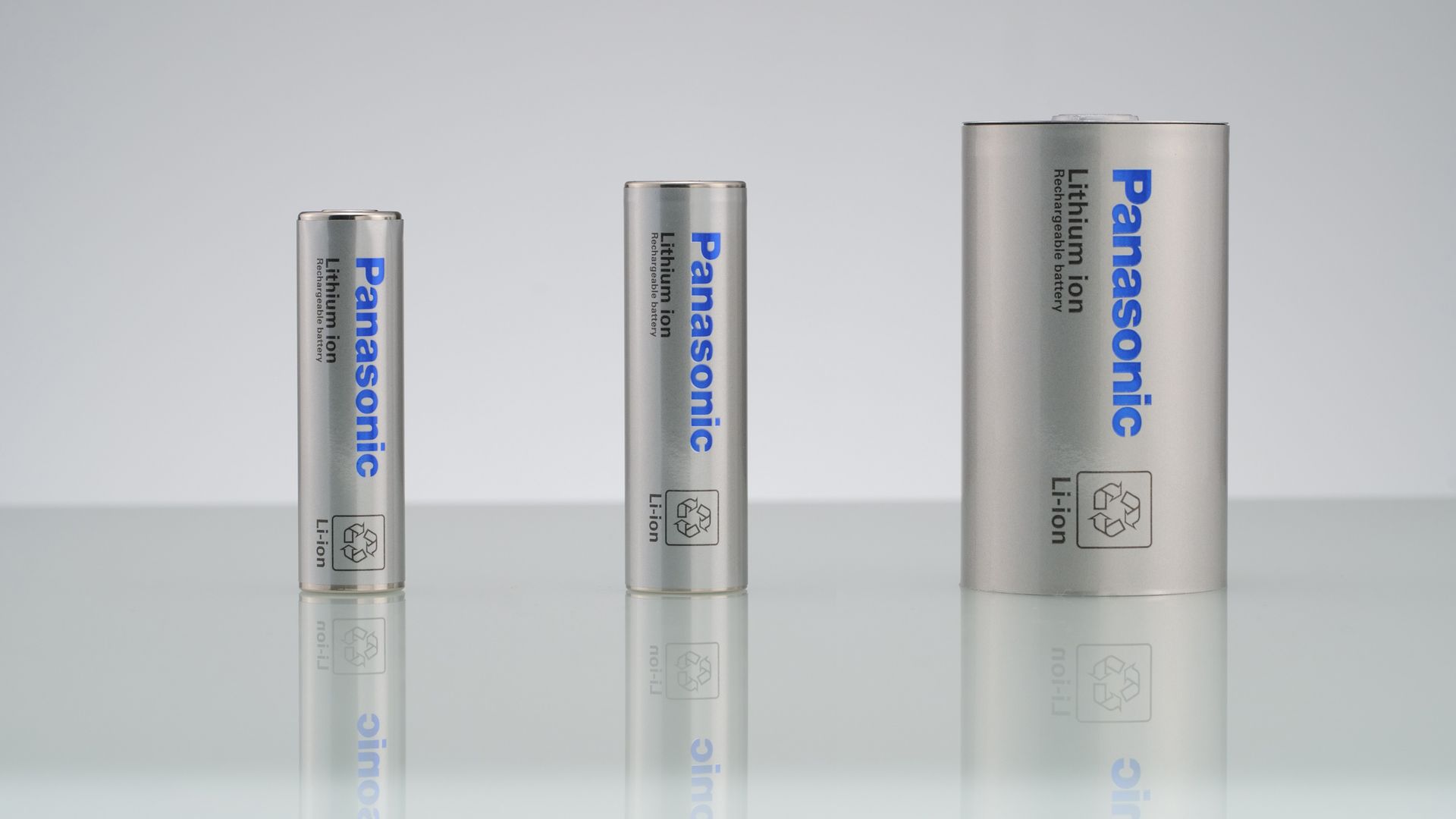
Panasonic lithium-ion batteries. Photo courtesy of Panasonic Energy
Panasonic's battery division plans to buy materials from U.S. upstart Sila to boost the performance of its batteries that go into electric vehicles.
Why it matters: The agreement is a major milestone for the U.S. startup as well as an important step for American-made, DOE-supported next-gen battery technologies.
Details: Panasonic Energy, based in Osaka, Japan, said it will use Sila's silicon anode material to help it reach a goal of 1,000 watt hours per liter of energy density for its batteries, a significant step that will extend the range of EVs.
- Current lithium-ion batteries have a range closer to 650 Wh/L to a max of 740 Wh/L.
- Sila's anode materials will be produced at its newly-opened factory in Moses Lake, Washington. Mercedes is also a customer of the new site.
- Sila's co-founder and CEO Gene Berdichevsky told Axios that the deal shows momentum for next-generation silicon anode technology as it's being adopted by the world's leading battery maker.
How it works: A battery is made up of an anode and a cathode that facilitate the flow of an electric charge.
- Most lithium-ion batteries use an anode made of graphite, and China dominates the graphite battery materials market.
- A silicon-based anode can boost a battery performance enough to extend the range of an electric vehicle by 20%.
Of note: Berdichevsky was the seventh employee at Tesla and the principal engineer on the Tesla Roadster battery. Panasonic is a major battery supplier to Tesla.
- Berdichevsky wouldn't comment on if his silicon anode would end up in Tesla vehicles.
Big picture: Sila, based in Alameda, Calif., is one of the poster children of the Biden administration's efforts to transition EV battery manufacturing back to the U.S. and out of the grip of China.
- Sila received a $100 million grant from the Department of Energy to fund the Moses Lake facility.
- Sila's DOE-backed factory has now secured two global brand-name customers.
What's next: Sila still needs to build out its Moses Lake facility and start shipping the product produced there by 2025.
