Climate startups look beyond VC for funding sources

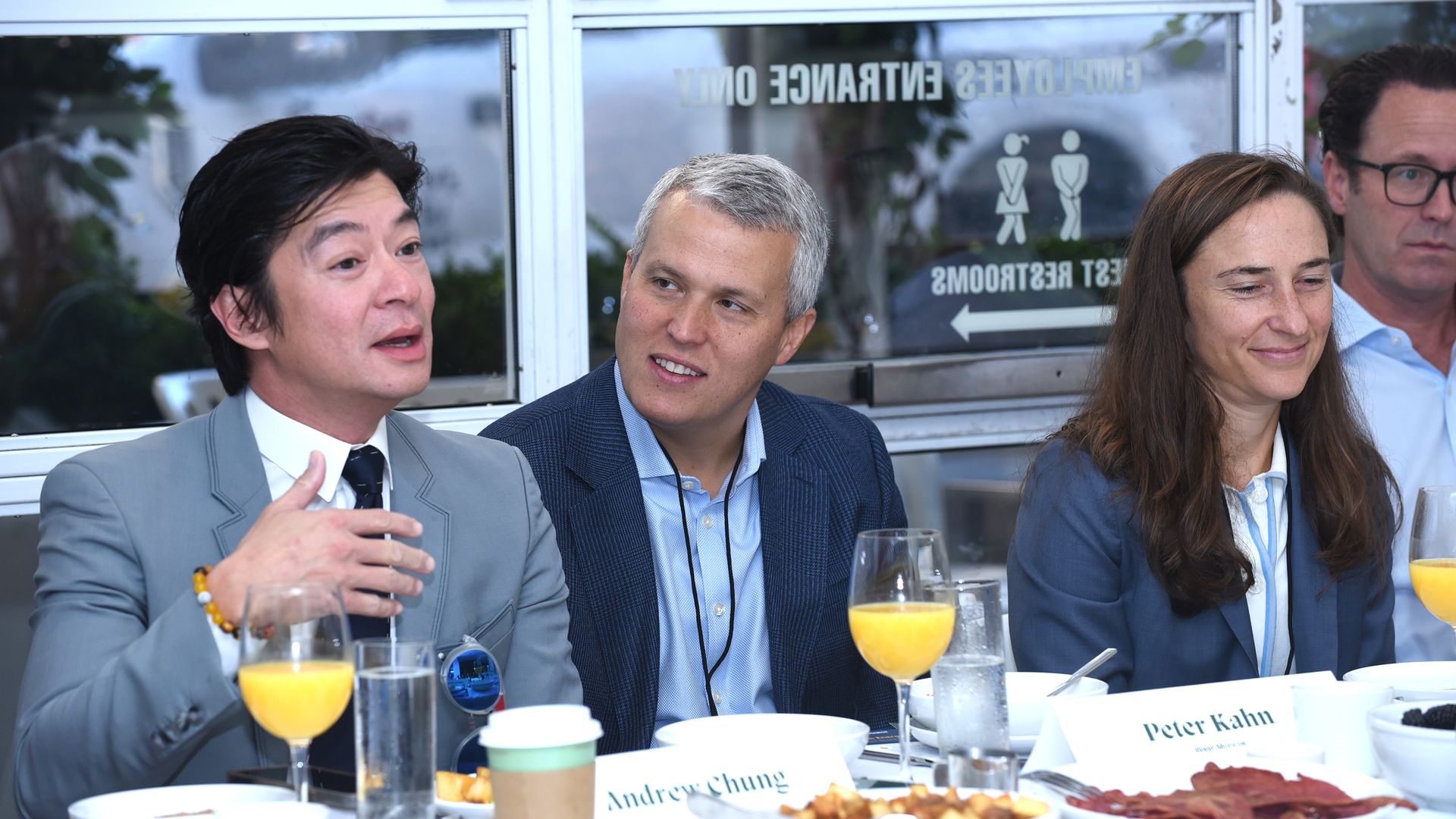
Andrew Chung, founder of 1955 Capital; Peter Kahn, senior partner, mergers & acquisitions, West Monroe; and Mary Mary Weisskopf, partner at Ember Infrastructure. Photo: Beatrice Moritz for Axios.
As venture funding pulls back, other pools of capital have emerged that can fill the void, a group of climate-tech leaders said on Thursday.
Driving the news: Climate-tech founders, investors and advisers gathered at an Axios Pro roundtable to tackle a range of topics impacting the industry.
What they're saying: VCs are focused on the health of their portfolio companies more so than funding, said Andrew Chung, founder of 1955 Capital.
- "You have to get a lot more creative during the next few years to be able to find the right type of investor, which may not come from the traditional institutional sources," said Chung.
State of play: The roundtable pointed to several alternative financing options:
- Strategics: Companies across oil, auto, energy, industrial and real estate are looking to invest in startups in various ways to add value to their own businesses. Oberon Fuels CEO Rebecca Boudreaux said the 13-year-old company, which makes renewable fuels, previously raised funding from the oil and gas sector when VCs weren't willing to back them.
- State governments: States that have Republican governors with progressive climate policies have been able to access large amounts of capital to help fund climate projects that weren't based solely on returns, said Chung.
- Canadian pension: Arash Nazhad, managing director of investment bank Moelis & Company, said he's been talking to Canadian pension funds that are looking for investments to be made in Canadian regions like Quebec.
- Middle East sovereign wealth: Likewise, "people are going to increasingly look to Middle East sovereign wealth funds" for investments, said Nazhad, pointing to the example of EV company Lucid Motors drawing investment from Saudi Arabia's PIF. Saudi Arabia is making investments to bring development and diversification beyond oil to the Kingdom.
- Philanthropic and family offices: "Who are the folks who aren't looking for the same level of risk or return?" said Chante Harris, managing partner and founder of Something New. "There's a lot of emerging capital in the philanthropic space."
- Ex-Im Bank: For companies that export goods, the U.S. Export Import Bank has a "Make More in America" initiative and is offering loan guarantees, said Tracy Gray, managing partner of The 22 Fund.
Yes, but: "Capital across the board is just more expensive now," said Gabriel Kra, managing director at Prelude Ventures: "It's much harder than it was 12 or 18 months ago."
Big picture: In addition to the alternative funding sources discussed during the breakfast session, startups are raising non-dilutive capital through federal grants and access to loan guarantees, enabled by the Inflation Reduction Act, as well as project financing when there's little technology risk for new projects.
- While it might be hard for growing startups searching for capital, the flip side is it's a more investor-friendly funding environment.
- "I think it's a great time to be investing right now. I'm actually very optimistic that some of the best climate-tech companies are going to come out of this generation of investments," said Chung.
