Logistics giant DHL revs up buying of electric trucks and planes

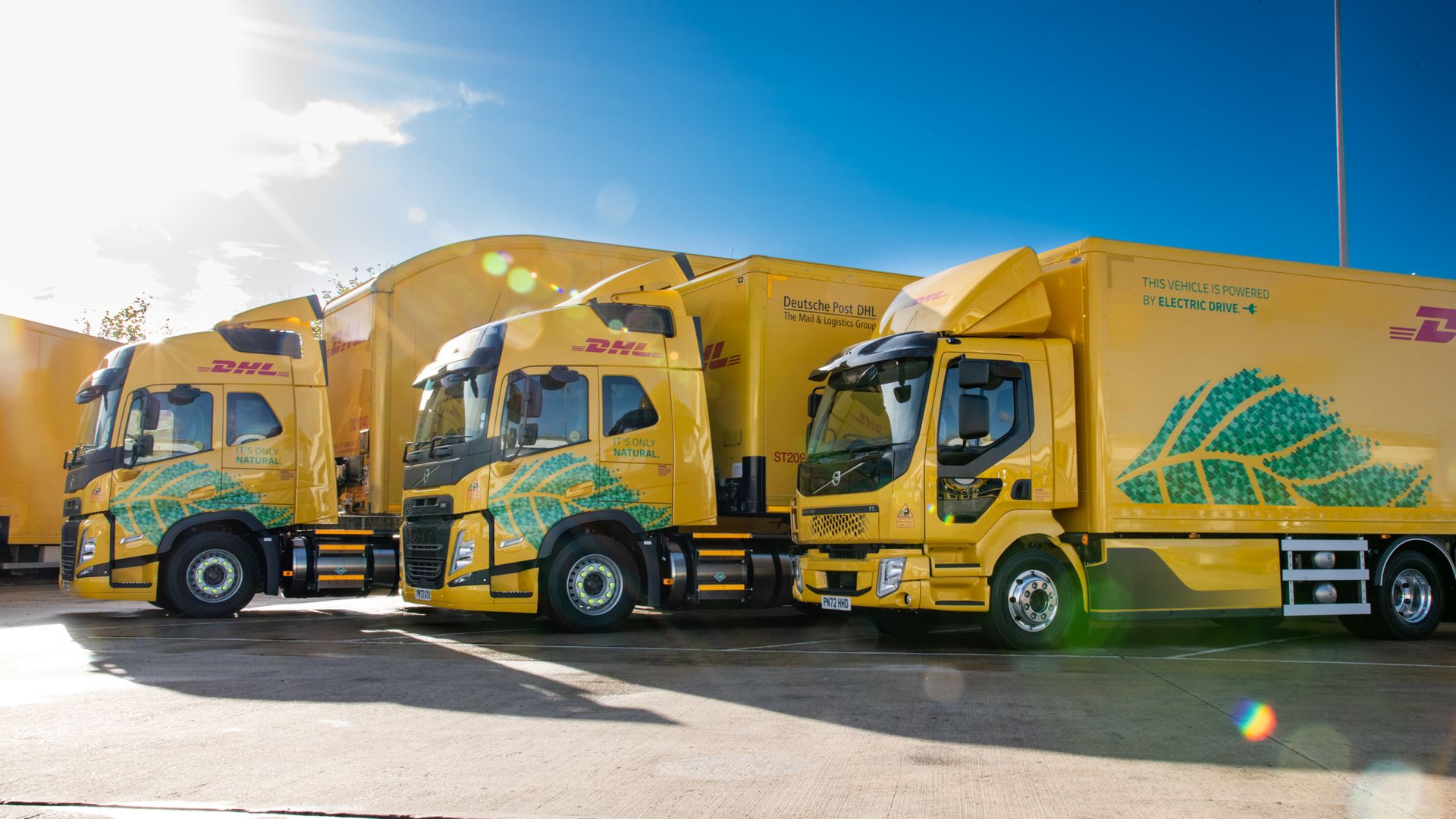
DHL is ramping up its purchases of electric trucks. Photo: Courtesy of DHL
Shipping behemoth DHL has quietly emerged as a major buyer of electric trucks and planes, as well as bio-based jet fuel to operate its traditional aircraft.
Why it matters: Logistics operators are emerging as some of the most aggressive acquirers of low carbon transportation technologies as the companies rush to hit substantial net zero targets and navigate global environmental regulations.
Details: DHL is operating 30,000 electric vehicles and plans to reach 80,000 EVs by 2030, more than doubling its electric fleet within seven years, DHL Americas CEO Mike Parra tells Axios.
- Those numbers make DHL's electric fleet one of the largest in logistics. The company has bought vehicles from manufacturers including Ford and Volvo Trucks, and has made its own.
- Beyond ground EVs, DHL's division DHL Express has agreed to buy up to 12 electric planes from Israeli aviation upstart Eviation.
- DHL has also agreed to buy more than 830 million liters of bio jet fuel through 2026 from companies including BP and Neste.
Be smart: Because of the German company's global footprint, it has to navigate the world's most aggressive environmental regulations in some European and Asian countries, in California and in some cities that are banning diesel-powered delivery vans in city centers.
- Electric vehicles can also help DHL lower its fuel costs over time, because the cost of operating an electric truck can be lower than the cost of operating a diesel-powered one.
Context: Parra says that "infrastructure is a challenge" as DHL moves to swiftly ensure that its rapidly growing EV fleet has adequate charging available.
- When electric fleets get large enough, getting enough electricity from local utilities that manage the power grid can become a substantial barrier. Other logistics operators including FedEx, Amazon and UPS face similar challenges.
- FedEx is electrifying 100% of its parcel delivery fleet by 2040, and Amazon has plans to buy 100,000 EVs from Rivian (though that deal may have changed).
Of note: For years DHL operated StreetScooter, a division that produced electric vehicles for the company's own use, but DHL sold it last year.
- DHL bought StreetScooter in 2014 because the logistics giant couldn't get the volume of electric vehicles it wanted in those early days. But producing its own electric trucks wasn't financially viable.
💭 Thought bubble: DHL has emerged as an important buyer of electric vehicles, planes, bio jet fuel and other low carbon transportation technologies.
- A large purchase order can be a make-or-break deal for a small provider.
- Parra says that "vendor selection is key" when it considers buying these types of products. DHL needs to make sure its partners "have the tech and the backing," including "a track record and scalability," to produce enough products.
What's next: DHL's overall fleet is massive, and those 80,000 electric vehicles represent only 60% of DHL's overall vehicle fleet.
- It's also got over 300 planes operated by DHL Express. Its biggest carbon emissions come from its air fleet.
- Six years ago, DHL announced a plan to have zero emissions from its logistics by 2050 and to spend close to $8 billion on low carbon technologies to achieve that goal.
