
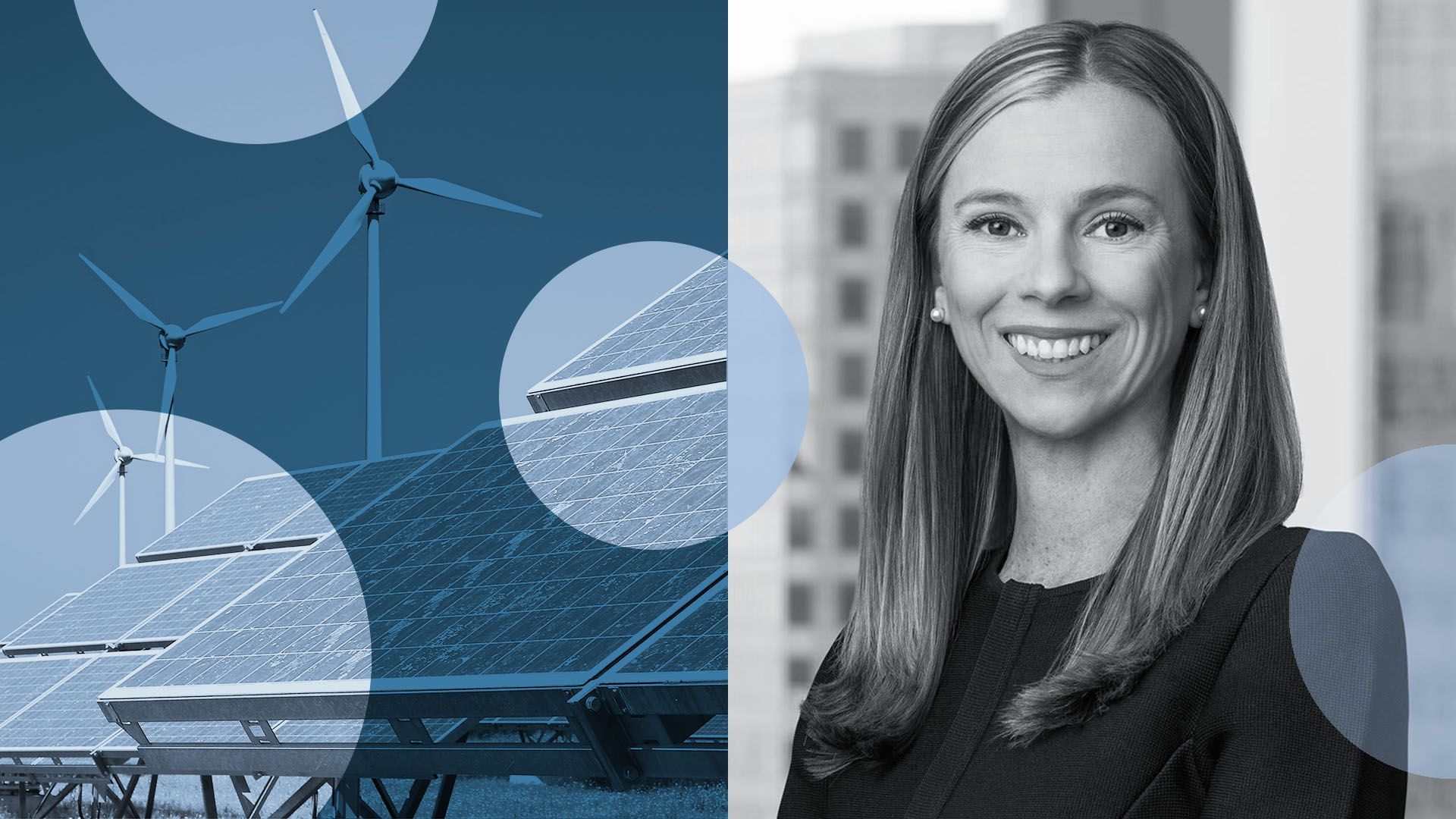
Photo illustration: Tiffany Herring/Axios; Photo: Courtesy of Vinson & Elkins
This week brought relief on the debt ceiling. But with little for dealmakers to do outside Capitol Hill except hope, lawyer Danielle Patterson had her eyes on carbon removal.
Why she matters: Patterson is a partner in the energy transactions and projects practice at Vinson & Elkins, where she works especially closely with private equity firms investing in renewables, battery storage and carbon capture projects.
This interview was lightly edited for length and clarity.
What, in your view, has been the big news in climate tech lately?
- The announcement of JPMorgan’s agreement with Climeworks to purchase carbon dioxide removal services via direct air capture and storage projects.
- Direct air capture and storage technology is still in the development phase, and there are limited DAC plants operating in the world, with only a few coupled with CO2 sequestration.
- It’s exciting to see JPM’s commitment to and investment in this emerging space.
What would you add to the narrative?
- It isn’t just the size of that transaction that makes it noteworthy, it’s the credence that a customer like JPMorgan gives to the direct air capture and storage space.
By contrast, what's going under-noticed?
- The role that oil and gas companies, both upstream and midstream, are playing in the energy transition.
- It will take all kinds of backgrounds, experiences and know-how to drive the energy transition forward, and traditional energy companies are well-suited to play a key role in many clean technologies. We see them being some of the front-runners in this space.
In three-ish words, what change would you make to climate tech dealmaking?
- It’s okay to come up with new solutions for new problems.
Three fun things:
💼 First job: Attorney at Vinson & Elkins — I’m still here.
👑 Proudest deal: Working on carbon capture and sequestration projects for clients — these are first-of-kind transactions.
💡 One tip for investors: No matter the technology, as an investor you are underwriting the developer or sponsor as much as, if not more than, the project itself.
