China's biotech boom could shift investing patterns

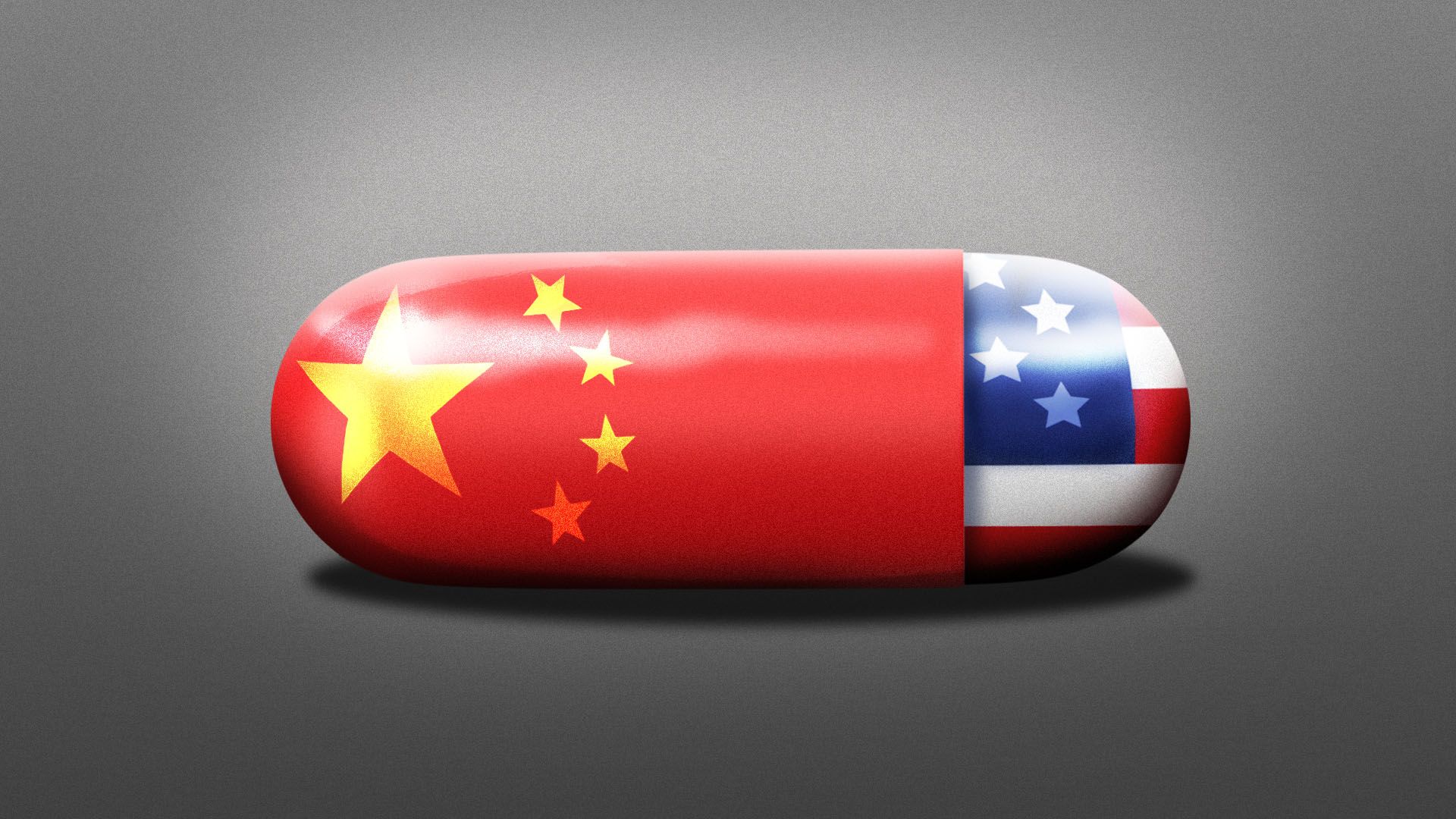
Illustration: Sarah Grillo/Axios
Chinese medicines are gobbling up a larger share of licensing deals this year, which could push more U.S. biotech investors to adopt a global view.
The big picture: Investors could pay closer attention in China as the U.S. pulls back on scientific grant funding that has launched so many early-stage biotechs.
Driving the news: China is transitioning into more of a drug discovery and development leader, per a Morgan Stanley report published Monday.
By the numbers: Annual revenue from Chinese drugs could jump to $34 billion by 2030 and to $220 billion by 2040, per the report.
- These medicines are expected to account for 35% of approvals by the FDA by then, up from just 5% today.
- Per Evaluate Pharma, China-origin drug assets are expected to comprise 40% of global licensing deals this year — a phenomenon that caused Chinese biotech shares to surge earlier this year.
What they're saying: VC firms like RA Capital Management have been vetting and investing in more companies founded in China.
- "There is a lot of promising innovation there that can help a lot of American patients," says RA Capital Managing Partner Peter Kolchinsky.
Zoom in: China has historically been known for producing generic and biosimilar medicines, and operating efficient clinical trials.
- "The non-Chinese companies will not want to ignore those capabilities when thinking about timelines and competition," says ARCH Venture Partners' Keith Crandell.
Yes, but: China's generic and biosimilar manufacturing focus has turned some investors off, as there's typically more upside to backing best-in-class and first-in-class drugs.
- "We have not seen too much from China in that category," Crandell says. "China does have some very strong scientists but is lacking several other important parts of the puzzle."
Threat level: That's beginning to change as China develops more novel treatments for cancer, diabetes and obesity, per the Morgan Stanley report.
State of play: Big Pharma is taking notice, with players like Bristol Myers Squibb, AstraZeneca, Merck and Novartis among the most active dealmakers in China by dollar value in the last five years.
- Novartis made two such deals in the last few months. Last week, the Swiss drugmaker agreed to pay $160 million upfront and up to $5.2 billion to Shanghai-based Argo Biopharmaceutical to develop experimental candidates for cardiovascular disease.
- In July, it committed to pay up to $175 million to Sironax, a company with Chinese roots, for the exclusive option to acquire its blood-brain barrier crossing tech.
The bottom line: "China's biotech ascent has been rapid, propelled by its talent, patient access and a cost-efficient infrastructure," Morgan Stanley's Jack Lin wrote in the report. "These elements have allowed domestic innovators to do more with less."
