Axios What's Next

October 17, 2022

1 big thing: Building better hurricane forecasts

Illustration: Annelise Capossela/Axios
The killer app for hurricane prediction? It could be drones that explore hurricanes and send back real-time data — or new satellite tech that gives forecasters a better look at storms from above, Jennifer A. Kingson and Andrew Freedman report.
Why it matters: Accurate forecasts will be increasingly vital as climate change makes for more intense and wetter hurricanes, which undergo rapid intensification.
Where it stands: Today's monitoring systems are good at predicting a storm's track but struggle to anticipate intensity changes.
- To improve predictions, scientists need more information about hurricanes' relatively small core. Right now, those are mainly sampled by human-flown Hurricane Hunter aircraft.
What's happening: In recent firsts, uncrewed airborne and seaborne drones have transmitted live data and video from inside these violent storms, including areas off limits to Hurricane Hunters.
- The drones complement advanced satellites (including a planned private-sector network) and a new hurricane forecasting model the National Oceanic and Atmospheric Administration (NOAA) aims to adopt next year.
Driving the news: After enduring an especially rough ride into Hurricane Ian, NOAA scientists deployed a 27-pound drone called Altius into the storm's eye and eyewall, where it spent two hours "acquiring critical measurements to understand these complex storm systems," the agency says.
- The 8-foot drone was released from "Kermit," one of NOAA's Hurricane Hunter aircraft.
- It was able to communicate from an impressive range of 100 miles, keeping Kermit's human pilots out of harm's way.
- Last year, NOAA first used "Saildrones" — surface vessels that troll the ocean to assess storm intensity.
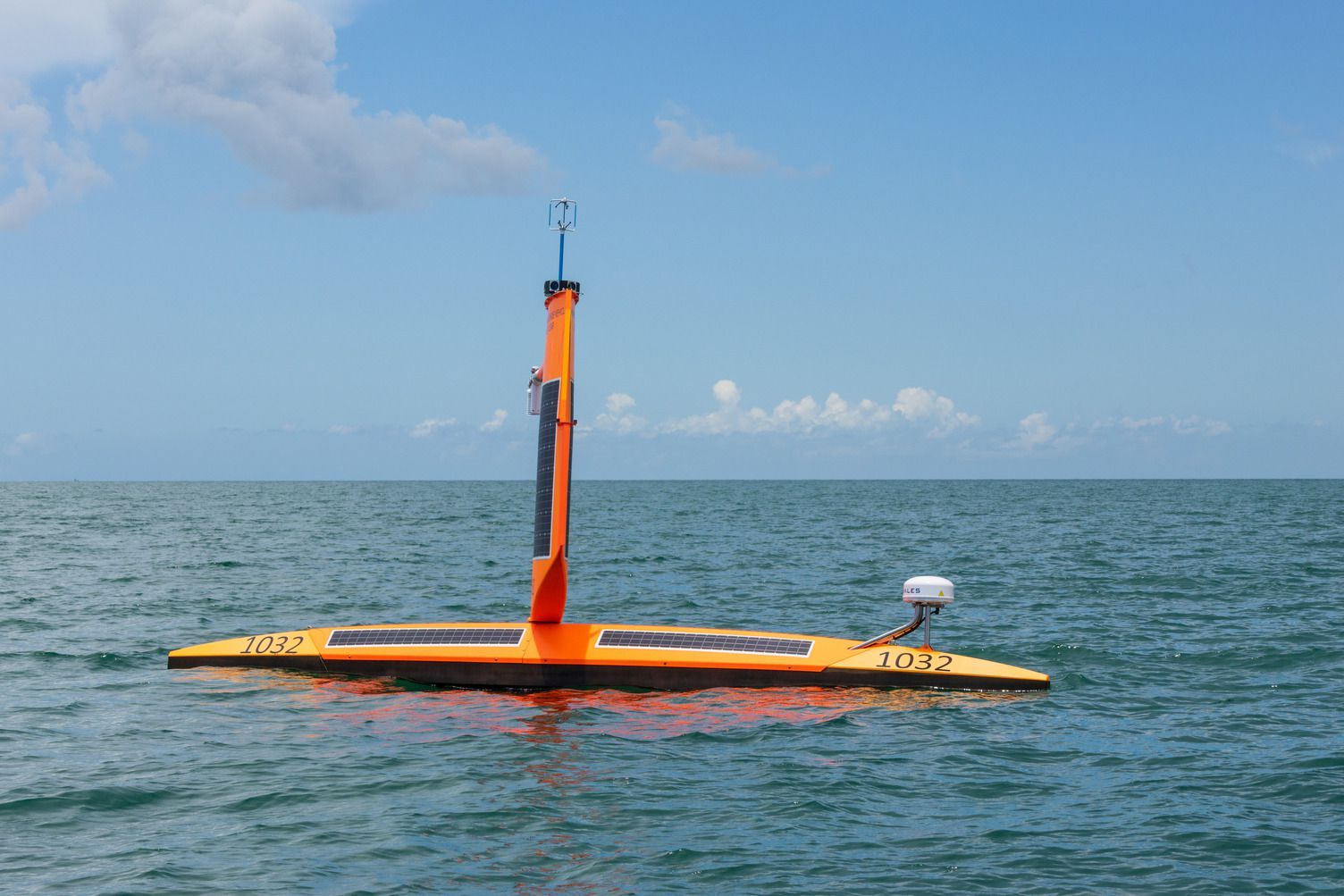
A Saildrone that plunged into Hurricane Sam last year marked "the first time we ever had video coming back in real time from the eye of the hurricane," said Matt Womble, director of ocean data at Saildrone, a NOAA contractor based in Alameda, California.
- The second time was last month, when a 23-foot Saildrone braved 50-foot waves and 100-mph winds in Hurricane Fiona, a Category 4 storm.
NOAA has been testing drones for years, but the latest generation is more sophisticated, providing real-time views of a hurricane's shifting track and intensity.
- "They're so new," Frank Marks, director of NOAA's Hurricane Research Division, said of the drones. "We haven't really taken advantage of them beyond seeing things we've never seen before."
- Going forward, the "kind of technology combination we're looking for is the manned aircraft flying the safer part of the storm a little higher" while drones dive into the eye.
The big picture: For storm intensity forecasts in particular, NOAA has been developing a new and improved system known as HAFS — the Hurricane Analysis and Forecast System — and hopes to implement it next spring.
- Marks says he was "blown away" with how HAFS performed during real-time experiments on Hurricanes Ian and Fiona.
Meanwhile, Boston-based weather and climate intelligence firm Tomorrow.io is building a constellation of 12 satellite-mounted radars meant to scan developing tropical storms and hurricanes hour by hour.
The bottom line: Not only can these new technologies pump out data that improves forecasting models, the drones can also beam video that conveys the ferocity of the storm to the general public — potentially persuading people to evacuate.
2. WFH creates opportunities for disabled workers

Illustration: Eniola Odetunde/Axios
3. Iowa schools install mental health alert software

Illustration: Megan Robinson/Axios
4. 📈 Streaming services, by $$$
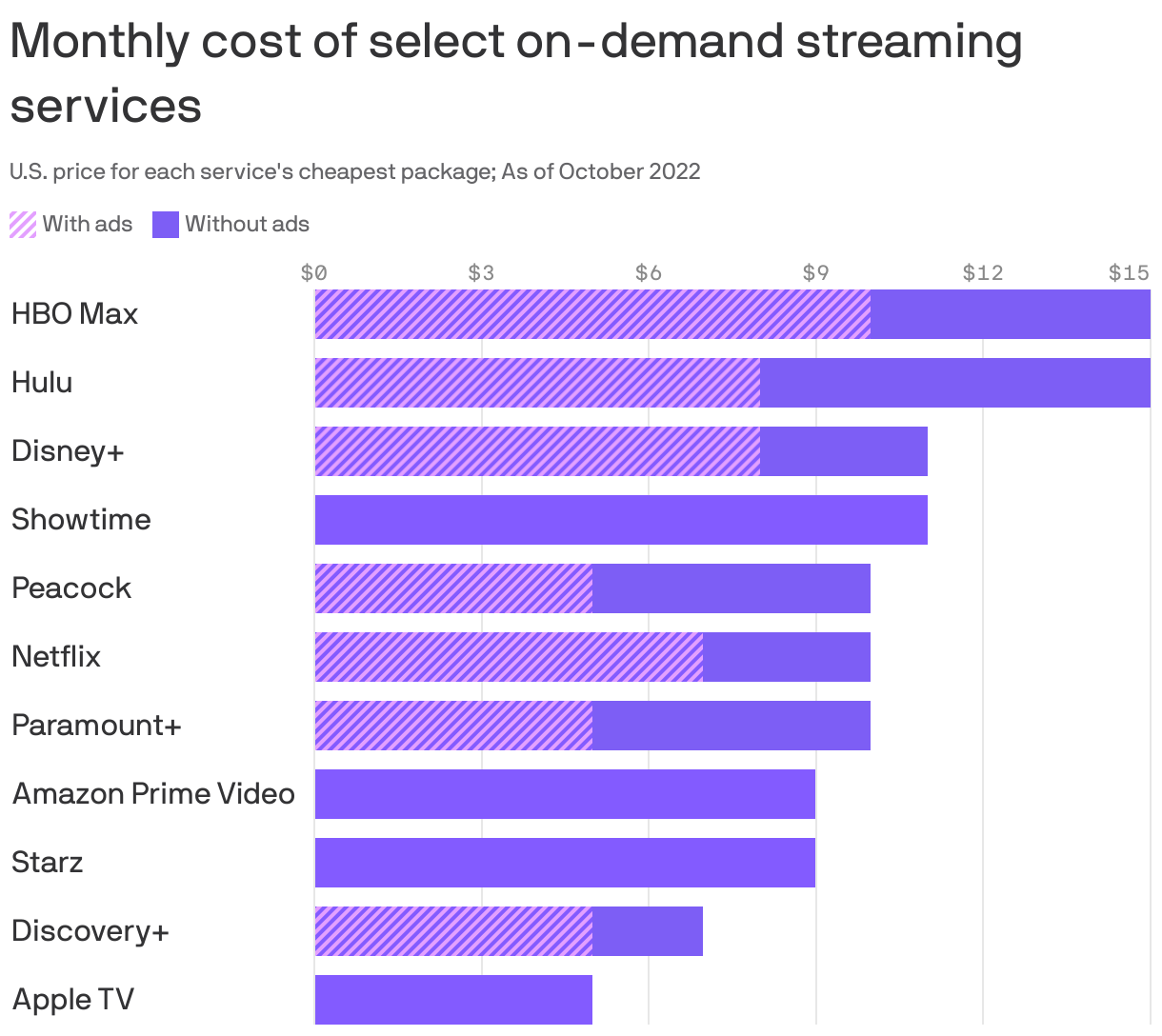
The most popular TV streaming services now cost anywhere from about $5 to $15 a month, depending on options, per an Axios survey.
- Some, such as HBO Max and Paramount+, offer cheaper ad-supported plans alongside pricier ad-free tiers.
- Others, such as Netflix, also have relatively high-cost premium tiers with 4K shows and movies.
Driving the news: Netflix is launching a $6.99/month ad-supported plan in the U.S. next month, Axios' Sara Fischer reports.
- The idea is to appeal to those who might not otherwise sign up — or keep people who were thinking of unsubscribing.
Alex's thought bubble: Gone are the days when streaming was a cheaper alternative to a cable plan. Now, budget-conscious TV fans have to make careful choices about which streamers they really, truly want.
5. One fun thing: What's that bird?
Photo: Ben Montgomery/Axios
Axios What's Next

The next decade of big, sweeping changes will unfold in cities and communities where new technologies like 5G, AI and drones are transforming how we work, live and play together. What’s Next will guide you through the revolution.