Axios Vitals

July 15, 2026



Good Wednesday morning. Today's newsletter is 888 words, a 3.5-minute read.
⚡️ Join Axios Live in Washington, D.C., on Wednesday, July 22 at 7:30am ET for a conversation about the policies, innovation and safety considerations around GLP-1 drugs. RSVP here.
1 big thing: CDC pick may have easier path through Senate

The latest Senate debate over a Trump health appointment kicks off today with a less polarizing nominee than some of the president's previous picks — but that doesn't mean controversies around vaccines and public health are over.
Why it matters: Former deputy surgeon general Erica Schwartz will have to convince lawmakers she has a vision to lead the CDC but can still work with Health Secretary Robert F. Kennedy Jr., who clashed with the last full-time CDC director over vaccine policy changes.
- If confirmed, Schwartz will inherit an agency battered by DOGE cuts, an attack targeting the CDC's Atlanta headquarters and political upheaval that led to the departure of top staff scientists.
- The agency has seen hundreds of millions in public health grants to states slashed and would face hundreds of millions more in cuts under the administration's fiscal 2027 budget.
State of play: Schwartz will be appearing before the Senate health committee and Chairman Bill Cassidy (R-La.), who has clashed with Kennedy over vaccine policy and recently lost a primary to a Trump-backed challenger.
- Cassidy said on CBS' "Face the Nation" last month that he was "favorably impressed" with Schwartz after meeting her.
Yes, but: There are questions about whether Cassidy will challenge a second nominee facing the panel today: Sean Kaufman, who's in line for assistant secretary for preparedness and response.
- Stat reported that he has made comments questioning vaccines in some cases, which could raise red flags for Cassidy, a staunch vaccine defender.
What they're saying: Richard Besser, former acting CDC director under President Obama, called Schwartz an "experienced, principled public health leader."
- But he said he hopes senators in the hearing ask her "how she would respond to efforts by the secretary and others in the administration to undercut public health measures, and whether there would be lines in the sand that she would refuse to cross?"
2. Medicare proposes overhauling physician pay


Doctors could see up to a 1.68% cut to their Medicare payments next year under a sweeping proposal the Trump administration released yesterday that aims to push more clinicians into value-based care arrangements.
The big picture: Physicians have generally seen their fees decline for years, with Congress often stepping in at the last minute to postpone scheduled cuts or make the doctors whole.
- Republicans included a one-year 2.5% increase as part of last year's giant tax-and-spending package.
Driving the news: CMS is proposing to make Medicare accountable care organizations easier to join while transitioning clinicians away from the traditional Merit-based Incentive Payment System, which would sunset in 2029.
- The agency would halt $2.38 billion in incentive payments that would otherwise go to doctors who don't participate in value-based care payment models over the next decade.
- It's also proposing incentives for physicians to join its cornerstone accountable care organization, the Medicare Shared Savings Program.
- Officials additionally solicited public input on changing how they calculate Medicare payments for many medical billing codes, and moving away from relying on survey data collected by the American Medical Association.
Overall, physicians would see a 1.19% reduction in Medicare payments if they agree to be paid based on patient outcomes. Those who don't would get a 1.68% cut.
What's next: The proposed changes already are prompting some providers facing rising practice costs to call on Congress to enact another year-end payment fix.
- CMS is accepting comments on the proposal through Sept. 14.
3. RFK Jr. accused of interfering in House races
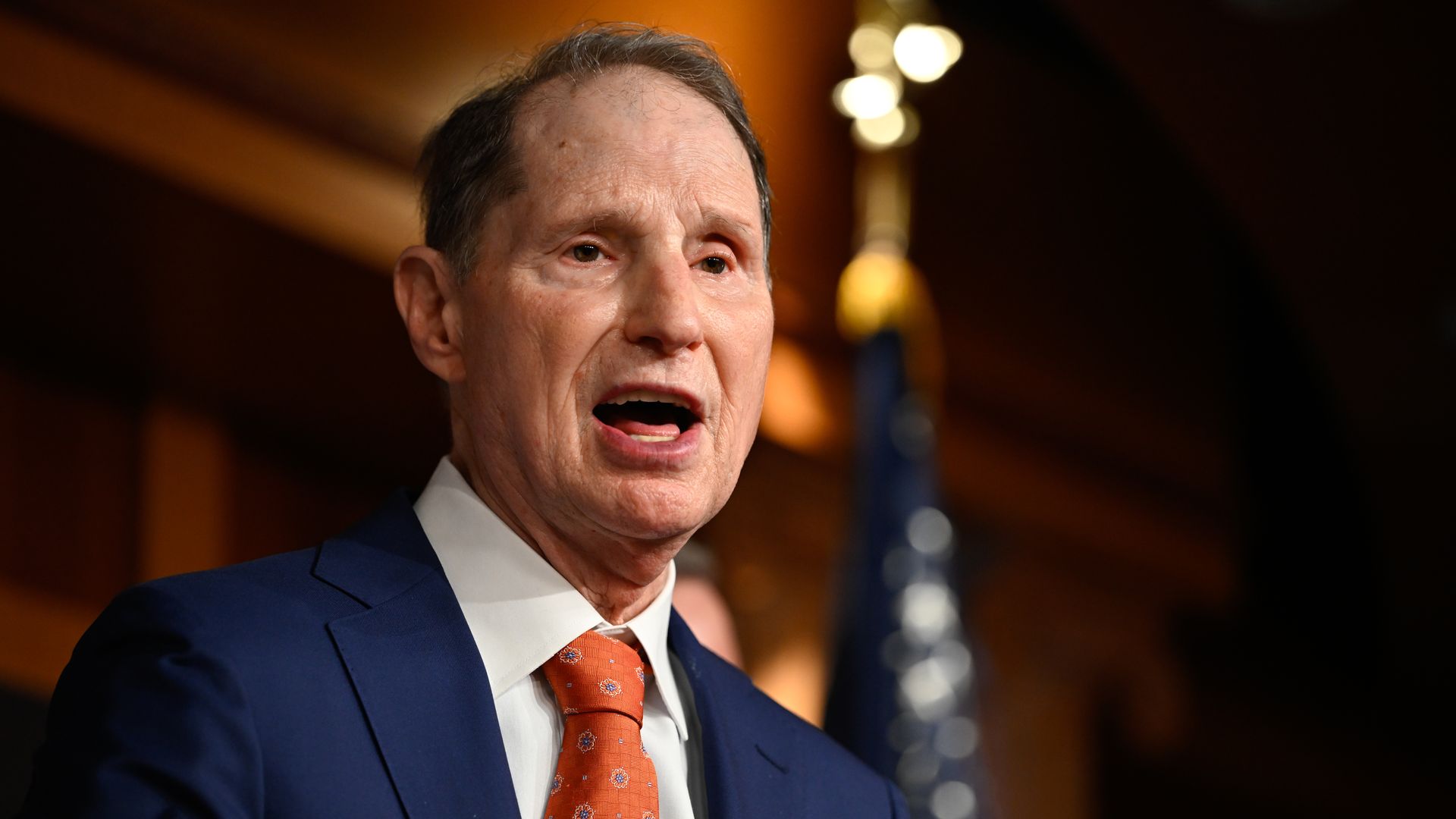
A senior Senate Democrat on Monday accused Kennedy of interfering in congressional elections, citing recorded conversations during which Kennedy appeared to try to convince two third-party candidates in Iowa to drop out of competitive races.
Why it matters: Dispatching Kennedy as a campaign surrogate across the country puts him in a position to undermine election integrity, Senate Finance Committee ranking Democrat Ron Wyden of Oregon wrote in a Hatch Act complaint to acting special counsel Jamieson Greer seeking an investigation.
- The Hatch Act limits federal workers' partisan political activities.
Driving the news: Wyden highlighted June phone calls Kennedy made to Marco Battaglia, a Libertarian candidate in Iowa's 3rd Congressional District, and Rick Stewart, another Libertarian running in the state's 2nd Congressional District.
- The Washington Post obtained a recording of Kennedy's call with Stewart, in which Kennedy suggested he would be Stewart's advocate and serve as a liaison with the White House if he dropped out of the race.
- Wyden said that Kennedy made a similar call to Battaglia days earlier, suggesting that if the House seat he was running for flipped to a Democrat it would undermine the Trump administration's agenda.
An HHS spokesperson said: "Leave it to Senator Wyden to politicize the administration's efforts to Make America Healthy Again. This cheap accusation of Hatch Act violations is untrue."
4. Catch up quick
⚖️ The Federal Trade Commission reached a formal settlement with CVS Health's Caremark in an ongoing legal battle over insulin prices. (Fierce Healthcare)
🧠 An experimental drug from Biogen could help slow early Alzheimer's disease by lowering levels of a brain protein called tau, researchers reported. (AP)
🧪 The cyclosporiasis outbreak in Michigan has outpaced lab capacity, with turnaround times now measured in days as caseloads climb. (Becker's)
Thanks for reading Axios Vitals, and to editors Adriel Bettelheim and David Nather and copy editor Matt Piper. Please ask your friends and colleagues to sign up.
Sign up for Axios Vitals

Healthcare policy and business analysis from Tina Reed, Maya Goldman, and Caitlin Owens.