Axios Vitals

June 03, 2026



Welcome to Wednesday. Today's newsletter is 912 words, a 3.5-minute read.
1 big thing: GLP-1 race moves beyond just weight loss

The obesity-drug race is becoming less about losing weight and more about keeping it off.
Why it matters: As more GLP-1 drugs deliver eye-popping results, the next winners may be determined by convenience, affordability and whether patients keep taking them long enough to benefit.
- That means reducing side effects, focusing on lifestyle changes and making the pricey drugs affordable.
Driving the news: Eli Lilly recently said its experimental drug retatrutide reduced body weight by an average of nearly 30% after 80 weeks — approaching the levels of bariatric surgery.
- But with existing pills and injectables already delivering up to 20% weight loss, clinicians and market analysts are questioning how much is enough — and whether the benefits of more powerful drugs outweigh the risks.
- "Everybody was chasing after that number — weight-loss magnitude," William Blair analyst Andy Hsieh told Axios. Now, the question is: "Is an additional 3% weight loss worth significantly more GI toxicity?"
- "There are many consumers who do not need to lose more than 15% of their body weight," Leerink analyst David Risinger told Axios.
Deciding who should be on which GLP-1 is becoming more complicated, said Wei-Li Shao, president of digital diabetes and obesity care management company Omada Health.
- Beyond having unpleasant gastrointestinal side effects, GLP-1s can weaken muscles, cause loss of bone mass and increase gallbladder problems in those experiencing rapid weight loss.
- "The more effective these drugs become, the more important nutritional support, lifestyle support, muscle preservation support becomes," Shao said. "The risk scales with the increased outcomes."
To keep patients on the drugs and achieve long-term benefits, companies including Amgen, Viking Therapeutics and GLP-1 giants Lilly and Novo Nordisk are increasingly betting on new approaches like combination therapies to improve tolerability or make treatments easier to take over the long term.
- "They're all trying to find their own niche," Chris Weber, a board member of the Obesity Medicine Association, told Axios.
2. House eyes another crackdown on China biotech
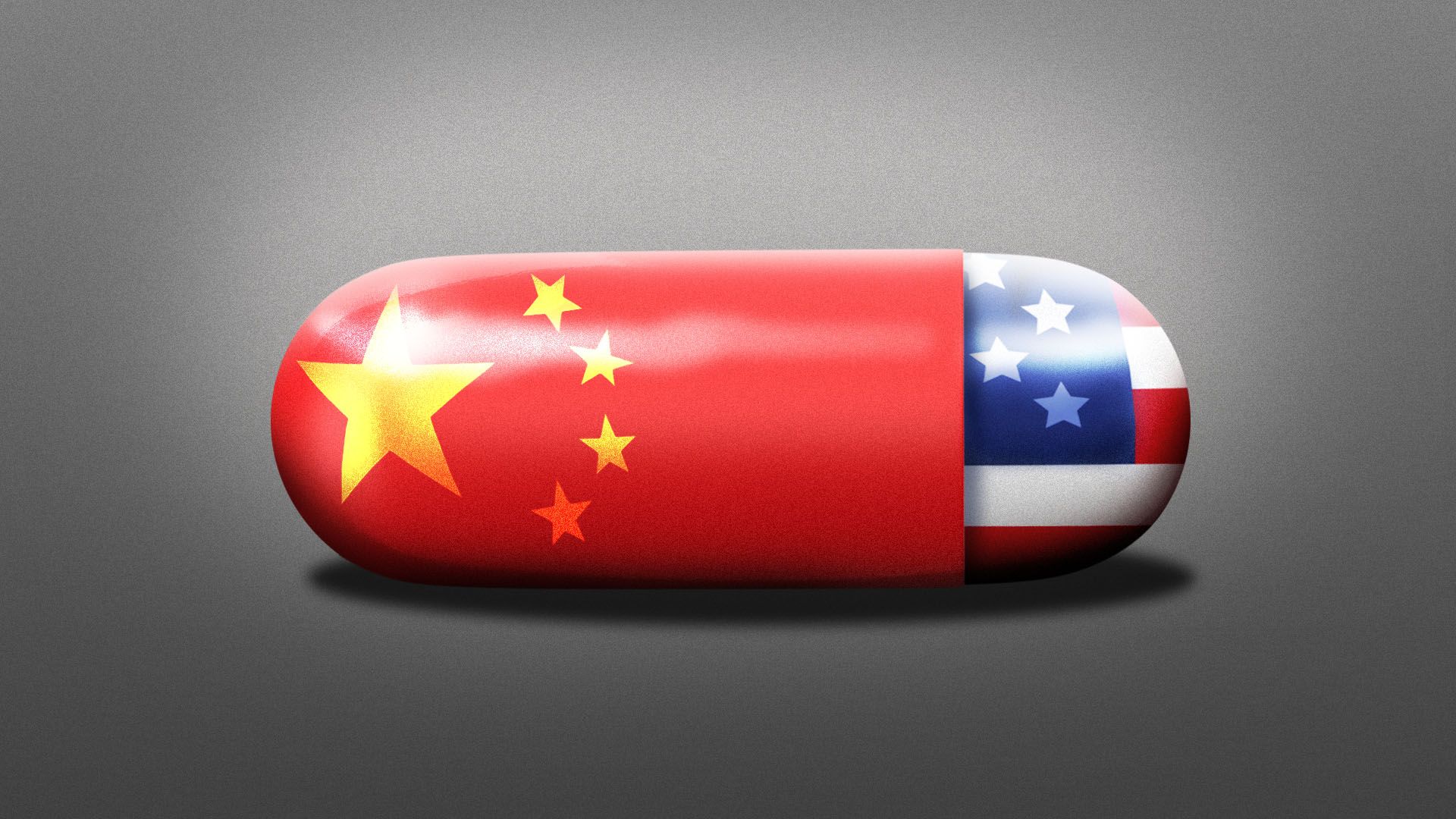
Congress is considering more steps aimed at restricting U.S. investment in Chinese biotech over national security concerns.
Why it matters: A new bipartisan House bill is the latest response to the intensifying global rivalry between the two nations in the life sciences, after lawmakers last year enacted the Biosecure Act and cut off taxpayer funding for certain Chinese biotechs.
Driving the news: The latest effort would add biotech to the list of sensitive sectors subject to Treasury Department screening of outbound investment.
- "We must not allow American investment, expertise, and technology to offshore our biotech industry, hand Chinese companies another chokehold over our economy, and hollow out our nation's research infrastructure," said Rep. John Moolenaar (R-Mich.), who's sponsoring the measure with Debbie Dingell (D-Mich.).
- The bill comes after Pfizer and Bristol Myers Squibb recently announced multibillion-dollar deals with Chinese firms to bolster their pipelines.
Between the lines: Moolenaar has warned unchecked U.S. investment in Chinese biotech will fuel the country's dominance over the pharmaceutical supply chain and lead to the same kind of dependency seen over rare earth elements.
Yes, but: Drug companies have said restrictions could have significant consequences for manufacturers that rely on equipment or services from Chinese firms.
- The bill would likely have to pass as part of a larger package, perhaps the annual defense policy bill.
3. 1 big number: Chatbots and kids' mental health

Nearly 1 in 5 youths ages 12 to 21 said they used AI chatbots for advice or help when feeling sad, angry, nervous or stressed, RAND researchers wrote in JAMA Pediatrics.
Why it matters: Chatbots aren't built to act as therapists and can miss important warning signs or mental health risks that show up subtly.
By the numbers: 19.2% of young people, or about 8.2 million nationwide, turned to chatbots such as ChatGPT, Gemini, Character.AI and Meta AI for mental health advice in 2025.
- That's up from 13.1% in a similar RAND survey a year earlier and almost the same as the proportion of young people who reported receiving counseling from a mental health professional.
- Nearly two-thirds (63%) of those who used the bots said they hadn't told anyone.
The study found that use was more common among females and among young adults ages 18 to 21 than among younger teens.
- Youths who had spoken with a physician about their mental health in the prior six months also were more likely to report using the bots for mental health advice.
4. Quote du jour

"I think he likes the results. ... I do actually believe that he is curious to make sure everything is going in the right direction. ... For him to want to know all the numbers and keep on top of them, it's the same reason he calls people at odd hours, because something's on his mind and he wants to deal with it."— CMS administrator Mehmet Oz at a White House briefing yesterday when asked about the frequency of President Trump's medical visits
5. Catch up quick
💉 Secretary of State Marco Rubio indicated the U.S. may resume funding the Gavi global vaccines alliance that Health Secretary Robert F. Kennedy Jr. pulled out of last year. (NYT)
⚖️ Groups demanding exemptions from vaccines on religious grounds are gaining legal momentum, even as Kennedy dials back his efforts. (WashPost)
🦠 Two scientists at a government lab were charged with smuggling vials of deactivated mpox into the U.S. from Africa and lying to investigators. (AP)
Thanks for reading Axios Vitals, and to editors Adriel Bettelheim and David Nather and copy editor Matt Piper. Please ask your friends and colleagues to sign up.
Sign up for Axios Vitals