Axios Vitals

December 23, 2025



Good morning! Today's newsletter is 1,098 words, a 4-minute read.
Situational awareness: The FDA yesterday approved a pill version of Novo Nordisk's Wegovy, making it the first oral GLP-1 drug for weight loss in adults.
- This is our last Vitals edition of the year. We'll be back in your inboxes on Jan. 5, and on axios.com if there's breaking news before then. Happy holidays! 🌟
1 big thing: Docs on edge about new Medicare reviews

Medicare next month will begin AI-powered pre-treatment reviews for select health services in a major policy change that's aimed at rooting out unnecessary care — but alarming providers.
Why it matters: While the change covers only 17 treatments or procedures in a handful of states, it marks a major shift for a program that's historically required very little prior authorization.
- The reviews have generated huge controversy in privately run Medicare Advantage plans and drawn backlash from patients and physicians in commercial plans, who contend the process causes administrative headaches and delays care.
State of play: The American Medical Association told Axios that some basic information — like how to actually submit a prior authorization request — is still unclear to providers with just a few days to go before the effective date.
- AMA also said it's having discussions with the administration that "seem to be making progress."
How it works: Starting Jan. 1, doctors in New Jersey, Ohio, Oklahoma, Texas, Arizona and Washington will have to get extra approval before Medicare pays them for certain outpatient services and procedures.
- The change will apply to skin substitutes, deep brain stimulation for Parkinson's disease, impotence treatment, arthroscopy for knee osteoarthritis and a dozen other items and services, CMS says.
Flashback: Medicare's innovation center announced the new reviews in June, saying they would focus on items or services that previous reports linked to fraud, waste and abuse or that were already subject to prior authorization in Medicare Advantage.
- The focus on wasteful spending comes with Medicare projected to run short of money to pay for seniors' health care by 2033, and evidence shows that the program may have spent as much as $5.8 billion on low-value health care in 2022.
Providers have urged CMS to delay the pilot, and Democrats in Congress introduced bills that would force administrators to stop the program, saying it risks erecting more barriers to care.
2. Fewer would recommend measles vaccine: Survey

A new survey finds a "small but significant decline" in the percentage of U.S. adults willing to recommend the measles vaccine.
Why it matters: The findings come with measles cases higher than in any year since the disease was declared eradicated in the U.S. and ongoing outbreaks in South Carolina and along the Utah-Arizona border.
Driving the news: The survey finds 86% of U.S. adults would recommend an eligible person in their household receive the measles, mumps and rubella (MMR) vaccine, down from 90% in November 2024.
- A similar share (83%) says the MMR vaccine is safe. That is about the same as in 2024 and 2023, but down from 88% in 2022.
- The survey was conducted by the Annenberg Public Policy Center of the University of Pennsylvania.
What they're saying: "Vaccination dispatched measles to the history books for most children in the United States," Patrick Jamieson, the director of APPC's Health and Risk Communication Institute, said in a statement. "Tragically, fears driven by misinformation have revived the threat."
Between the lines: There could be political risk to undermining vaccines. A separate survey from polling firm Fabrizio Ward finds 83% of voters in the 35 most competitive House districts say the benefits of the MMR vaccine outweigh the risks.
3. Another plea for SCOTUS to weigh price talks

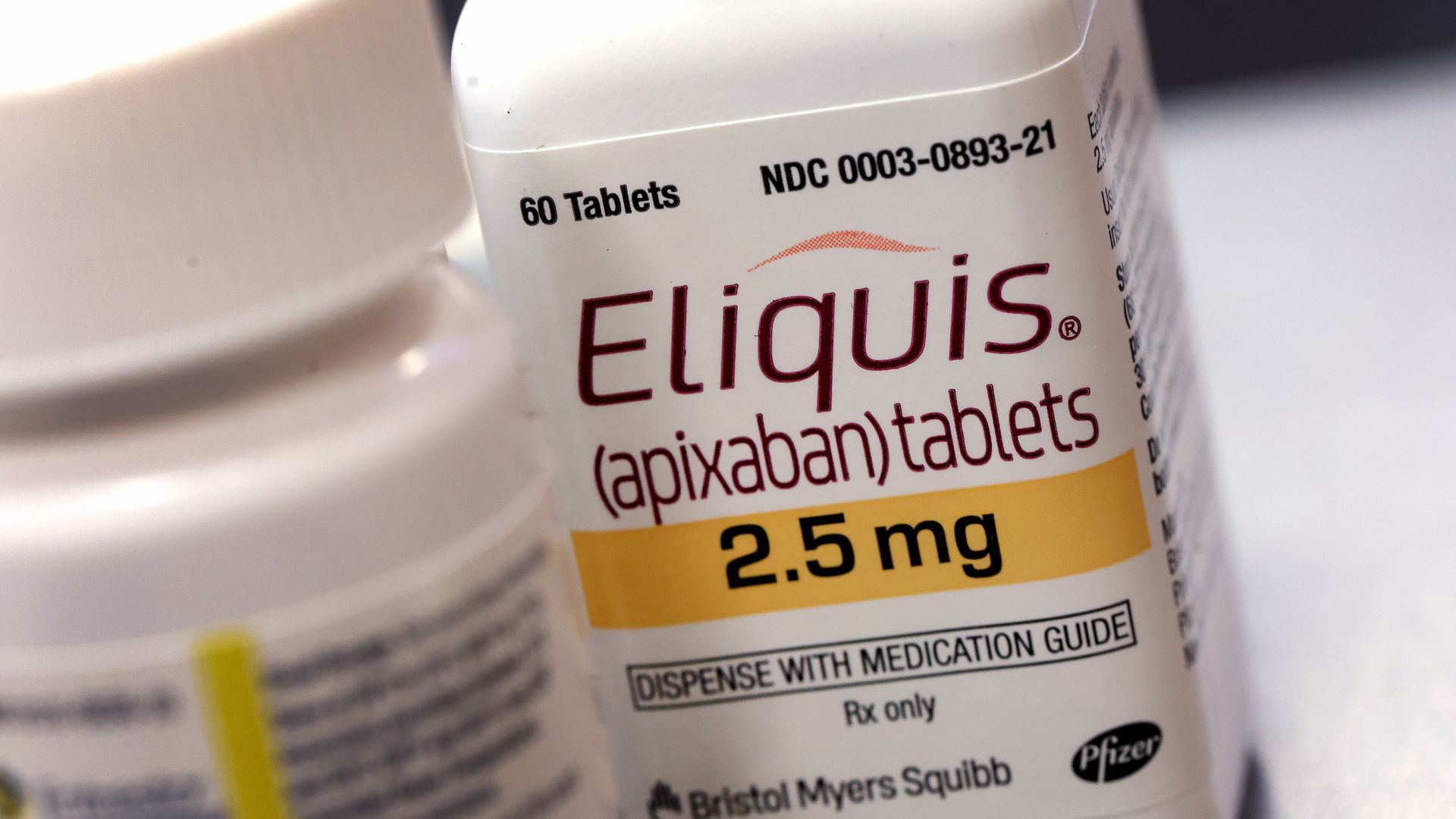
Bristol Myers Squibb is going to the Supreme Court to challenge the way Medicare drug price negotiations will force it to sell its blood-thinner Eliquis at a steep discount starting Jan. 1.
Why it matters: The company is the second drugmaker to seek high court review of the process in which Medicare cuts deals to lower the list prices of widely used drugs.
- AstraZeneca petitioned the court for a review in September. Previous challenges by drugmakers and their allies in lower courts have failed.
Driving the news: Bristol Myers Squibb contends the process uses the threat of tax penalties that would reach more than $1 billion a day to compel the company to sell its most valuable products at below-market prices, in a departure from Medicare's market-based design.
- "The program hoists a menacing 'sword of Damocles' over any manufacturer whose product has been chosen for 'negotiation,'" Bristol Myers Squibb wrote, arguing the negotiations violate due process and constitute a "taking" of property.
- The challenge was first reported by Endpoints News.
Catch up quick: Medicare negotiated a 56% discount on a 30-day supply of Eliquis, to $231. The drug accounted for $18.3 billion in Medicare prescription drug costs in 2023.
- The Supreme Court petition was filed the same day Bristol Myers Squibb joined eight other major pharmaceutical companies in committing to President Trump's "most favored nation" drug pricing policy and agreeing to lower U.S. prices for some of their products.
4. Medicare Part D seniors may be overmedicated

1 in 6 seniors enrolled in Medicare's drug benefit were prescribed eight or more medications at the same time, raising questions about whether doctors are layering on prescription drugs in a way that could be risky for patients, a Wall Street Journal analysis found.
Why it matters: There's particular concern about the number of drugs older patients take simultaneously that affect the central nervous system, which can amplify side effects and lead to falls and other accidents.
- The siloed nature of the health system means doctors might not be aware of every drug a patient is taking, and there may not be a shared medical record, the WSJ noted.
What they found: Among seniors who were taking eight or more drugs, 3.6 million had prescriptions for at least one medication that geriatricians say elderly patients should generally avoid.
- 1.6 million got benzodiazepines, sedatives that geriatricians say are typically best avoided in most circumstances.
- Doctors who prescribed the most drugs were likelier to be in rural parts of the South, where there's a high incidence of chronic disease.
- Insurers that sell Medicare drug coverage are supposed to review older adults' medication use so they can better manage chronic conditions, but the requirement only applies to a subset of enrollees.
More providers are adding enhanced electronic medical records that can offer a more complete picture of medication histories.
- The review covered 2022 Medicare Part D prescription records under a research agreement with the federal government.
Thanks for reading Axios Vitals, and to senior health care editor Adriel Bettelheim and copy editor Matt Piper. Please ask your friends and colleagues to sign up.