Axios Vitals

April 21, 2026



Hello, Tuesday! Today's newsletter is 1,030 words, a 4-minute read.
📈 If you're a CEO or on a CEO's team, request to join Axios CEO Jim VandeHei's free new Axios C-Suite weekly newsletter.
1 big thing: Exclusive — Dems probe drug price deals
Calls for more details about President Trump's drug pricing deals are intensifying, with Senate Democrats set to unveil legislation today as part of a push questioning whether the arrangements really help consumers.
Why it matters: The "most favored nation" deals with 16 pharmaceutical companies are a signature health policy accomplishment the administration is already touting ahead of the midterm elections.
- But polling indicates most of the public is skeptical Trump will deliver and lower drug costs for people like them.
Driving the news: The legislation, shared first with Axios, would require Health Secretary Robert F. Kennedy Jr. to make terms of the confidential deals public.
- It is led by Senate Finance Committee ranking Democrat Ron Wyden of Oregon, joined by several potential 2028 presidential contenders like Arizona Sens. Mark Kelly and Ruben Gallego and all of the committee's Democrats.
- While it stands little chance of advancing, the measure raises doubts about the administration's transparency — and whether the drugmakers may actually benefit.
- "After spending the last year parading Big Pharma CEOs through the Oval Office, all Trump has to show for it are a handful of sweetheart deals that shower goodies on these companies while Americans continue paying high prices for medicines they count on," Wyden said.
An accompanying Democratic report states that "Americans can reasonably conclude, in the absence of further transparency, that these 'deals' are a sham" with "little to no savings to patients."
Between the lines: Lowering drug prices has long been a popular political goal, and the battle lines over credit are forming heading into November's midterms.
- More than two-thirds of Democrats, independents and Republicans said in a KFF poll last month that there's not enough regulation to limit the price of drugs.
The big picture: Trump frequently makes sweeping claims about how much the deals are lowering drug prices.
- But the administration is refusing to disclose what it agreed to, saying the deals contain confidential and proprietary information.
2. UnitedHealth cuts rural hospital claim reviews
UnitedHealthcare plans to exempt about 1,500 rural hospitals from pre-treatment claim reviews by this fall, including for payments made through Medicaid and fully insured commercial plans.
Why it matters: The move by the giant insurer aims to address a persistent complaint from physicians and patients that's also added to cost and staffing strains at already strapped facilities.
- Health insurers say they've cut prior authorization reviews by 11% in the past year after committing to streamlining requirements for patients and doctors.
Driving the news: The exemptions from reviews are part of a package of rural care initiatives UnitedHealthcare announced yesterday that include speeding up payments to facilities and forming new partnerships with health systems to improve maternity care, diabetes treatment and post-surgical care.
- The company envisions using what it calls "hub-and-spoke models" for rural care that combine telehealth, clinical decision tools and home-based care to reach more people in outlying areas.
Patient advocates and consumer groups continue to press for new laws and regulations addressing prior authorization, saying voluntary industry moves aren't enough.
- There's congressional support for limiting Medicare Advantage prior authorizations, but the initiative has repeatedly stalled.
3. FBI wants hospitals to share cyberthreat info
The FBI's No. 2 official told hospital executives yesterday they need to step up information-sharing on cyberthreats as the agency works to disrupt attacks earlier.
Why it matters: Health care was the top target for ransomware and other cyberthreats last year, according to FBI statistics. Data breaches and attacks on hospitals shut down operations, delay time-sensitive treatment and risk harm to patients, and also cost health systems millions per incident.
Driving the news: FBI deputy director Andrew Bailey framed the threat through a law enforcement lens, emphasizing the disruption of criminal networks, "not just arrests and indictments."
- "We have to go on offense and disrupt the ecosystem that allows perpetrators to exist," Bailey told the American Hospital Association meeting in Washington, D.C.
- Bailey emphasized the need for close coordination with hospitals, including sharing threat intelligence to identify attacks earlier.
Between the lines: He pointed specifically to the threat of attacks by Russian-speaking "ransomware as a service" groups that operate with safe harbor from the Russian government.
- "We're at a point where they're attacking a hospital system and it's just normal, everyday routine transactions for these groups," he said. "For the hospital on the receiving end ... it's anything but."
- Major cyberattacks in 2025 hit Yale New Haven Health System and kidney care giant DaVita, among other providers.
4. 1 big number: GLP-1 prescriptions
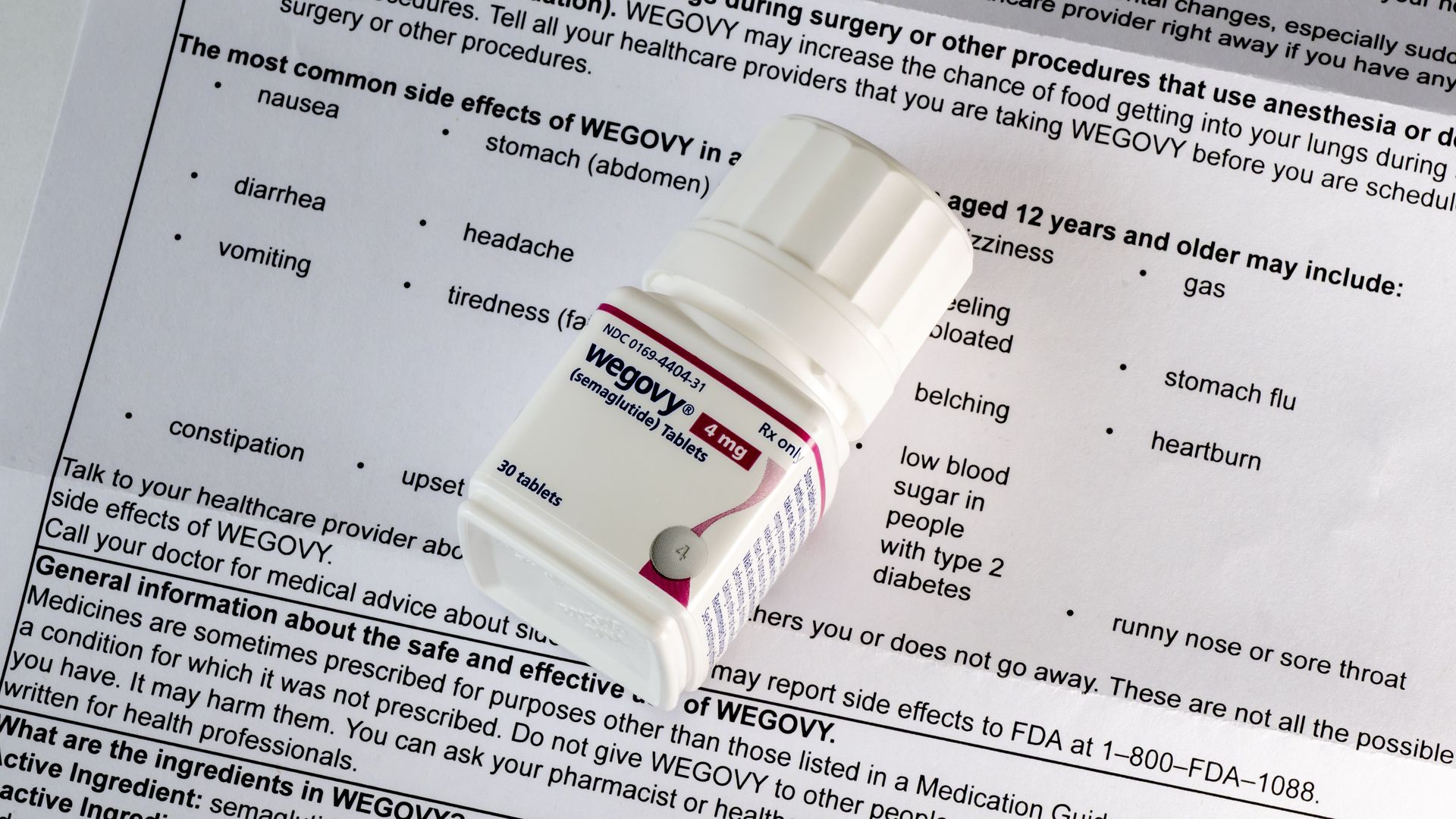
The rollout of the new Wegovy pill contributed to a 21.7% jump in first-time prescribing of GLP-1 drugs from December to March, according to an analysis of electronic health records.
The big picture: Despite variable insurance coverage policies and the fact that many patients can't stay on them, the weight-loss drugs accounted for nearly 8% of all U.S. prescriptions in March, according to health data company Truveta Research.
What they found: Tirzepatide, the active ingredient in Eli Lilly's Mounjaro and Zepbound, continues to be the most prescribed anti-diabetic and anti-obesity medication. But semaglutide — sold by Novo Nordisk as Wegovy and Ozempic — had the greatest percentage increase over last quarter.
- Looking at longer-term trends, more than 14.7 million prescriptions for GLP-1s were written between January 2019 and March 2026.
- More than 2.8 million patients were prescribed one of the drugs over that period.
What we're watching: The effects on the market from Lilly's newly approved daily GLP-1 pill, which will compete with the Wegovy pill and can be taken at any time without restrictions on food and water.
5. Catch up quick
🥼 The PEPFAR program to combat HIV suffered big blows after the Trump administration's abrupt stop and restart of its activities last year, data shows. (NYT)
🧫 Eli Lilly is doubling down on CAR-T therapy, agreeing to buy gene delivery biotech Kelonia Therapeutics in a deal worth up to $7 billion. (BioSpace)
☂ Oscar Health launched a consumer marketplace for insurance beyond the plans it sells. (Forbes)
Thanks for reading Axios Vitals, and to editors Adriel Bettelheim and David Nather and copy editor Matt Piper. Please ask your friends and colleagues to sign up.
Sign up for Axios Vitals