Axios Vitals

July 22, 2026


Halfway there, gang. Today's newsletter is 1,073 words, a 4-minute read.
🚨 Situational awareness: President Trump late yesterday threatened to put a 100% tariff on generic drugs effective August 2028, in order to reshore generic drug production.
EXCLUSIVE: Nvidia CEO Jensen Huang defends Chinese AI companies and open AI models in a new interview with Axios' Mike Allen for our Behind the Curtain video series. The full episode drops tomorrow. Watch a clip on YouTube ... Subscribe to our channel.
1 big thing: Medicine's great payment reshuffling

A Trump administration revamp of how Medicare pays doctors could force steep reimbursement cuts next year for specialists like dermatologists and orthopedic surgeons.
Why it matters: It's the result of an ongoing pivot to redistribute Medicare dollars away from procedure-heavy specialties toward more primary and preventive care, which have long lagged in reimbursements.
- Higher pay could make it easier to recruit new physicians to the field and close care gaps in underserved communities.
Driving the news: Medicare's new physician payment rule proposes boosting what geriatricians, internists and other primary care doctors can charge the federal health program next year. In turn, several specialist categories will face steep cuts.
- Physicians overall would see as much as a 1.68% cut to their Medicare payments in 2027. The payment update, which does not account for medical cost inflation, will be finalized this fall.
Between the lines: Part of the reason for specialist payment cuts is a proposal to reduce payment to providers that bill for a procedure and office visit on the same day.
- The more expensive of the two services would be paid in full, and the less expensive would be reimbursed at 50%. The first Trump administration proposed a similar policy in 2019, but backed off after pushback from some physician groups.
- The payment rule also would make a technical change to the way medical practice expenses are calculated that could curb payments to specialties.
Friction point: The administration asked for input on moving away from the decades-old practice of basing payments on recommendations from a committee of physicians run by the American Medical Association.
- Critics say the committee tends to value surgeries and other costly procedures higher than primary care. The AMA notes that its committee has recommended new billing codes and payment increases for primary care services over the years.
2. Measles cases surpass last year's total
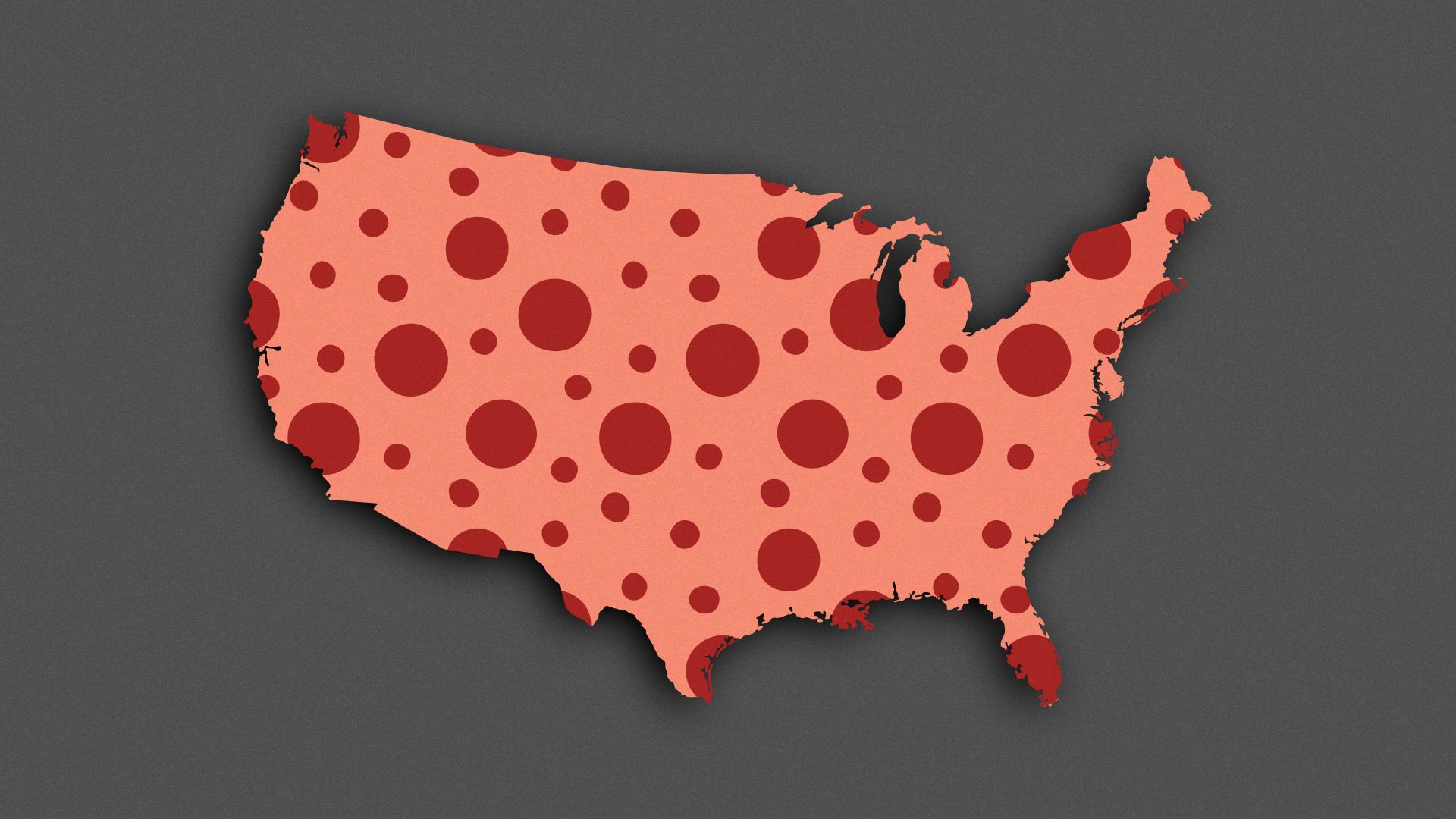
The U.S. measles case count for this year has surged past last year's total and now stands at 2,295 — a level that hasn't been seen in 35 years, according to a Johns Hopkins University tracker that compiles state and local health data.
Why it matters: It's the latest sign that the virus is rebounding in areas with low vaccine coverage, threatening the United States' measles elimination status, which is due to be reviewed in November.
The big picture: The majority of cases are in unvaccinated people. While overall measles vaccination rates are still relatively high, public health officials say they must remain above 95% to maintain herd immunity.
By the numbers: As of yesterday, there were nine more cases than in all of 2025, per the Johns Hopkins U.S. measles tracker.
- Jurisdictions including South Carolina, Utah, Texas, Florida and Arizona have the most reported cases.
- The CDC reported 2,260 confirmed cases in its last update on July 16. The agency said there were 34 new outbreaks reported this year.
- The last time measles cases were higher was in 1991, when the U.S. had 9,643 cases, according to CDC data.
3. More than $1 billion in Medicaid funds frozen


The administration is halting more than $1 billion in federal Medicaid payments to California and Minnesota until the states take more steps to investigate questionable claims.
Why it matters: The moves announced yesterday continue a series of freezes to blue states' funding as part of the administration's crackdown on fraud.
- They also maintain scrutiny of Minnesota's safety net funding after the administration used the state's inability to rein in fraud as justification for launching last year's ICE enforcement surge.
Driving the news: CMS said it's deferring about $867.5 million in Medicaid payments to California and $199 million to Minnesota after financial reviews turned up unsupported claims for in-home care and other services.
- HHS said it also will expand its authority to remove bad actors from federal health programs and possibly bar them from returning.
- CMS said it reviewed California's claims for certain in-home care programs after identifying spending growth that exceeded national trends and other claims officials said require more documentation.
- The agency also cited Medicaid claims in 14 service areas in Minnesota that it said require additional documentation, including expenditures linked to providers who had been flagged through program integrity reviews.
4. New tool helps track hospital closures
While hospital closings play an outsized role in health policy debates, a new tracking tool shows that for every 10 U.S. facilities that shut from 2001 to 2023, eight opened.
Why it matters: It's difficult to clearly track market changes at the local level. The task will become more important as changes from last year's sweeping Republican tax-and-spending package ripple through the health system.
What they found: Between 2001 and 2023, 644 U.S. hospitals closed and 502 opened — a net loss of 142 hospitals, according to the hospital markets tool, launched today by the Health Care Affordability Lab at Yale.
- Over the same period, hospital beds per thousand residents dropped by over 20% from nearly three beds to just over two.
- California, New York, Pennsylvania, Georgia and Michigan have had the highest net losses of hospitals over the period.
- States with higher levels of population growth like Texas, Colorado, Arizona, Florida and Nevada had the most net openings.
One-third of the states gained more hospitals than they lost, and five experienced no net change.
- The tool doesn't yet have a full summary on openings over the past three years.
Between the lines: Closures have weighed heavily on facilities with narrow margins that are heavily reliant on public programs, typically in rural areas.
- Researchers note some of the pressure has been offset by the Affordable Care Act's Medicaid expansion and the Critical Access Hospital program, which reimburses most rural hospitals on a cost basis for Medicare care.
5. Catch up quick
⚖️ The weight-loss drug wars reached a new level of intensity as Novo Nordisk sued Eli Lilly, accusing its archrival of misleading advertising. (Axios)
🏛️ Texas Republican Sen. John Cornyn threatened to vote down ambassadorial nominations of two top Trump allies unless the administration distributes money from the PEPFAR program. (Semafor)
❌ Acting CDC director Jay Bhattacharya ordered the detention of U.S. citizens not exposed to Ebola who were returning home from the Democratic Republic of Congo. (Rolling Stone)
Thanks for reading Axios Vitals, and to editors Adriel Bettelheim and David Nather and copy editor Matt Piper. Please ask your friends and colleagues to sign up.