Axios Vitals

August 25, 2026

Good Tuesday morning! Today's newsletter is 776 words, a 3-minute read.
1 big thing: Hourslong ER visits
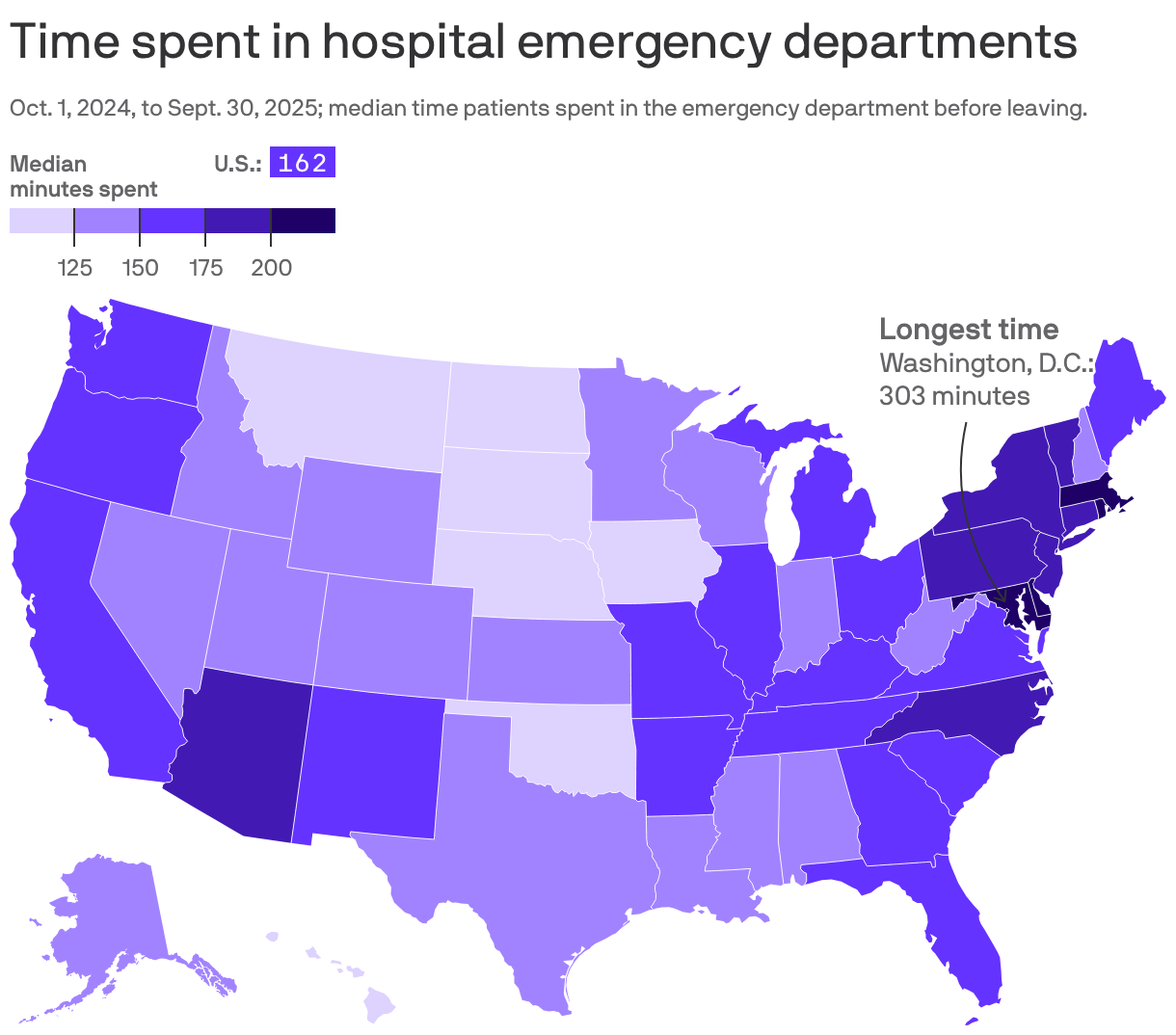
Patients now spend an average of more than two and a half hours in hospital emergency departments, and visits have been getting longer in nearly half of the states, new federal data shows.
Why it matters: Forthcoming insurance eligibility and cost changes could lead people to put off care until their health reaches a crisis point, sending even more patients to an ED.
- Longer visits may also mean longer waits to see a clinician — a driver of negative experiences and increased costs for the health care system.
Driving the news: The median time spent in the emergency department was 162 minutes during the year ending Sept. 30, 2025, according to CMS.
- Washington, D.C., had the highest median visit length at 303 minutes. North Dakota had the lowest, at 110 minutes. The national median visit length stayed the same from the previous year.
- The data also shows that an average of 2% of patients nationwide left the emergency department before being seen.
Median visit lengths increased in 24 states and D.C. compared with the prior 12-month period, per Axios' analysis of the CMS data.
- Oregon and Arkansas each saw a 15-minute jump in visit times. Twenty states saw decreases.
Between the lines: More than 20% of patients spend more time waiting for an ED visit than recommended for their triage level, according to the most recent data from the CDC.
- Reducing ED wait times is one focus in a federal effort to improve health care by 2030.
Zoom out: Once patients are seen in the ED, they can face more long waits before they're actually admitted to the hospital.
2. Fauci's lawyers start legal defense fund

Anthony Fauci's lawyers have started a legal defense fund for the nation's former top infectious disease official as Republicans in Congress and some states turn up the heat with investigations of how he handled the pandemic response, Reuters reports.
Why it matters: The mounting probes could result in costly legal proceedings, despite former President Biden's preemptive pardon of the longtime NIAID director.
Driving the news: David Schertler, counsel to Fauci, told Reuters in a statement that his client deserves a robust defense against "unfounded and frivolous actions."
- The Senate homeland security committee this month found Fauci in contempt for refusing to answer questions from lawmakers investigating COVID-19's origins and referred the matter to the Department of Justice for possible prosecution.
- Florida Attorney General James Uthmeier, along with his counterparts in Louisiana and West Virginia, also subpoenaed Fauci as part of an investigation into whether he profited off COVID-19 guidance.
Fauci and his lawyers won't control how the money is spent or how the fund will be managed, his lawyers said. Attorneys' invoices will be reviewed by an independent expert adviser, they told Reuters.
3. Groups urge safe harbor for trial sponsors

Nearly 130 medical groups yesterday urged HHS to create a legal safe harbor allowing clinical trial sponsors to cover patients' costs of participating in studies without violating the federal anti-kickback law.
Why it matters: The Trump administration is seeking input on whether fraud and abuse laws can hinder trial recruitment at a time when drug developers are increasingly moving studies overseas.
- At issue is whether reimbursing patients could amount to an improper inducement.
Driving the news: Groups including the American Cancer Society Cancer Action Network, Susan G. Komen and the Parkinson's Foundation wrote that an estimated 30% of clinical trials done between 2011 and 2021 were suspended or terminated for not reaching enrollment targets.
- The groups also noted that low-income patients may be likelier to live in underserved areas with fewer medical resources and have to travel farther to a trial site.
Context: HHS' inspector general is studying possible modifications to the federal Anti-Kickback Statute.
- It's soliciting input on questions like whether there should be advertising limits, or what safeguards should be in place to ensure trial participants aren't steered to items or services offered by the sponsor outside the clinical trial, per a backgrounder from Sidley.
4. Catch up quick
💉 Blue and red states aren't signing on to a Trump plan to expand Medicaid access to weight-loss drugs, fearing a drain on their budgets. (Politico)
⚖️ A federal judge rejected Merck's attempt to overturn Medicare drug price negotiations, ruling after three years on the first challenge to the program. (Bloomberg Law)
📓 Florida wants to remove four immunizations from entry requirements for public and private schools, and to broaden religious exemptions. (CBS)
🩸 Blood transfusions could transmit harmful brain proteins like amyloid-beta, which is associated with Alzheimer's, a review suggests. (MedPage)
Thanks for reading Axios Vitals, and to editors Adriel Bettelheim and David Nather and copy editor Matt Piper. Please ask your friends and colleagues to sign up.
Sign up for Axios Vitals