Axios Vitals

June 09, 2026



Good morning. Today's newsletter is 1,025 words, a 4-minute read.
1 big thing: How health data sharing exposes patients

The push to make medical records easier to share could be opening the door for rogue companies to sell patient information to law firms and other businesses without their knowledge.
Why it matters: Americans assume their medical records are only seen by doctors, nurses and others involved in their care.
- But the rapid growth of health tech vendors and data sharing platforms is creating security gaps — just as AI is making it easier to mine personal medical data.
Driving the news: Electronic health records giant Epic and three health systems are suing software company Health Gorilla for allegedly letting third parties posing as health providers access more than 300,000 medical files on a data-sharing platform.
- One of those companies, GuardDog Telehealth, has admitted as part of a consent agreement that it took records under false pretenses and sold the data to lawyers looking for clients for class-action lawsuits.
- Epic also accused a now-defunct provider called SelfRx of fraudulently pulling more than 100,000 patient records. It dropped the charges last week after SelfRx's founder made a sworn declaration that it actually obtained fewer than 100 and couldn't explain who took the others.
Between the lines: The case is showing how long-running efforts to allow patient records to flow more freely across the health system remain a work in progress.
- Leading health and tech companies have spent years and vast sums trying to come up with a framework that can link different record systems and reduce inefficiencies, medical errors and waste.
- But it can't really work if a company participating in a health data sharing network like SelfRx can't account for requests made in its name.
The central question is how data companies can verify who's requesting data.
- SelfRx's declaration "provides further evidence that there is a lack of accountability and oversight," Epic said in a statement.
2. Scoop: World Cup Ebola blame game readied


The White House, fearing that international travel could accelerate the spread of Ebola as the World Cup hits America, is pressuring Europe to dramatically shift its strategy for preventing infections, sources tell Axios.
Why it matters: Top Trump aides are frustrated with Europe's limited travel restrictions and want it to abandon the World Health Organization's Ebola playbook in favor of Washington's tighter rules, a senior official said.
- The implied message: Any outbreak of the Ebola virus in the U.S. would be Europe's fault.
Driving the news: The State Department last week sent an extraordinary request to European countries calling for travel restrictions from Central Africa, where the outbreak began.
- "European countries must do their part to ensure this outbreak does not spread further," a State Department official told Axios. "Action is required now."
The administration's objections center on three talking points, according to the senior official. They:
- Claim WHO failed to "immediately report" the outbreak and "misled the world" by not encouraging countries to impose "travel bans and border closures."
- Scold the European Union for following WHO's guidance and resisting travel restrictions and enhanced airport screening measures for travelers arriving from Ebola-affected countries.
- Call on the EU to follow the lead of Canada and Mexico by imposing U.S.-style restrictions on nonessential travel from Ebola-impacted countries.
3. Waiving copays increased clinical AI use
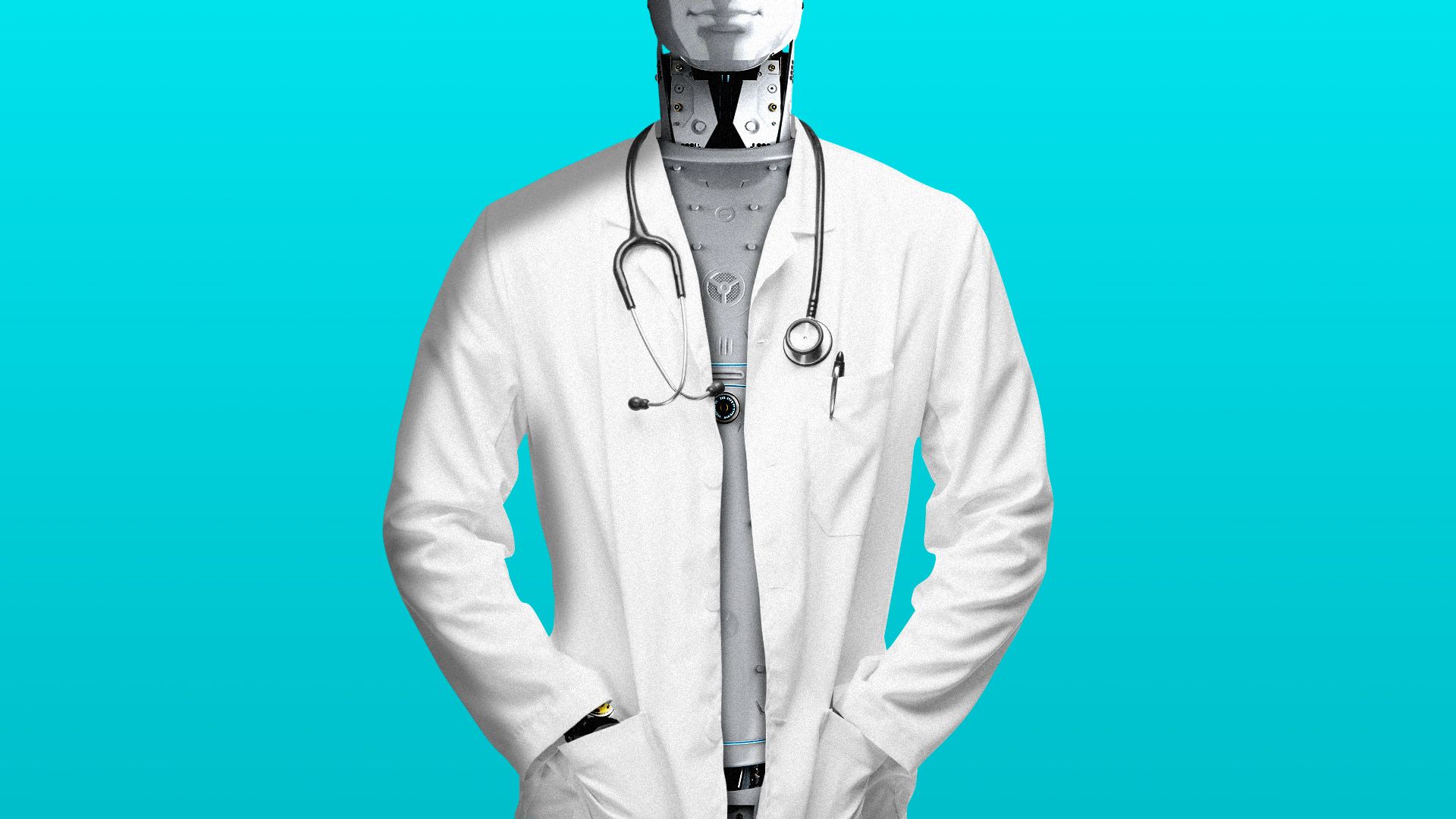
Americans may be warming up to the idea of using AI for medical screenings — at least if it's a less expensive option than seeing a live clinician.
Why it matters: The public already is turning to chatbots for medical advice, and rising health costs could make AI tools accepted features of office visits and diagnostic tests.
Driving the news: Johns Hopkins researchers found more than 80% of patients due for an annual diabetic eye screening opted for the AI tool when the copay was waived, compared with 43% who chose AI when the copay was not waived.
- When there was no copay, participants also perceived the AI as more effective.
- The screening was for diabetic retinopathy, a leading cause of blindness. FDA-approved AI tools can diagnose the condition from retinal images, without an onsite specialist.
Yes, but: Patients who chose AI over a traditional screening with a medical professional were much likelier to seek confirmation from their eye doctor after getting the results, regardless of whether the results were normal or abnormal.
- "Well-designed incentives will accelerate patients' AI usage," said Haiyang Yang, a co-author of the study in npj Digital Medicine. "The key is to identify the appropriate design for each medical AI context."
4. 1 big number: Childhood vaccine safety

The percentage of Americans saying childhood vaccines are "very safe" has fallen to 57% from 63% in 2025, harking back to pre-pandemic levels, according to a new poll from Harvard T.H. Chan School of Public Health and the de Beaumont Foundation.
Why it matters: While support for childhood vaccination remains strong, there are signs that overall vaccine support may be softening as the Trump administration upends federal policies around the shots.
What they found: The poll of 2,205 adults found strong shares of adults in both parties say vaccines are safe overall, but that there is a big partisan split in the group saying vaccines are "very safe" (46% of Republicans, compared with 76% of Democrats).
- Even though a majority opposes efforts to narrow the childhood vaccine schedule, more than 4 in 10 support the policy change.
- More than three-quarters (77%) say that parents should be required to vaccinate their children in order to attend school. But again, there are big differences by party: 91% of Democrats and 65% of Republicans back the requirement.
5. Catch up quick
🥼 At least two American Diabetes Association leaders resigned in the wake of researchers being kicked out of the group's annual conference for criticizing the Trump administration. (MedPage)
🎓 19 medical schools joined the administration's push for greater integration of nutritional learning in medical education. (Fierce Healthcare)
🦠 It's going to be difficult for the U.S. to prove measles isn't endemic and keep its "measles-free" designation. (ProPublica)
🫄 The introduction of Apple's smartphone in 2007 helped lower U.S. fertility rates, especially among teens and young adults, new research concludes. (Axios)
Thanks for reading Axios Vitals, and to editors Adriel Bettelheim and David Nather and copy editor Matt Piper. Please ask your friends and colleagues to sign up.
Sign up for Axios Vitals