Axios Vitals

January 26, 2026



⛄️ Happy dig-out day to those who observe. Today's newsletter is 1,011 words, a 4-minute read.
1 big thing: Health care hiring loses steam

The health care job growth that's powered the labor market since the COVID pandemic is stalling out.
Why it matters: Republican cuts to federal health programs, AI automation and rising costs are making health systems and other employers level off hiring — including for jobs requiring a professional license like nurses or physical therapists.
- The results could widen gaps in care and exacerbate health disparities.
By the numbers: Health care employment drove most of the month-by-month job growth last year, increasing by an average of 34,000 jobs per month, according to the Bureau of Labor Statistics.
- But that's less than health care's monthly average increase of 56,000 roles in 2024.
Health care hiring has essentially returned to a pre-pandemic pattern of slower growth after a post-COVID surge driven by returning patients and hospitals replacing burned-out workers, said Neale Mahoney, an economics professor at Stanford.
- "It was only a question of when ... and we're starting to see it now," Mahoney said.
Case in point: Alameda Health System, a safety-net provider based in Oakland, California, announced last month that it's laying off 247 employees, including clinicians.
- Administrators cited the system's precarious finances: It expects to lose $100 million annually by 2030 as a result of the Medicaid cuts, per CBS San Fransisco.
AI automation is also pushing some providers to cut administrative staff.
- Revere Health, the largest physician-owned health system in Utah, announced in September that it will lay off 177 employees, citing a partnership with a company that automates claims processing.
- Clinical jobs in health care are more insulated from automation, and AI may actually help extend the clinical workforce where shortages exist.
- Still, some clinicians are concerned. Almost 15,000 nurses in New York City went on strike this month, demanding new safeguards around AI use in hospitals, among other things.
2. DHS funding fight puts health deal in limbo

A bipartisan health care deal and continued funding for HHS are getting caught up in the intensifying fight over homeland security funding.
The big picture: The Senate needs to pass a six-bill spending package to avoid funding expiring on Jan. 31 for health agencies and programs like community health centers.
Driving the news: Following DHS' fatal shooting of a 37-year-old nurse Saturday in Minneapolis, Senate Democrats vowed to block the package if homeland security spending is included.
- The package includes the Labor-HHS-Education spending bill, as well as a bipartisan health care agreement with measures that would overhaul pharmacy benefit managers' compensation, among other policies.
Between the lines: It's possible that senators could agree to break out the homeland security funding and vote on the rest of the package, including the health measures.
- But any Senate changes would have to be approved by the House, which isn't in session this week.
- Senators aren't due back until Tuesday — assuming they aren't delayed by the winter storm that's blanketed large parts of the country.
3. NIH grant money could be frozen by year's end

NIH may have avoided the almost 40% cut in President Trump's budget request. But billions of dollars in research funding at half of its institutes could still be frozen by the end of 2026, Nature reports.
The big picture: Expert panels that review grant applications at 12 institutes and one NIH center are on track to have no voting members by the end of the year because members' terms are expiring. The administration last summer dismissed dozens of scientists who were due to fill the vacancies.
- Funding can't be awarded under federal law for most grants without reviews by voting members.
What they're saying: "This could lead to some very big problems for the agency," Michael Lauer, who ran the NIH branch that funds outside researchers, told Nature.
- The high-level advisory committees in question specialize in disciplines including infectious diseases, mental health, neurological disorders, minority health and aging.
Flashback: The administration early last year suspended grant review panels and canceled existing grants, in a move the Government Accountability Office later found was improperly withholding congressionally approved funds.
- An HHS spokesperson told Nature the department doesn't anticipate a lapse in the ability to make awards and that the administration was actively appointing new council members.
4. Foreign aid ban adds gender identity and DEI

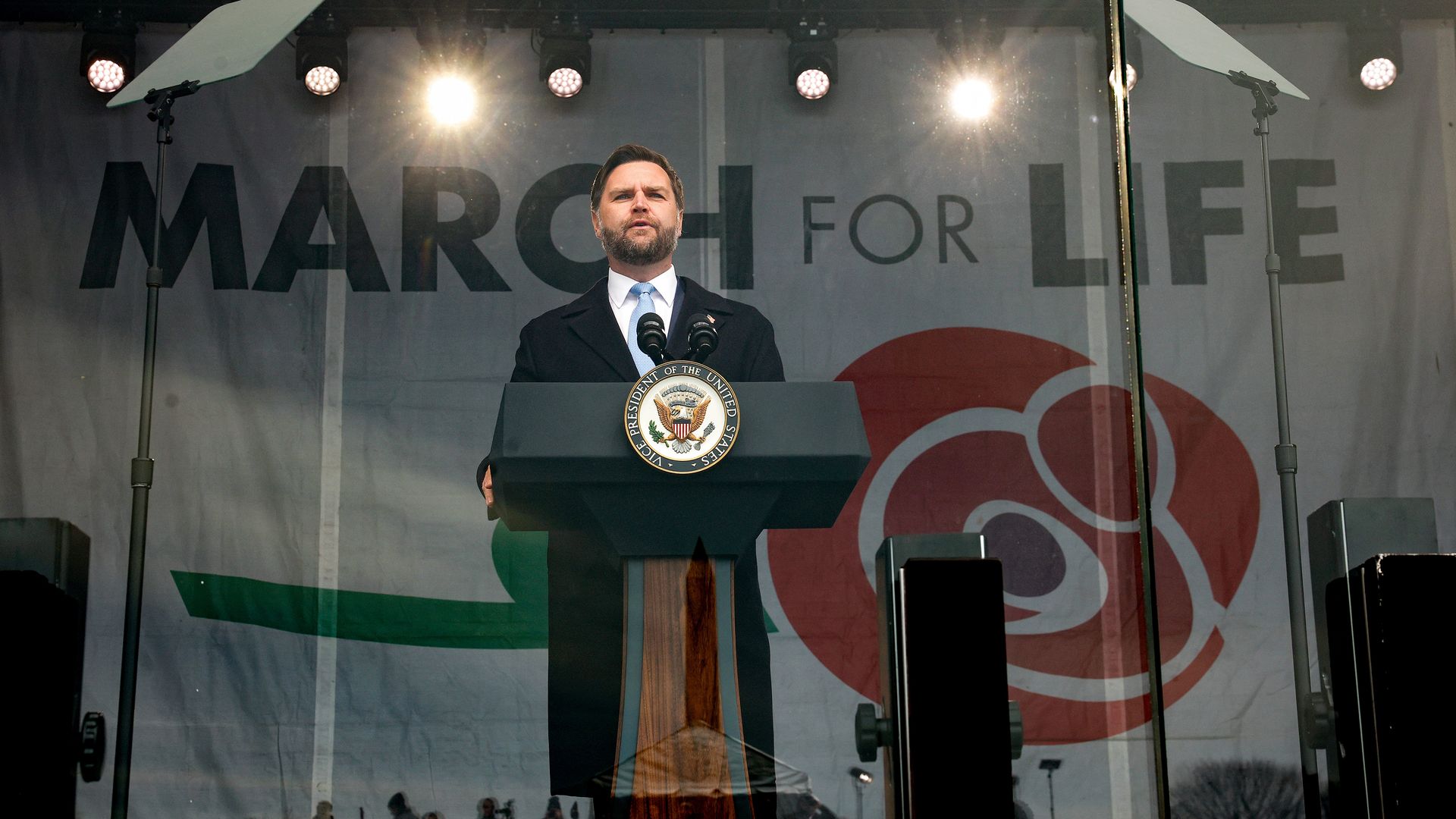
Coming off a turbulent year in global health, the administration on Friday expanded a foreign aid ban on organizations providing abortion-related services to apply to groups supporting gender identity and diversity programs.
Why it matters: The broadened "Mexico City" policy affects more than $30 billion in foreign assistance to foreign and domestic organizations.
Driving the news: Vice President JD Vance told the March for Life event in Washington, D.C., that the policy expansion was "to protect life, to combat DEI" and "radical gender ideologies," and it would pertain to "every non-military foreign assistance that America sends."
- Trump during his first days in office reinstated the "Mexico City" policy, which critics refer to as a global gag rule.
- Former President Ronald Reagan first enacted the policy in 1984. Each Democratic president has rescinded the rule upon entering office, and each Republican president has reinstated it.
What they're saying: The latest move threatens hard-won global health gains by limiting access to lifesaving health care for women and girls around the world, said Janeen Madan Keller, deputy director of global health policy at the Center for Global Development.
- Amy Friedrich-Karnik, director of federal policy at the Guttmacher Institute, said it "exports harsh U.S. abortion bans and ideologically driven mandates to countries around the world," threatening health services and equity initiatives.
5. While you were weekending

💰 HHS told states on Saturday that it would pause public health grants worth about $5 billion, then hours later said it would lift the halt. (Bloomberg)
💉 Moderna is scaling down its investments in vaccine development as the U.S. market grows increasingly hostile to immunizations. (BioSpace)
⚕️ William Foege, who developed the vaccination strategy that helped wipe out smallpox and led the early response to the AIDS epidemic as CDC director, died at 89. (NYT)
Thanks for reading Axios Vitals, and to editors Adriel Bettelheim and David Nather and copy editor Matt Piper. Please ask your friends and colleagues to sign up.