Axios Vitals

April 02, 2026



Welcome to Thursday. Today's newsletter is 882 words, a 3.5-minute read.
1 big thing: Bracing for the next NIH budget fight

Medical research advocates are bracing for a grinding election-year fight over the future of NIH with the expected release of the Trump administration's FY 2027 budget Friday.
Why it matters: Congress rejected the steep 40% cut the administration proposed for NIH last year, but the biomedical research institution continues to feel fallout from canceled grants, layoffs and a slower pace of getting money out the door to academic researchers.
Driving the news: Trump's budget is expected to reheat much of last year's debate, though advocacy groups don't expect it to call for as big a cut.
- "The president has said he wants to make America healthy again. He said he wants to end cancer. These things are only possible if you increase the funding of the NIH," said Russ Paulsen, executive director of United for Cures, a network of patient advocacy groups.
- His organization preemptively released polling this week finding 66% of voters opposed a hypothetical 20% cut to federal medical research funding.
- A spokesperson for the White House budget office did not respond to requests for comment.
Between the lines: Congress the last time around rejected Trump's plans on a bipartisan basis and actually increased the NIH budget by $415 million for 2026, to $48.7 billion.
- But topline numbers are only part of the story. There's also concern about changes to how NIH grants are structured and dispersed.
- The Trump administration has increasingly used "forward funding," providing a multiyear grant in one up-front lump sum, rather than year-by-year.
- That has resulted in the same overall dollar amount going toward fewer projects, because more money is committed in up-front costs. There were 5,564, or 9%, fewer grants in fiscal year 2025 than 2024, according to United for Medical Research.
The intrigue: Grantees are also concerned that grants are going out the door more slowly — and sometimes with more restrictions. The Supreme Court last year let NIH terminate $783 million in awards linked to DEI initiatives.
2. Eli Lilly weight-loss pill gets FDA nod

The two-horse race in weight-loss drugs intensified yesterday after the FDA approved a daily GLP-1 pill from Eli Lilly.
Why it matters: The pill, to be sold under the name Foundayo, will compete directly with Novo Nordisk's Wegovy pill, whose January rollout was one of the fastest drug launches ever, with more than 600,000 prescriptions filled to date.
- Lilly's approval came via a fast-track review the company received as part of the drug pricing deal it made in November with the Trump administration.
Driving the news: FDA approved the pill for adults with obesity or who are overweight with at least one weight-related medical condition.
- Lilly said it's accepting prescriptions on its LillyDirect website with shipping to begin on April 6, followed shortly by broad availability at retail pharmacies and through telehealth providers.
- People paying out of pocket will be able to buy the lowest dose of Foundayo starting at $149 a month, going up to $349 for higher doses. Individuals with insurance may pay as little as $25 a month with a savings card.
The pill was shown in trials to deliver an average of 12.4% weight loss at the highest dose in clinical trials.
- Unlike Wegovy, it can be taken at any time without restrictions on food and water.
- Novo Nordisk said in a statement that its pill is more effective.
3. Quote du jour
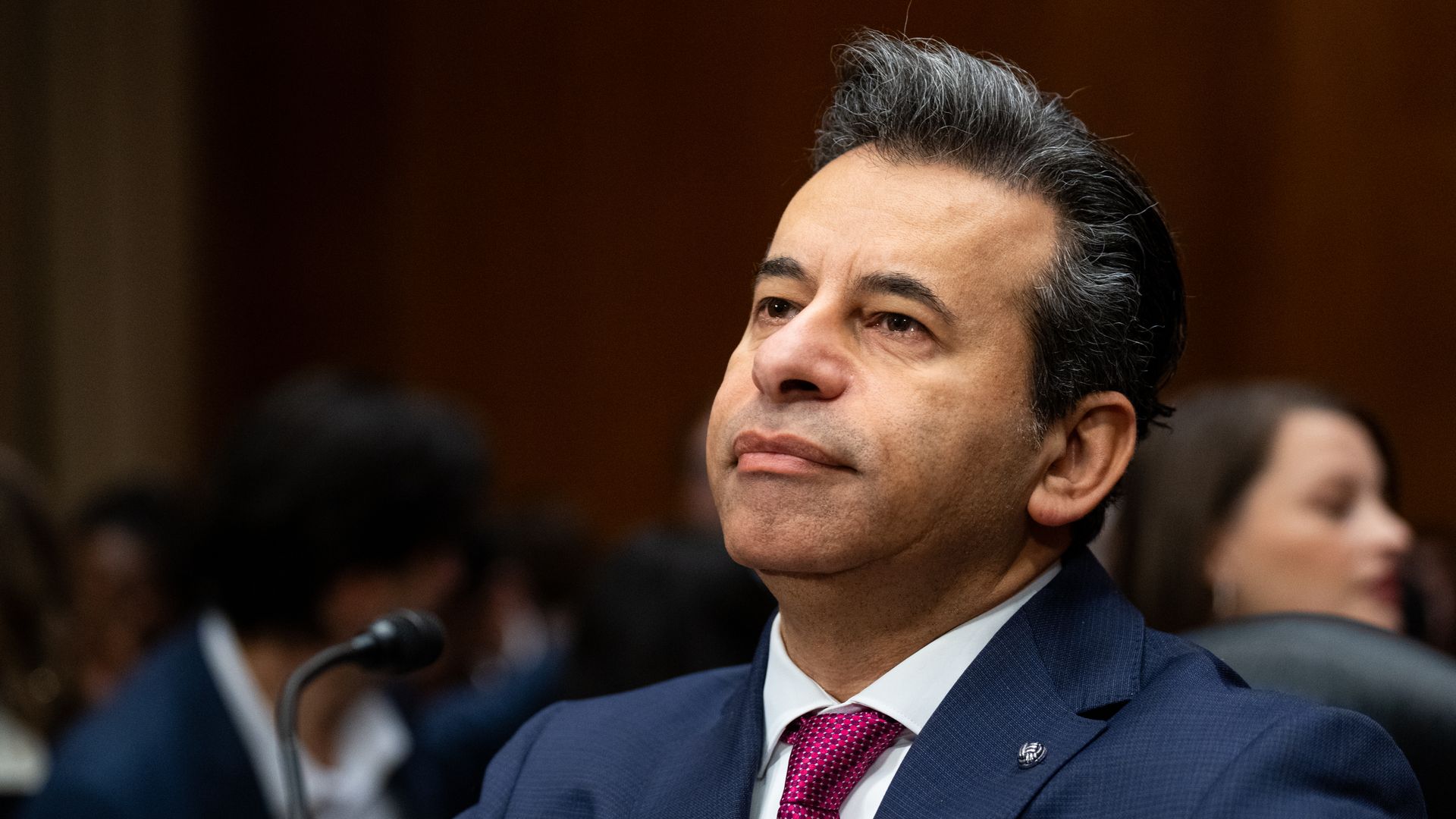
"I came to the FDA at a very tough time, immediately following the DOGE restructuring. ... We are at a point now where I think we've made significant progress in healing from those changes."— FDA commissioner Marty Makary to reporters yesterday, reflecting on his first year at the agency
4. New GOP criticism of Medicare innovation center

Republicans are aiming new criticism at CMS' innovation center after a government audit found it scaled up just four of 70 experiments in health delivery and payment changes that yielded net savings.
Why it matters: It's the latest wave of GOP anger directed at the Center for Medicare and Medicaid Innovation, which was created under Obamacare and authorized to spend $10 billion per decade to test ways to reduce federal health spending.
- The Trump administration overhauled the center's strategy and prematurely terminated four experiments last year.
By the numbers: While it was projected to produce net savings, CMMI increased federal spending by $5.4 billion from fiscal 2011 through 2020, per the GAO report.
- The Congressional Budget Office estimated CMMI spent nearly $8 billion over a decade testing health delivery and payment changes that only yielded $2.6 billion in savings.
House Budget Chairman Jodey Arrington (R-Texas) blamed the inefficiencies on large amounts of unspent funds and slow implementation rates.
- He suggested the administration's focus on waste, fraud and abuse in health programs should extend to the center, while acknowledging "CMMI's mission is too important to abandon."
5. Catch up quick
🏛️ Surgeon general nominee Casey Means has unsuccessfully tried to secure meetings with two Republican senators who could sink her candidacy. (CNN)
🦠 South Carolina is seeing no new measles cases, drawing the worst outbreak in decades toward an end. (Post and Courier)
🛑 The CDC paused tests for rabies and pox viruses that it does for state and local health departments. (NYT)
Thanks for reading Axios Vitals, and to editors Adriel Bettelheim and David Nather and copy editor Matt Piper. Please ask your friends and colleagues to sign up.
Sign up for Axios Vitals