Axios Vitals

February 11, 2025


Tuesday's here, Vitals crew. Today's newsletter is 989 words or a 3.5-minute read.
⚡️ Our hugest apologies for our delay in getting you this newsletter. The vendor that sends Axios newsletters had a technical lapse — we're investigating to try to prevent a recurrence. Thank you for reading and trusting Axios!
1 big thing: GLP-1s are no longer a "miracle fix"

The luster is starting to wear off GLP-1 weight-loss drugs including Wegovy and Ozempic as more clinicians warn patients about side effects and other potential risks stemming from their surging demand.
Why it matters: Research showing the drugs not only work for obesity but could lower the risk of heart attacks, stroke, some cancers and even Alzheimer's disease has overshadowed the substantial cost and the fact that many patients can't stay on them.
What they're saying: "There is almost like a backlash kind of a sentiment going on," said Peter Antall, chief medical officer of digital chronic health company Lark.
- "I don't believe that we're having second thoughts about the power of the medication. But I think the shine is coming off how they're being used in real practice," he said. "That's where many of us are concerned."
The big picture: Millions are now taking anti-obesity prescriptions from Novo Nordisk and Eli Lilly as well as lower-cost copycats from compounding pharmacies.
- There's no denying the drugs have life-changing capabilities. But high sticker prices and uneven insurance coverage skews which patients can get them — and which patients can consistently stay on them.
- And, in many cases, patients have begun taking the drugs with unrealistic expectations and little guidance.
"Everybody just thinks it's this miracle fix," said Ethan Lazarus, an obesity medicine physician based in Colorado and former president of the Obesity Medicine Association.
Between the lines: Study after study shows the majority of patients drop off the drugs within two years, with many spending less than a year on them.
- The reasons most commonly cited included the cost of the brand-name drugs — Ozempic retails for nearly $1,000 a month and Wegovy for hundreds more — periodic shortages, as well as side effects like severe GI distress and, occasionally, pancreatitis.
2. N.Y. hospital gets backlash over Super Bowl ad

A New York City academic medical center is drawing unexpected fire from doctors, patients and others in health care for buying a pricey Super Bowl ad touting its services.
Why it matters: NYU Langone's ad comes amid heightened scrutiny of nonprofit hospitals, which don't pay federal income taxes, and as Americans' frustration with the broader health care system is cresting.
The big picture: The ad played nationwide — alongside those for automakers, beer and snack foods — and likely cost upward of $8 million, according to TV ad impact measurement company iSpot.
- It featured a group of doctors struggling to complete a passing play, then getting words of encouragement from former New York Giants star Victor Cruz as a narrator intoned, "Not the best football team, but the best health system."
- "This feels like a terrible idea when healthcare providers are constantly telling Congress that their reimbursements are too low," one health tech entrepreneur posted on his LinkedIn page Sunday.
Congress has started to look at ways to lower what Medicare pays hospitals.
- There's also bipartisan pressure to enforce nonprofit hospitals' responsibility to provide charity care in exchange for their no-tax status.
"As the top-ranked academic medical center for quality care in the United States and as a leader in medical breakthroughs ... NYU Langone Health chose to highlight our unique team-driven, integrated health system on a broader stage," said Steve Ritea, the health system's senior director of media relations.
3. States sue to halt NIH research funding cuts
Attorneys general from 22 states sued the Trump administration on Monday, seeking to halt a plan that would cap NIH payments covering overhead at universities and medical research centers.
- A federal judge later granted a temporary freeze.
The big picture: The billions of dollars in cuts to new and existing grants could lead to layoffs, disrupt clinical trials and shutter laboratories, the states charged in U.S. District Court in Massachusetts.
- The plaintiffs include multiple states known for their research economies, including Massachusetts, North Carolina, Maryland and California.
Driving the news: The states charge the administration acted in an arbitrary and capricious way by not explaining the basis for the cap.
- It said the move also violated a 2018 law governing NIH spending that forbade the federal health department or NIH from developing or implementing a modified approach reimbursing the so-called indirect costs for biomedical research.
Congressional Republicans have been slow to react, and the extent of any protest will say a lot about whether they're willing to fight Elon Musk's broader DOGE efforts.
- Senate Appropriations Committee Chair Susan Collins (R-Maine) called the cuts "poorly conceived" on Monday and said she had spoken to HHS Secretary-designate Robert F. Kennedy Jr. about them.
4. Baked goods recalled over listeria concerns

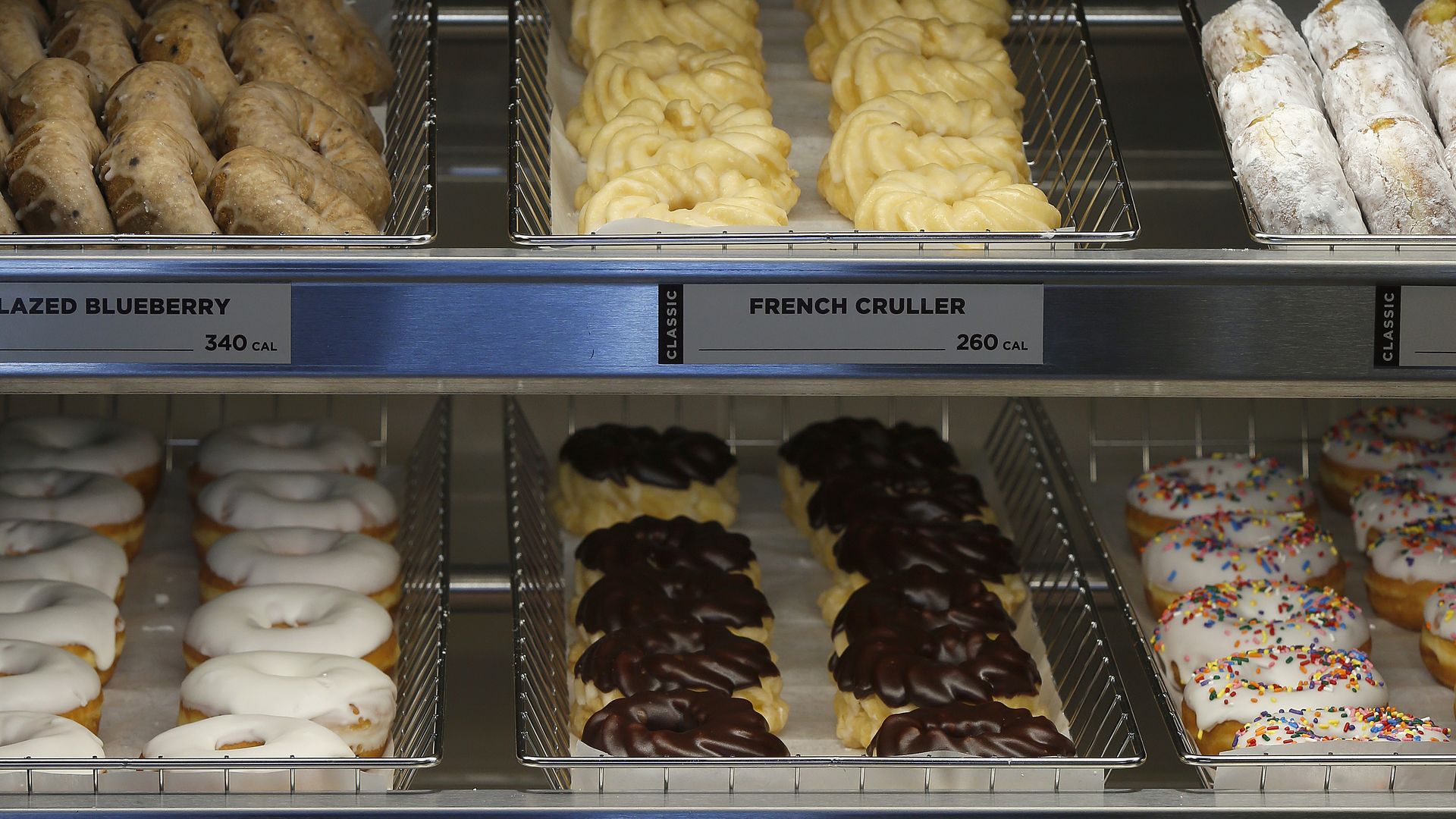
More than 2 million baked goods manufactured by FGF Brands, including some doughnuts and products sold at Dunkin', were recalled over concerns of potential listeria contamination, according to an FDA report.
Why it matters: Listeria monocytogenes can cause serious and sometimes fatal infections for some people and symptoms vary, according to the CDC.
- Listeria infection is the third-leading cause of death from foodborne illness in the U.S.
The big picture: Sixty products are included in the recall, which first went into effect Jan. 7 but was upgraded to a Class II recall Feb. 5.
- The FDA defines this recall as a "situation in which use of or exposure to a violative product may cause temporary or medically reversible adverse health consequences or where the probability of serious adverse health consequences is remote."
State of play: FGF Brands said in a statement that the recall was a "precautionary measure based on non product related findings" at one of its U.S. doughnut facilities.
5. Catch up quick
🤖 A House bill by Rep. David Schweikert (R-Ariz.) would clarify that AI and machine learning technologies can be used to prescribe drugs to patients, if authorized by the state involved and approved by the FDA. (MedPage)
🏥 Mass General Brigham is restructuring operations and cutting jobs as it grapples with a projected $250 million budget shortfall. (Modern Healthcare)
🧍🏼 Ozempic slimming can make the skin sag. Enter the $20,000 "body lift." (WSJ)
Thanks for reading Axios Vitals, and to senior health care editor Adriel Bettelheim, managing editor Alison Snyder and copy editor Matt Piper. Please ask your friends and colleagues to sign up.