Axios Vitals

May 13, 2026

Welcome to Wednesday, gang. Today's newsletter is 911 words, a 3.5-minute read.
1 big thing: Makary exit adds to leadership void

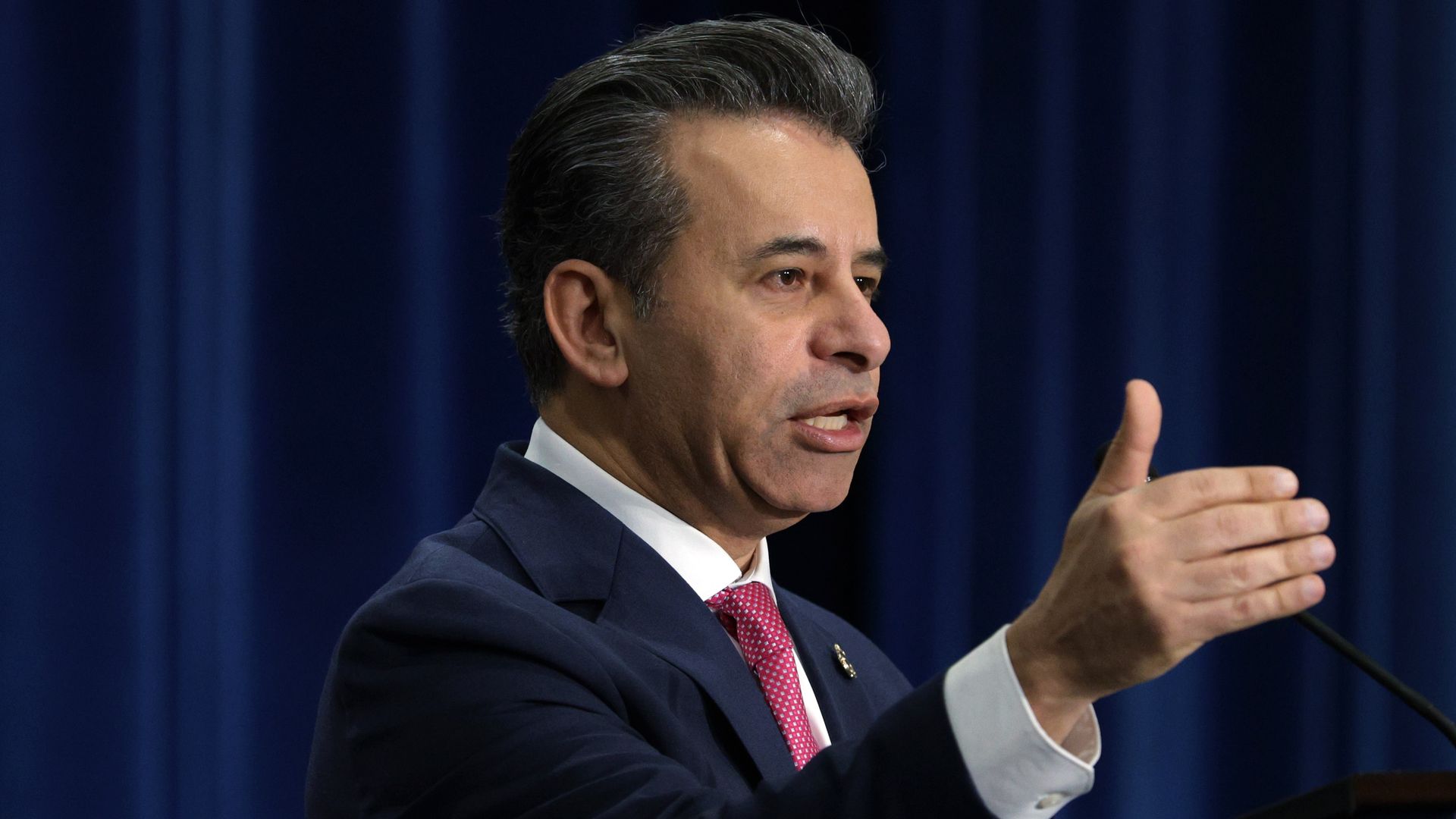
Marty Makary's departure from the FDA may remove one of the Trump administration's lightning rods for controversy.
- But it won't solve the organizational upheaval and political jockeying that marked much of his 13-month tenure.
Why it matters: There's lots of uncertainty around how the Senate will find the bandwidth to confirm another FDA commissioner while it considers President Trump's nominees for CDC director and surgeon general.
- The FDA itself is also facing other key internal vacancies, including for directors of the centers overseeing drugs and biologics.
- And there are questions about whether a successor will continue efforts to streamline clinical trials and other regulatory actions.
Driving the news: Yesterday, Trump confirmed Makary was out after facing internal criticism for not accommodating some of the president's priorities, as well as complaints from health care investors about unpredictable regulatory decisions that rejected some promising drugs.
- "Marty is a great guy. He was having some difficulty," Trump told reporters, in response to questions about whether he resigned or was fired.
- The task of steering the agency for the moment will fall to Kyle Diamantas, a Florida lawyer and reported friend of Donald Trump Jr. who was heading the FDA's food center.
Between the lines: David Mansdoerfer, a senior HHS official in the first Trump administration, wrote on X that Diamantas had the regulatory and legal chops to lead a transition and also was "a good pick for MAHA, and a good pick for business."
- Even before Trump made Makary's exit official, various health interests — from vaping lobbyists to independent physicians to anti-abortion politicians — were calling for a reset.
- It was a sign of how much surprise policy moves, organizational upheaval and political interference have come to characterize an agency once known for predictability and evidence-based decision-making.
2. Hantavirus response stokes readiness concerns

The government's lagging response to the hantavirus outbreak aboard a cruise ship is fueling concerns about the government's preparedness for a more widespread infectious disease crisis.
Why it matters: Public health experts say the response underscored vulnerabilities tied to the U.S. withdrawal from the World Health Organization, as well as layoffs and leadership turnover at federal agencies like the CDC.
What they're saying: "The U.S. has gone from leading global health security to watching from the sidelines," Tom Frieden, who served as CDC director in the Obama administration, told Axios in an email.
- "The first time a CDC specialist was named in this response was nine days into the emergency, and only in response to reporter questions," he said.
Between the lines: Communications delays from the federal government directly to states were also of concern, said Lori Tremmel Freeman, CEO of the National Association of County and City Health Officials.
- "New York has three, that we know of, passengers from the ship," she said. "They're waiting to hear where they are, if they'll come their way."
States including Minnesota, Kansas and California are continuing to monitor possible exposures.
3. Pharma warns MFN pricing could erode access

U.S. patients can get new medicines paid for by public insurance an average of three months after they launch, compared with nearly three years in other high-income countries, according to a PhRMA analysis shared first with Axios.
Why it matters: The drug industry trade group says the data is a sign of what could be undone if policymakers write President Trump's "most favored nation" drug pricing into law, as Trump is insisting on.
What they found: 88% of new medicines launched within the past decade are reimbursed by government payers in the U.S.
- Just 36% of those drugs on average are covered in the 19 peer countries the federal government is using to benchmark international prices in forthcoming most-favored nation payment experiments.
- Nearly three-quarters of the 477 medications launched globally between 2016 and the end of 2025 were launched first in the U.S., PhRMA found.
- PhRMA analyzed data from IQVIA, GlobalData and individual country governments.
The other side: The Trump administration and other proponents of international drug price benchmarking — including Sen. Bernie Sanders (I-Vt.) — say it's needed to bring down prices for Americans.
4. Charted: Tick season casualties


Tick bites are sending a record rate of people to the ER for this time of year, according to new CDC data.
Why it matters: An estimated 31 million Americans are bitten by a tick each year, and roughly 476,000 are treated for Lyme disease, per the CDC.
By the numbers: April saw 104 ER visits for tick bites per 100,000 total ER visits — up from 68 in April 2025, according to preliminary data from the CDC's tracker.
- Everywhere except for the south-central region of the U.S. — where blacklegged ticks are less common — weekly rates of ER visits for tick bites are the highest for this time of year since 2017.
Between the lines: Lyme is the most common tick-borne illness in the U.S., but ticks also spread other serious diseases, including Rocky Mountain spotted fever, babesiosis and alpha-gal syndrome.
5. Catch up quick
📦 Iran war disruptions are forcing drugmakers and suppliers to weigh raising prices, stockpiling materials and changing their shipping patterns. (Endpoints)
📉 Hims & Hers posted a Q1 loss as it transitions its weight-loss business to selling branded GLP-1s. (Fierce Healthcare)
👰 Weight-loss drugs are prompting a leading bridal retailer to guarantee its dresses will fit, even if the bride's body changes after purchase. (Axios)
Thanks for reading Axios Vitals, and to editors Adriel Bettelheim and David Nather and copy editor Matt Piper. Please ask your friends and colleagues to sign up.
Sign up for Axios Vitals